Guest Post…Creative Commons by James Hutchings

Many writers, whether published or just starting out, are very nervous that someone else will steal their work, whether that be another writer using their ideas in their own stories, or someone making pirated copies of their books. When I put out a collection of my writing, I specifically gave permission for anyone at all to copy my ideas, or even to cut and paste whole stories. I also contacted the Pirate Party, a worldwide network that wants to lessen copyright, and told them that I was giving anyone permission to put my ebook on file-sharing sites. In this post I hope to show why I went against common wisdom.

Creative Commons

I used a free service called Creative Commons. Creative Commons is useful for people who want to give the general public permission to use their work, but with restrictions. In my case I didn’t mind people using my work for non-profit purposes, such as posting on a blog, but I didn’t want to allow anyone to make money off it. Similarly I wanted anyone who used it to give me credit. I could have just listed these things myself. However I’m not a lawyer, and perhaps I would have worded it wrong so that someone could twist what I said to do more than I meant. Also I could have been unclear about what I was allowing and what I wasn’t allowing. Sure, someone could email me and ask, but the whole purpose of having a written statement is so that people don’t have to ask.

Creative Commons has a series of different licenses, which give permission to do different things. They’re all legally ‘tight’, and they’re all summarized in plain language. So all you have to do is go to their site and answer a series of questions, to get to the license that does what you want. In my case I used the Attribution Non-Commercial License.

Why?

That’s what I did. But why? Common sense would suggest that I’m giving something away for free that I could be selling. However I believe that, in the long run, I’ll be better off. The main reason is that I’ve seen how many people are, like me, trying to get their writing out there. Go to Smashwords and have a look at the latest ebooks. Then refresh the page ten minutes later, and you’ll probably see a whole new lot. The problem that new writers face isn’t that people want to steal your work; it’s getting anyone to show an interest in your work at all. If someone passes on a pirated copy of my work, it might get to someone who’s prepared to buy it – and that someone would probably have never heard of me otherwise. Even if they don’t want to pay for what they read, I might come out with something else in the future, and perhaps paying 99c for it will be easier than hunting it down on a file-sharing site.

Science fiction writer Andrew Burt tells the story of someone who disliked his book, and to get back at him decided to put a copy on a file-sharing site. The effect was that he got a small ‘spike’ in sales immediately afterwards.

I also have some less selfish motives. Many people would assume that the purpose of copyright is to protect authors and creators. Leaving aside the fact that someone else often ends up with the rights (how many Disney shareholders created any of the Disney characters? How many shareholders in Microsoft have ever written a line of code?), that doesn’t seem to have been the intention in the past. The US Constitution says that Congress has the power “to promote the Progress of Science and useful Arts, by securing for limited Times to Authors and Inventors the exclusive Right to their respective Writings and Discoveries.” Note that protecting ‘intellectual property’ isn’t mentioned. The authors of the Constitution seemed to see the point as getting ideas out there where people can use them: almost the exact opposite of keeping them ‘safe’ and ‘protected’.

The original idea of copyright seems to have been a sort of deal: you have an idea, and we want you to get it out into the world where it will do some good. To encourage you to do that, we’ll give you a monopoly on its use for a limited time. After that, anybody can use it (it will enter the ‘public domain’).

A lot of people don’t know that copyright used to give a lot less protection than it does now, especially in the United States. In the US, it used to be that works were copyrighted for a maximum of 56 years. Today copyright in the US can last for over 100 years. In fact Congress keeps extending the time. In practice, they’re acting as if they never want ideas to go into the public domain.

This is great for the owners of ‘intellectual property’. But it’s hard to see how this “promotes the Progress of Science and useful Arts,” or how forever is a “limited time.” In a sense it’s a theft from the public. Anyone who publishes work has accepted the deal that the law offers, of a limited monopoly in return for making their idea known. Congress has been giving them more and more extensions on that monopoly, but doesn’t require them to do anything to earn it.

It probably doesn’t matter that much that Disney still owns Mickey Mouse, or that Lord of the Rings is still under copyright. But remember that these laws don’t just apply to the arts. Similar laws apply to science as well. So a life-saving invention could be going unused, because its owner wants too much money for it, or because it’s tied up in court while two companies fight about who owns it.

Conclusion

I’m far from an expert on either the law or the publishing industry. However I hope that I’ve given you, especially those of you who might be thinking about publishing some writing, a different take on the whole issue of whether authors should worry about their ideas being stolen. At least I hope I’ve shown you that there’s a different way of thinking about it, and that that way doesn’t require you to just give up on making money; in fact that it might be more profitable as well as better for society.

—————–

About the Author: James Hutchings lives in Melbourne, Australia. He fights crime as Poetic Justice, but his day job is acting. You might know him by his stage-name ‘Brad Pitt.’ He specializes in short fantasy fiction. His work has appeared in Daily Science Fiction, fiction365 and Enchanted Conversation among other markets. His ebook collection The New Death and others is now available from Amazon, Smashwords and Barnes & Noble. He blogs daily at Teleleli.

—————-

This article is licensed under a Creative Commons Attribution Non-Commercial License.

Guest Post…Why I Read YA, by Eric Edstrom

I ignored the YA section of the bookstore for most of my life, believing those books were strictly for teens. That prejudice ended with the Harry Potter phenomenon. I know, I know. HP isn’t quite YA, but stick with me.

Suddenly, grown-ups everywhere were seen reading HP novels in coffee shops, on airplanes, and at beaches. Whatever stigma had been associated with adults reading children’s books disappeared overnight. I happily joined this movement, as did millions of others.

With my resistance broken down, I didn’t think twice about trying a couple young adult novels I’d been hearing about. I bought, read and endlessly recommended both Little Brother by Cory Doctorow and Twilight by you know who. It wasn’t long before I started to prefer YA.

Why do these YA stories resonate with me, a grown man, several rings out from the bullseye of the target market age?

I believe it’s because authors don’t write these books for teens; they write them about teens. The condition of being a teen is one of in-between-ness: between childhood and adulthood, between dependence and independence, innocence and worldliness. If you’re a teen, the adults in your life don’t quite view you as an equal, and yet you no longer identify with children. You’re stuck.

The struggle to get out of the the in-between-ness causes endless angst. It’s amidst this glorious angst that some of the juiciest stories happen.

Here’s my theory: YA stories are myths about the journey teens must take to reach adulthood. Teens love these stories because they see their own struggles in them. But if you accept my theory, YA stories are as much about adulthood as they are about teenagerhood. And that’s why they appeal to adults.

Maybe these stories provide some wish fulfillment, like an opportunity to relive one’s teens and make different choices. Or maybe the appeal is that adults feel some paternal or maternal instinct toward the young characters.

I think it’s more than that.

In my opinion, all that distinguishes an adult from a teen is the collected sediment of years. If you scrape away the layers of cynicism and world-weariness, many adults are still teens at heart. I know I still struggle with authority, with the opinions of my peers, and I suffer continued disillusionment as one more thing I was certain was true turns out to be false.

So why I do I read YA?

It’s because, despite the fact I’m in my fourth decade, I’m still making the transition from childhood to adulthood.

P.S. And that might also be the reason I write YA.

 ————————
Thank you Eric for joining us on the blog today!
————————
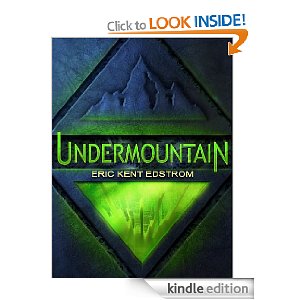
Eric Edstrom is the author of Undermountain, released in December 2011. 
Synopsis: 
Undermountain is an innovative, clever and wildly imaginative adventure. Along the way, Edstrom turns the legend of bigfoot on its head.
A group of troubled teens escape to the Canadian Rockies for a ten day excursion. All they take with them is their backpacks and their grizzled old mountaineer guide. But when Danny and Breyona encounter a creature of legend—an eight foot tall beast they tag as “bigfoot”—the hike turns into a race for their lives.Swept to the secret city of Undermountain, Danny, Breyona and their friends find themselves in the middle of a war—between their “bigfoot” captors and horrific creatures called “shriekers.” But more than their freedom is at stake. To escape, to survive, to save the Earth, Danny and Breyona must end the war … and make sure neither side wins.

Purchase links

Amazon US: http://www.amazon.com/dp/B006PHZ82W

Amazon UK: https://www.amazon.co.uk/dp/B006PHZ82W

Smashwords: http://www.smashwords.com/books/view/117435

Also available in nook, kobo, apple stores

—————————-
Meet the Author 

www.ericedstrom.com

@bigfootgrizz

@ekedstrom

Interview…with Mist from Bookaholics Book Club

Bookaholics Book Club is one of our favourite facebook pages to follow and the blog attached to it is great – interesting, thorough reviews of stuff we like to read 🙂 And so we’re really excited to have Misty from the club here at Aside from Writing for our very first blog writer interview!

Hi Mist, welcome to Aside from Writing, can you tell us a little about yourself and the Bookaholics Book Club?

Hi! Thanks for having me. Well I’m 26, married with three (mostly) lovely children. I love to read books and then tell people about them so in mid-2010 I set up a Facebook page to do just that, six months later I decided that wasn’t enough and I had to give my opinion as well so I set up my blog to run alongside it for book reviews. My Book club is what keeps me sane from the kids and is a great community (I hope!) where people can come and talk about books they like or get suggestions for new ones to discover.


You’ve just celebrated the first year of the blog. What prompted you to start writing it and was there anything particular you wanted the blog to achieve?

Mostly I just love sharing books and my blog gives me the opportunity to do that, I write honest reviews that help people decide if a book is for them and I help promote books by having author guest spots. I didn’t really have any big goals for my blog when I got started, just that someone would read it!


What’s been the best part of running the blog? Any particular highlights for your first year?

Honestly, getting that very first follower felt like a huge milestone, it meant there was someone, somewhere who was interested in reading what I wrote and I wasn’t talking to myself! I’ve had a great first year discovering this big book blogging community I didn’t know was there and making new friends all over the world!


And the hardest parts?

Definitely the amount of hours I’ve sometimes had to put in, whilst I love my blogging hobby it can take up more time than I’d realized it would when I started and I’ve found myself putting together posts late into the night when I just wanted to go to bed but it had to go up… ever since I’ve discovered the ‘schedule post’ feature my life has been a lot easier lol! Writing a review for a book I didn’t enjoy is also a hard thing to do, trying to say why I didn’t like a book without being spoilerish or sounding like I’m just blasting the book is a hard balance.


What’s an ideal day for you – and how do you fit the blog into that?

Hmm an ideal day for me is spending time with my kids, reading good books, getting some me time and generally being a domestic Goddess, of course there just aren’t enough hours in the day for all that so my house is a tip lol

Now that I know I can write blog posts in advance and schedule them, I usually try to get my regular ones written at the start of the week and I always give myself a night or two away from the computer, just to relax and spend time doing other things so I don’t end up resenting it for taking up all my time and wanting to quit something I love.


With the wide content you cover on the blog and the facebook pages, you must meet a lot of authors – what do you like best about the engagement you get with them writing the blog?

I definitely love that lots of authors are so accessible on Facebook and Twitter so I can ‘Meet’ them; I’ve certainly had some fan girl moments when my favorite authors have responded to me, you don’t get that with movie stars! I’ve also met a lot of new authors along the way and discovered books I might not have discovered otherwise.


And what’s the best bit about connecting with fellow readers?

Just the shared excitement about our love of books, I don’t really know anyone in ‘real life’ that are hardcore readers like me or even like the same books, so if I want to talk books I have to get online to do that and social networking sites are great for finding other booksessed people who understand my passion.


What genres/authors do you love to read? 

Mostly I read paranormal books, for any ages! But I also like YA fiction, things on mythology and some women’s fiction and I’m a huge fan of Dystopian and post-apocalyptic books. Some favourite authors are Maria V. Snyder, Rachel Vincent, Richelle Mead and James Dashner.


Any ‘must have’ books that you want to get hold of in 2012?

I’ll try to keep it short lol I’m super excited for The Kill order by James Dashner and The Golden Lily by Richelle Mead… there are tons more but it’s best I stop there lol


Random Questions:

If you could be a character from any book – who would it be and why?

Rosemarie from Vampire Academy by Richelle Mead, that girl kicks butt! But she also makes mistakes and lets her mouth run her into trouble, she’s not perfect but she’s loyal and determined, certainly someone I’d be happy to be.


Favourite fictional world – where would you live?

Every summer I wait patiently for my Hogwarts letter but sadly it doesn’t come L


Best super-evil baddie?

Voldemort!!

————–

Thank-you for taking time to talk to us today and being our first interview!

————–

If you like the sound of Bookaholics Book Club check them out!

Blog: http://bookaholicsbkcl.blogspot.com

Facebook: www.facebook.com/bookaholicsbkcl

Twitter: www.twitter.com/bookaholicsbkcl

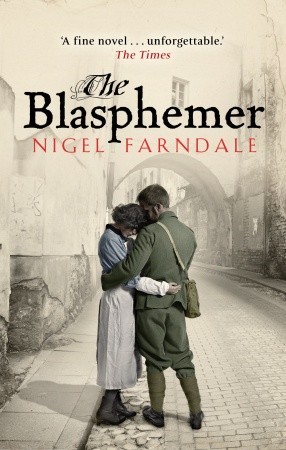
Book of the Month – February – The Blasphemer

That time already? So much going on at the moment for the guest features launch this week! Well, it’s Vic’s choice this month and she nominated The Blasphemer by Nigel Farndale as BotM. Feel free to read along with us and join any discussions/add reviews of your own 🙂

The Hunger Games…Stephen King’s Review

If you’ve not seen Stephen King’s review of The Hunger Games, check it out here.

http://www.ew.com/ew/article/0,,20223443,00.html

The Hunger Games…Bonnie’s Review

Rating: 5*

What to say about The Hunger Games that’s not already been said…well obviously from my rating I loved this book: I couldn’t really put it down, got into the characters and story; it ticked a lot of boxes for me. Now I see what all the fuss is about!

Since finishing this I’ve been trying to think of anything I don’t like…and there’s nothing. Some characters might have done things I didn’t want them to do – but the actions fit with their personalities and so I have to accept maybe I’m just more of a romantic than I thought. Plus it meant I needed to read the other books – like now! 🙂

The plot, action, character development were all great – I guessed some twists but still wanted to read them happen which tells me this is a good book. I liked the parallel drawn with modern obsessions with reality tv with no real consideration given to young people being put before cameras and being ripped apart (figuratively) by judges. The society of haves and have-nots and the great chasms between them.

The first chapter or so it took a little getting used to the first person, present tense narration, but once over that it really started to flow.

(On the wider series): Throughout the trilogy I liked the references/comparisons (obvious and subtle) to the Roman Empire…you pick these up in the first book easily: arenas, tributes, bloodthirsty games to keep districts in line, fighting with tridents and nets… It’s also reflected in the description of the Panem world: each district supplies a particular product or commodity similar to the provinces of the Roman empire, for example, where Egypt was the “breadbasket of Rome”. As the books progress you see elements of the excesses of Roman society in the Capitol inhabitants, such as the feasting/vomiting piece. (According to Seneca, the Romans vomited so they could eat and they ate so they could vomit – who said food issues are a new problem!) I think Collins does a good job of blending these aspects of the Roman empire into The Hunger Games and for me it was a nice basis for the ‘world building’ of Panem – which she acknowledges in Mockingjay with the “Panem et Circenses” quote, which was originally said about Rome and referred to a government who appeased discontent in their citizens through simple, gratuitous recreation and entertainments…wonder what parallels there are to see in that for people in 2012? 🙂

So…overall a really good quality YA book – I didn’t want to put it down. I don’t do 5 star ratings often, but this definitely gets it.

Just finished…Numbers by Rachel Ward


This is not the book I thought it was going to be. I probably read the blurb wrong, but I expected Jem’s gift to become part of an ‘epic’ story with the “chain of events” mention in the blurb meaning big society changes and impacts. And it didn’t – this is a very small world in a way, centring around Jem and Spider for the majority of the book. But that does not make their story any less powerful, or the impacts of events any less shattering – it’s just all done from a very personal perspective.

Numbers is really well written – the colloquial style that stretches through all the dialogue and Jem’s first person narration fits the story perfectly and adds depth to her character in ways that just saying she’s had a hard life, been pushed from one place to another, never fitted in just wouldn’t manage. She has so much more depth I think because her voice is so distinctive…the orphan girl, special gift, not fitting in, could all amount to cliche amongst YA novels, but because of how Jem appears through the narrative there is nothing cliche about her.

They reality of Jem’s life is not nice and you don’t want it to be that way. You want there to be some magical way for it to be better – but that wouldn’t be real would it? It’s not easy reading a story about someone who’s genuinely difficult teenage life is being played out in cities throughout the UK, because you could quite easily be one of the middle-class dog walkers, passing by either being paranoid or ignoring her. Jem’s point of view is very genuine and realistic and can make for uncomfortable reading. But also, that’s why Jem and Spider’s unplanned romance comes together so authentically.

With Jem and Spider – I could see them as real people. They could have walked off the pages and into some of my high school classes – their behaviour was so true and I could see people I once knew in how they behaved. (The scene where Jem gets excluded brought to mind the memory of a boy who was being excluded refusing to leave site and the chaos of teachers and police chasing him around the school field whilst everyone hung out the windows cheering – ahh good times?!).

Everything about this book was real for me – it was gritty and dirty, could be stinky and sad – very well written with complicated genuine characters. I think perhaps that’s why it’s not a five for me: it was an interesting book, good story, characters and well crafted…I just found it hard to enjoy because the reality of it is quite sad. Until the final chapter – I think the Jem you see there shows the changes you would hope for. So with the last chapter I’d say 4.5!

Book of the Month – January – The Hunger Games

To get things started and keep things nice and easy, our first BOTM f0r 2012 will be The Hunger Games by Suzanne Collins (as if you hadn’t already heard of it!) At least this will tie in the ‘Hunger Games Mania’ which is no doubt set to sweep the world as the film comes out shortly.

So – now we’ve got that sorted – better get reading and we’ll be back at the end of the month with review and discussion.

So it begins…

It all started when I wrote a book…

…then I discovered this huge world of reader blogs and after writing my thoughts for Goodreads and Amazon and others I just got to thinking – why not blog it? So here it is 🙂

But it’s not just me…there are lots of writer/readers out there, as well as reader/writers and so between a few of us we’ll do the reviewing and posting to this blog…perhaps we’ll also get some writing done too!