IAM Review: “Beyond the Shadows”, Anna Hub

Guest Feature

It was a delight to have Anna here yesterday for our interview, and today Tony reviews her first novel “Beyond the Shadows”…

———————————————–


3/5

What would happen if your shadow was trying to consume you? Selena Parker is about to find out…

Selena is leading a normal life until a man in a restaurant tells her to watch her shadow. Dismissing his concerns at first, she comes to realise it’s moving and shifting on its own. She places a hand on it, and falls through to a primitive jungle world, then again and again, each time spending less time in the real world.

Selena’s responses are entirely realistic when she realises she can fall through her shadow. She dims the lights and researches mental illness, wondering if she’s going quietly mad while she tries to continue her normal life. She quickly comes to realise that even the dimmest lights cause shadows though, and knows she can’t fight back against it.

It doesn’t stop her fight though; Selena is an adaptable character who refuses to accept the inevitability of the jumps to and from the jungle. And when she’s forced to accept the reality of what’s happening to her, she adapts again. She learns how to survive in the wilderness, what berries and bugs are edible and how to make a fire. She tries to warn her family what will happen to her. When she is finally, irrevocably trapped in the jungle, she shifts her focus, trying not to linger on the family and life she’ll never see again.

In the jungle she meets Braydon – the man who first warned her of the shadows – who seems to have given up on ‘normal’ life quicker than her and settled to life in the jungle. Braydon begins to exhibit signs of being a ‘Hunter’, a semi-supernatural human with enhanced strength, agility and senses. Together they move out of the dense jungle and towards a settlement of humans who are also trapped at the edges of the jungle.

It’s a great concept for a story…how can you hide from your own shadow? And it was that which pulled me through the first half of the book. Selena’s attempts to keep up a normal life and her resourcefulness when it came to researching survival techniques and tracking down a comatose Braydon drew me to the character. I loved the way she dealt with the things life was throwing at her and got on with it. There isn’t a moment when she gives up.

I liked the world of the book as well, the way that distances ‘over there’ equate to distance ‘over here’. Her upstairs bedroom is on a rock; her living room is a cave under that rock. It’s all logical and consistent. What was missing was a full sensory experience: I wanted to know what that jungle smelled like and the assault of the colours on her eyes. Was the sky blue over there?

Where the book starts to lose a little of its power is with Braydon. I found him to be two-dimensional next to Selena, and I had the impression that if Selena could have found another guide in the jungle, she probably would have. Partly, he’s such a foil for her it’s hard to empathise with him; he’s quite negative to Selena’s optimism. There didn’t seem to be much chemistry between them beyond the basic need to survive and share body heat.

The antagonists of the book – The Hunters – don’t make much of an appearance either. We’re only told what they are capable of and don’t see them in action much  – one anonymous woman being chased, that’s about it. The main threat in the jungle is the remarkable cats with whip-tails, which is danger enough without the Hunters being there.

What also didn’t work for me was the transition from jungle to village of survivors. From being adaptable and resourceful, Selena seemed suddenly powerless when she was there, becoming quite passive and weak. The village transition takes place about half-way through the book, and from then on, Selena seemed almost a secondary character in her own story.

The book needed a few more edits. There are a lot of run on sentences (the author told me she grimaces over them now too), but it seemed to suit the narrative voice of Selena.

For a first novel, this was pretty good. A nice concept with the shadow-portals and a strong (for the most part) main character and a consistent world.
 

IAM Interview with…Anna Hub

Guest Feature

Guest Feature

Our guest author for Indie Month today is Anna Hub, Australian author of Beyond the Shadows. Check out the intriguing blurb for the book here and then find out more about the lady herself in our author interview. There’s a review of “Beyond the Shadows” coming tomorrow.

———————————————–

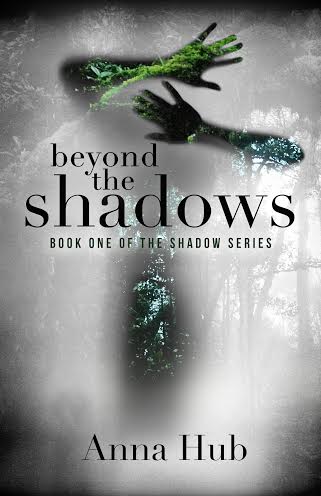
Beyond_the_Shadows_Cover “A violent shudder travelled up my spine, each vertebrae snapping together like a zip lock, all my muscles tensed but I couldn’t tear myself away from the image …”

If your shadow was trying to consume you, how would you run from it?

What if you were afraid of something you could never escape?

Selena Parker’s journey into the unknown begins in her dreams, but the consequences are carried back into her conscious life and she soon realises paranormal forces are at work. Her shadow has become more than just an image, it is a gateway to a sinister new world where mysterious creatures roam and she is confronted by danger that challenges her will to survive.She finds the man whose fate is linked inexplicably to her own but she knows nothing of him and doubts his true nature. Her only option is to place her life in his hands while they search for a way to stop the shadows claiming them forever.

Anna_Hub_Profile_Pic

Which authors have influences you most and how?

I have to say Isobelle Carmody. When I was a kid, I struggled to get into books, until my sister gave me Isobelle’s first book – Obernewtyn. I fell in love with it, and from that point on I realised the magic and wonder that could live inside the pages. Obernewtyn pulled me into a world filled with adventure and magic – I guess I never really came back.

Is there a song you could list as the theme song to your book?

I listened to a lot of Bat for Lashes, in particular the Two Suns album, while I was working on the Shadow Series. It’s gentle enough to work in the background, but it also has a mystical quality. It created the perfect mood.

What has been your most rewarding experience since being published?

I was invited to a local highschool to give a presentation on writing. I’m definitely not a natural public speaker, and to begin with the thought of it horrified me, but it’s the things that challenge us the most which reward us the most. Standing in front of that class was pretty surreal, one of those moments where you have to ask yourself if this is really happening to you.

Can you see yourself in any of your characters?

Absolutely. I used to be embarrassed when people told me they could see me in my characters. Now I’ve realised it’s pretty much impossible to keep yourself out of them. You can only write what you know. My characters are a combination of who I am, what I see, and what I wish I could be.

How do you react to a bad review?

I was absolutely terrified of receiving my first bad review. I was afraid it would make me hate my writing too much to ever go back. To be honest it didn’t hurt as much as I thought it would. Don’t get me wrong, it wasn’t great, but surprisingly it actually inspired me to work harder. It made me realise where my weaknesses were and it gave me something to prove – that I can do better. Now I use bad reviews to motivate me.

What the best advice anyone has ever given you?

Once you release something you’ve created, it’s already in your past. It’s no longer a true representation of your skills or knowledge. Don’t get caught up in the imperfections, by the time someone criticises it, you’re already better at it.

What are you working on at the moment – do you have any other books in the works?

After releasing a four part series I wanted to work on a standalone project. I thought a short one to two year project might be nice!

My current WIP is set in a dark world where people are haunted by ghosts of themselves – ghosts of the living. The main character, Daniel, is a hunter trained to destroy these ghosts before they can take over their hosts and spread their curse.

It’s a little darker than the Shadow Series, there are definitely some creepy vibes in there, but I’d like to keep it accessible to people who don’t venture too deep into the realm of paranormal. I’m still on the first draft but if everything goes to plan, I’ll be releasing it later this year.

Your most unusual or random habit?

I’m not sure why, but I can’t eat everything on my plate. It’s ridiculous. If I have a bowl of ravioli, I have to leave at least one piece behind. It’s like that one little bit tips me into the dark abyss of psychological fullness. Weird right?

Hidden talent?

I can pick the perfect avocado, every time, without fail! It’s definitely a superpower.

Favourite quote from a movie?

Oh lord, how do I pick? I’m a quote lover. I’m going to go with, “We’re all mad here.” From Alice in Wonderland. It applies quite nicely to most of the writing community hehehe. There was a time when I hated my overactive mind, now it’s my favourite thing about myself! Embrace the madness!

Tell us about yourself. 

When I was a child I wanted to be an author, it seemed like a perfectly attainable dream to me then, but of course I grew up and realised that writing was not the best way to make a future for myself. So I discarded the idea and decided to do something normal.

When I studied nursing I thought I’d found a place for myself, but within six months of working in that field I knew I needed more. So in July 2007 I bought myself a lap top and started writing in my spare time. It took me two years to complete my first book and by the time it was finished I felt as though I’d learnt enough to pursue the dream.

My love for writing has grown rapidly since then and now I know that it’s something I can’t live without. It’s a place where there is no limit, no exact destination and my mind is free to exist in many worlds.

It’s a beautiful sanctuary.

Links

Facebook: www.facebook.com/annahubbooks

Website: www.AnnaHubBooks.com

Twitter: www.twitter.com/annahubbooks

Amazon: http://www.amazon.com/Anna-Hub/e/B00CKG56TM

Goodreads: https://www.goodreads.com/author/show/6913627.Anna_Hub  

Blog: www.annahub.wordpress.com

Tony’s Review: The Grapes of Wrath, John Steinbeck


2/5

In the dustbowl depression of 1930s America, the Joad family from Oklahoma move to California out of desperation, lured by the promise of a mythical land of endless food and well paid work that doesn’t exist.

For the first half of this book, I loved it. Steinbeck alternates each chapter between the Joads and a bigger picture of half the country on the move, hungry for work and hungrier for food. The travels along Route 66 were full of drama and tension and the characters well developed.

It was a delight to travel along with them, poor and desperate as they were, dignified in their poverty, hoping as they did that they would find what they were looking for…but knowing that they wouldn’t, hoping at least for some resolution for them. Some of the writing was beautifully poetic, especially in the wider-world chapters.

It was when they arrived in California that the story crumbled and stalled. There were long passages that went like this:

Tom pushed open the matchbox and took out a match. He struck the match against a piece of sandpaper and took the flame carefully to the lantern, and lit the lantern with the fragile yellow dancing flame. The lantern lit with a mellow dancing light against the walls of the shack. Tom sat back and warmed his hands on the feeble heat coming from the lantern.

How about we try this, Mr Steinbeck…?

Tom lit the lantern from a match and sat back, warming his hands on the feeble heat coming from it, the light dancing on the walls.

…and then we can get on with the story. How would that be? No? Okay then, I’ll sit through the same drawn out descriptions every time someone does something, no matter how minor.

What that happened throughout the last third of the book, it really dragged it down. Steinbeck also decided that he only really needed two characters (Ma and Tom), and the rest drop into the background and become two dimensional and superfluous. He might as well have killed the rest on the journey to California for the impact they have in the story.

And the ending. Well, it just…ends. There are no conclusions, and we never find out what happens to the family. It’s like Steinbeck died halfway through and didn’t finish the story. In fact, I just checked online to see if my copy was missing a dozen pages. Nope.

Here’s how sucky the ending is (Skip it if you don’t want spoilers):

The Joad’s are flooded out of their shack of the week, and they come across a barn. Rose of Sharon (huh?), who has just undergone a still-birth, gives an un-named starving man her breast milk. The End.

WTF was THAT?

After four hundred pages, some of the most wonderful and poetic language, that’s IT?

Do the family starve? Do they drown? Do they go back to their shack after it dries out? Would it have killed him to write an epilogue? At that point I was glad to finish the damn thing and be done with it.

No more Steinbeck for me. After the flat characters of “Of Mice and Men” and making me care about a desperate family and then leaving me hanging, he’s had his chance.

Tony’s Writing Tips: That’s what he said

I stumbled across a blog the other week. I won’t tell you who it belonged to, but they were giving a writing tip on ‘using alternatives to he said / she said’. They gave quite an impressive list of adjectives and managed not to include any adverbs (-ly ending words). It was well thought out and presented.

But that’s not why I’m here. I’m here to tell you exactly the opposite:

He said – she said is absolutely fine.

Seriously – don’t worry about it and don’t look for anything else; most people are reading the dialogue and not overly wondering how your characters are saying it. Give them a context and they’ll be happy.

The only exception to this is rule I would suggest are asked and replied. Feel free to use those as much as you need.

Let’s do an example and see which one you think works the best:

 Adjectives

I sprinted to the boulder and dived behind it, so close to the stone that it radiated cold back against my cheeks. I waited a second longer, then when I didn’t hear anything, I dared raise an eye above the marbled edge of the rock. The S’loths hadn’t moved from the fire, not even stirring to look in our direction. So far so good.

I looked back over my shoulder. Jack still stood at the edge of the forest, hesitating. I waved him towards me, but it was another long minute before he sprinted towards me. He mistimed his dive and smacked into the boulder with far too much noise, not able to hold in a cry of pain.

“Quiet!” I hissed.

“Sorry,” he whispered.

I waved him to silence and peeked over the rock again. A S’loth yawned and stretched, but nothing else was moving.

“What do you see?” he inquired.

“They aren’t moving…just sitting there. We might be able to go around them,” I breathed.

Jack rose beside me, peering over my shoulder, his mouth a centimetre from my ear, his breath close enough to stir the hair. “Are you sure?” he wondered.

Nothing wrong with that, you might think. Works, doesn’t it?

Yes, it works…but I think you’re over-egging the pudding. Give your readers some credit for their intelligence. The context tells them your two characters aren’t shouting, doesn’t it? They know when one of them has asked a question, don’t they?

He said – She said

I sprinted to the boulder and dived behind it, so close to the stone that it radiated cold back against my cheeks. I waited a second longer, then when I didn’t hear anything, I dared raise an eye above the marbled edge of the rock. The S’loths hadn’t moved from the fire, not even stirring to look in our direction. So far so good.

I looked back over my shoulder. Jack still stood at the edge of the forest, hesitating. I waved him towards me, but it was another long minute before he sprinted towards me. He mistimed his dive and smacked into the boulder with far too much noise, not able to hold in a cry of pain.

“Quiet!” I said.

“Sorry,” he replied.

I waved him to silence and peeked over the rock again. A S’loth yawned and stretched, but nothing else was moving.

“What do you see?” he asked.

“They aren’t moving…just sitting there. We might be able to go around them,” I said.

Jack rose beside me, peering over my shoulder, his mouth a centimetre from my ear, his breath close enough to stir the hair. “Are you sure?” he asked.

Just for another idea, here’s the way I would write it. Strip out the said and dialogue attributes as much as you can – fillet your dialogue down to the bone. This has the effect of speeding up the pace as well –the stripped dialogue drags you through the story.

Filleted

I sprinted to the boulder and dived behind it, so close to the stone that it radiated cold back against my cheeks. I waited a second longer, then when I didn’t hear anything, I dared raise an eye above the marbled edge of the rock. The S’loths hadn’t moved from the fire, not even stirring to look in our direction. So far so good.

I looked back over my shoulder. Jack still stood at the edge of the forest, hesitating. I waved him towards me, but it was another long minute before he sprinted towards me. He mistimed his dive and smacked into the boulder with far too much noise, not able to hold in a cry of pain.

“Quiet!”

“Sorry.”

I waved him to silence and peeked over the boulder again. A S’loth yawned and stretched, but nothing else was moving.

“What do you see?”

“They aren’t moving…just sitting there. We might be able to go around them.”

Jack moved close beside me, peering over my shoulder, his mouth a centimetre from my ear, his breath close enough to stir the hair. “Are you sure?”

Give your readers a clear enough scene and they’ll know who said Quiet! And who apologised for it – without you having to lead them through it.

Cover Reveal! “Medusa” by Tony Talbot

Medusa-Resize

Well, it’s taken me a while, but here it is! My latest book is live today!

“Lissa Two is a thief of the ocean cities, struggling to make enough money to clear her debts and take care of her traumatised sister, scratching a meagre living as best she can.

So she has enough worries without her life getting more complicated…but when a boy named Hattan literally falls from the sky, she can’t just let him drown.

It’s a decision she comes to regret, a decision that will change not only her life, but the lives of everyone she loves.

If they survive…”

Amazon Paperback.

Amazon Kindle.

It’s FREE for the first weekend of publication. As are four of my short stories – Fidget, Black Shark, Out of Step and Blind Date.

As always, thanks for reading and supporting independent authors!

Tony’s review: The 5th Wave, Rick Yancey

 1

3/5

Cassie Sullivan may be one of the last humans left. The alien attack has wiped out most of humanity in four waves of increasing destruction.

It took me just over four days to read this. I started on Thursday night, and would have gone straight through the night if I didn’t have to get up the next morning. By the time I’d put it down, I was 20% of the way through, thoroughly hooked, and I finished it over the weekend.

It didn’t matter that the first part of the book was all back-story. What grabbed me was how compelling and plausible that back-story was. The aliens weren’t dumb enough to land and start with death-rays and city busters; instead taking out humanity in four swipes from orbit. Score: seven billion to zero.

The book split into two converging stories about 25% way through, which led to some twists that I could see coming a mile away (Although for a page or two, I did wonder if I had one of them pinned down). The second story strand was the brutal boot-camp training of teenage (and younger) soldiers for the fight back against the aliens. Or are they aliens? Trust and the destruction of trust is one of the themes of the book, a call back to fifties sci-fi films where the aliens (ie communists) look just like us.

Short, snappy chapters, tumbling stream of consciousness sentences stripped to the bone – Yancey’s writing style is fantastic, tripping along, ripping away everything but the most essential details. I wish THE ROAD by Cormac McCarthy had been this good.

Where Yancey seems to struggle is with his social interactions. Conversations that don’t make much sense to the reader and some convoluted syntax didn’t give me much insight into their relationships. Cassie immediately falls for the first handsome boy she comes across, despite her mistrust of him and his motives, and despite warning herself not too. Although for a pleasant change, there isn’t a love triangle going on between Cassie and the two main male characters in the story.

An excellent book where it comes to action and the end of the world, but it falls off when the characters have to talk to each other.

Tony’s Review: Clockwork Angel by Cassandra Clare

https://i0.wp.com/upload.wikimedia.org/wikipedia/en/thumb/4/43/Clockwork_Angel_1.jpg/220px-Clockwork_Angel_1.jpg

3/5

Tessa Gray descends from a boat from New York to Victorian England, expecting to meet her brother, but a very strange and sinister pair of sisters kidnap her instead. Tessa finds herself pulled into a “Downworld” of magic, spells, vampires and demons, as she searches for her brother. Rescued by an organisation calling itself The Enclave, Tessa discovers she’s the focus of some very unwelcome attention, beings that will stop at nothing to possess power she didn’t know she had.

I’ve never read any Cassandra Clare before, and the book starts off really strongly. I can see why people like her writing. I felt immersed in Victorian London, smelling it and tasting it along with Tessa. For the first few chapters, the book rattled along.

Then it all fell apart for a while. There must be close to a hundred pages of exposition after Tessa is rescued by The Enclave. She sits and wanders around The Institute, while everyone tells her what sort of world she’s fallen into.

And there’s a chapter which really bugged me: Two of the main characters interview a businessman to see if they know anything about Tessa’s brother, and other matters. It could have been covered with a reported speech conversation about as short as this: “We went to see Mortmain. He doesn’t know where your brother is, but he seems to know more than he should about Downworld.”

It didn’t need a chapter. It didn’t need a chapter that head-hops out of Tessa and into two other characters. Nowhere else in the book does it do that. It was about this point that I realised I was reading exposition and nothing much else was going on apart from Tessa falling in love with the (obligatory) two boys at the same time.

Hmmm, love triangle with supernatural creatures, where have I seen that one before? At least these two are the best of friends and don’t let Tessa come between them.

However, the pages of exposition were quite subtly done – It did take me seventy pages to realise there wasn’t much else going on – and by then the pace was picking up again, enough to keep me reading until the end of the book. There was a neat twist close to the climax that reverberated right back to the start of the book that kept things interesting.

One of the joys of the book is its strong sense of location and atmosphere. Clare writes wonderful little details – moonlight streaming through a window, the stench of The Thames, long shadows and dark corners – to wrap you up in the world. Although she does need to know that in England in summertime, twilight goes on for hours. She has Tessa looking out of a window at sunset and a page of dialogue later it’s dark. At least, I hope Clare thinks it’s summertime – we don’t get much daylight at eight pm in winter.

The characters are another of the strengths of the book. Will and Jem flash witticisms off each other like a comedy duo, lightening the mood with comic relief; Tessa gives as good as she gets back at them, refusing to back down when faced with the moody Will.

Will…he’s an interesting character, a brooding Heathcliff and a Byronic hero, a wastrel like Sidney Carton in A Tale of Two Cities. Yet, like Sydney, you know his heart beats with passion and fire. I kept seeing Sydney Carton in every description of him – he does lean against things a lot, and has the same subtext of vulnerabilities, you sense. A 19th century Han Solo, waiting for his princess.

Jem was the yang to Will’s ying – sensitive, caring, passionate. Fragile to Will’s indestructible.

I never got the impression there was any contest between which of them Tessa would choose, so I couldn’t call the relationship they had a love triangle. Maybe a right angle one if it was; Tessa was always going to choose…ahh, but that would be a spoiler.

I knew going in that this was book one (Thanks for telling me on the cover – I hate books without a resolution that turn out to be trilogies), so not all of the questions were answered, not all of the villains dispatched or the threads wrapped up.

All in all, a skilful tale, filled with a great sense of place and atmosphere and witty dialogue. The exposition let the book down for me…it could have been fifty pages shorter.

I believe I read this is a prequel to The Mortal Instruments series, but I haven’t read them and didn’t need to to enjoy this one.

I’m in no rush to read Book Two or Three  (Why does everything need three books these days anyway?), but if I stumble across them one book-bereft day, I’ll probably pick them up.

Tony’s Writing Tips: Ignore that Elephant in the corner

Adam yawned and rubbed the sleep out of his eyes, blearily taking in the empty place at the breakfast table. “Morning, mum. Where’s dad? Did he leave for work already?”

His mum didn’t turn away from the eggs she was scrambling. “We had an argument last night, so after he fell asleep, I shot him.”

Adam yawned again. “Extra butter in those eggs?”

“Of course.”

Adam poured himself some juice. “Is this orange? Did they change the ingredients?”

This silly piece of writing is an example of what writers call “The Elephant in the Room”.

Elephants, are of course, very hard to ignore. Unless your characters are wearing blinkers or earmuffs, having someone throw something major into your story and then not have anyone react to it is generally not a good idea.

Your character got up last night and shot someone, and all you want to know is if there’s extra butter with those scrambled eggs. At which point, your readers will start to wonder what the gubbins are you talking about, and why aren’t you talking about what’s really going on here.

Think of the facet of your story as a spotlight aimed at a darkened stage. There it is, shining away on the box on a table. The thing you want your characters to talk about is in that box – why Adam’s mother shot his father. And what are you doing? Shining your spotlight wayyyy over there, talking about scrambled eggs. Why do we care about scrambled eggs? We keep looking back at the box, no matter how hard you don’t want us to.

The other side of this is where magic and misdirection comes in. When you dim the lights to shine it on the eggs, we don’t see the stagehands swooping away the box and bringing the elephant on stage until the lights come back up – in my example, perhaps Adam pulls his own gun while we look away. Then we want the characters to talk about something else, while we do some magic in the dark.

But, the thing with “EITR” is that this misdirection is never given to a reveal. In my example, no one would ever mention the shooting again. If you cut away to focus on something else, fair enough; but remember to cut back to what your readers are thinking about:

Adam yawned and rubbed the sleep out of his eyes, blearily taking in the empty place at the breakfast table. “Morning, mum. Where’s dad? Did he leave for work already?”

His mum didn’t turn away from the eggs she was scrambling. “We had an argument last night, so after he fell asleep, I shot him.”

Adam yawned again. “Extra butter in those eggs?”

“Of course.”

He poured himself some juice. “So you shot dad, huh? About time.”

“I thought so too.”

If you don’t do this, you’ll have a pachyderm of problems on your hands.

Tony’s Review: The Rainbow Maker’s Tale, Melanie Cusick-Jones

13448440

3/5

The sequel to Hope’s Daughter follows Balik’s storyline through the same events of the first book, told from his POV.

It’s an interesting choice for a sequel, and it fills in a lot of the blanks from the first book. I really liked Balik’s logical self-sufficient approach to life, and his approach to solving problems. He learns that trusting someone isn’t a weakness, but a strength – indeed, towards the end of the book, Cassie has to save him.

The world building was as strong as Hope’s Daughter, and this time we got to see more of the way the station worked. At the climax of the book, there’s a brutal torture sequence that makes me glad I’ve never upset the author enough to be interrogated by her!

It’s obvious Cusick-Jones has done her homework on medical and technological procedures – all the technology and biological information seem logical and consistent with what’s going on.

The pacing was good as well, the characters always on the move and the chapters never lingering too long.

It did suffer a little though, from knowing what was going on in Hope’s Daughter, and knowing how it played out. Although the books can be read in any order, you really need to read Hope’s Daughter first. For instance, the characters mention The Collective, which won’t mean anything if you hadn’t read HD.

There were a few typos that caught my eye as well – the most jarring was when Cassie says her friends have gone to the retirement quarter, not the marriage quarter, and there were a few run-on sentences that needed full stops and not commas – but nothing too major.

Looking forward to seeing where Cusick-Jones goes with the next book in the series!

Tony’s Review: Ender’s Game, Orson Scott Card

4/5

In fighting monsters, do we become monsters?

It’s the theme of this gripping book from Card. The writing is fluid and the characters dynamic and evolving.

Taken from his home at the age of six, Ender Wiggins is trained to be a killer against an alien race, a killer without remorse or pity. Terrified of turning into the bullying brother he hates, Ender is able to turn his anger to fighting mock battles in battle school, where a generation of children and teenagers are being trained to fight for the survival of humanity. At any cost to themselves, psychologically and physically.

The battles are fake and no one gets hurt, but that doesn’t stop Ender from being bullied and suffering psychologically – his brilliance is the target of envy, an envy fostered by his teachers. He responds brutally, without mercy…only feeling remorse when he’s finished.

In some ways, Ender reminded me of the literary James Bond. Bond would kill quickly and efficently; not enjoy doing it, but doing it because he had to in order to survive, and doing it to the best of his ability. Only Ender is a child, and the stress nearly pulls him apart.

One of the problems of the book is that Ender never sounds like a child. We’re told he’s a super genius, but I don’t think any super genius would be that mature. There’s a political subplot dragged in involving Enders sister and brother, but mostly it seems to be there for padding. What’s interesting about it is the way they go about it – they go online (The book was written in 1985) and set up sock-puppet accounts, each holding different opinions and written in a different style.

The biggest problems with the book start when Ender graduates to proper military training. I won’t give away the spoiler ending, but it seems rushed.

Also, 95% of the way through the book, a super weapon is mentioned in passing that has never been talked about before. It’s dropped so casually in the conversation, I thought I’d skipped a page. Half a page later, it happens again. “It will go straight through the Ecstatic Shield.” Oh, that’s all right then. So what is an Ecstactic Shield, since no one has ever talked about one before?

The epilogue seemed a little strained and too long as well. If the book had ended a chapter after the climax, it would have worked better. Instead Card seems to struggle to shoehorn extra plots in to work up to a sequel, and the book drags its feet to the last page.