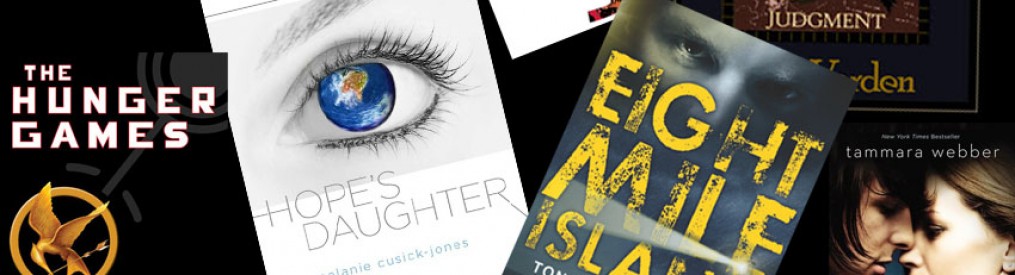
Tony’s Thinking: Finding an Old Friend


A few years ago, I was wandering through the library at the school where I work, and there was a book seller vending his wares. Just on the spur of the moment, I asked him if he had Bedknob and Broomstick by Mary Norton.

And he did. Wow. Nostalgia trip! It was like finding an old childhood teddy bear in a forgotten cupboard.

You see, B&B was one of the first books I read independently when I was about six, and I devoured it. The plot was simple, the characters easy to grasp and I loved that book. I still love it, and sometimes still even quote it (“It’s cheaper to spit in a bus”, “Pale hands, my heart is singing…”). I read it over and over, and it soaked into me.

I was utterly transported by it, carried away for the first time I could remember. My love of books and writing is all down to this. Here is where it all started for me.

As a result, B&B is part of who I am today. It got me into reading, and there’s been nothing I’ve ever read since that has given me such simple pleasure. Flicking through it again years later, I was still captivated by it, like finding a childhood toy that can still transport your imagination to another world. It was like stepping back to being six years old again.

I was swept away by it when I reread it, and that’s something every book should do to you. Take you away from where you are and drop you somewhere else, whether it’s by magical bed like in B&B or Platform 9-3/4 of Harry Potter.

There’s an elemental power in the first book we remember reading, something that stops with us for the rest of our lives. One of the reasons I love reading – and one of the reasons I love writing – is to write something like this: Something that doesn’t leave you, but becomes part of who you are as you go through life.

I haven’t come close to writing anything as elegant as B&B yet, which is why I keep trying. I don’t think I’ll ever come close to anything like this wonderful and powerfully simple little story that captured my imagination and then set it free again.

Thank you Mary Norton. Thank you more than I could ever tell you.


Have a favourite childhood book? Leave your comment below.

Tony’s Thoughts: My writing playlist…and why

Playing music when I write doesn’t always work for me. My home and my “office” are pretty quiet most of the time, apart from – to quote Belinda Carlisle – the sound of kids on the street outside.

So when I listen to music when I write, it isn’t necessarily because it’s something I want to hear anywhere else. It’s more like it’s another barrier between me and the outside world, another way of getting through the hole in the page where I write without distraction. Earphones and an MP3 player are essential…I don’t want anything to distract me once I’m in there, don’t want to pop back out of the document I’m working on and fiddle with my computer’s media player.

In a way, I can listen to anything…because there comes a point when I’m listening to it and not consciously hearing it; tracks will zip by on my MP3 and I won’t even notice when one starts and one ends until the end of the playlist.

Having said that, if I stick on Beethoven’s Ninth symphony and I’m still writing at the end of it, that’s a solid piece of work; that sucker’s 78 minutes long. I sometimes air compose towards the end, something I always do when I come across The William Tell Overture. It’s too catchy not to. (Trivia of the day: A recording of Beethoven’s Ninth was chosen as the run length of a CD).

Anyway, I have things on my MP3 I never listen to other than when I’m writing. Ten symphonies by Joseph Haydn, and one by his son Michael. Four Beethoven symphonies and 1st and 2nd piano concertos, tons of Mozart. I’ve been getting into some Salieri as well.

I tend to prefer longer pieces of classical when I’m writing, but I have some soft rock on there as well – some Belinda Carlisle (My wife pointed me towards The Go-Gos, and I’ve been having a blast with them), some Bryan Adams. A whole playlist of “Late 20th Century”, 80s and 90s stuff. A long list of 50s and 60s, and The Beatles.

I think the thing for my MP3 is familiarity. I’m listening while I write because the music is familiar to me and I don’t have to focus on it. I’ve heard it a thousand times before, so it doesn’t have any surprises. There’s stuff on there I listen to when I’m not writing, but most of it…most of it is the equivalent of white noise.

And sometimes I even have to turn that off because it’s simply too distracting, and sometimes it’s too easy to get distracted rather than writing – I spent a good few hours on Saturday playing with my playlists rather than writing, for instance. I wrote my last three books without a soundtrack, but I did stick it on when I went back to editing. Book Five feels like a soundtrack novel, and so far it is. It’s early days yet.

I know some people do it for the rhythms, assigning a piece of music to each character, and that sounds like fun and something I wish I could do. You’re a better multitasker than I am if you can focus that well. For me, it’s another wall between the world and the page, and sometimes you need all the walls between you and the world outside, so you can get into the rabbit hole and fall forever.

Just Finished…The Moon Dwellers, David Estes (Spoilers)

3/5

At some point in the future, humanity is wiped out from the surface of the globe and forced underground. Society splits into three factions, the elite Sun realm, the working drones of the Moon Dwellers and the underclass of the Star realm.

Adele Rose is in prison for no reason other than her parents were branded as ‘traitors to society’. Her family torn away from her, she waits to rot in prison. Tristan Nailin, son of the Sun Realm president, is a prisoner too…a prisoner of his fathers empire and expectations.

When he drives by the prison where Adele is a ‘guest’, they find themselves powerfully physically and psychically affected by their encounter, even though they don’t meet.

That night, both Adele and Tristan break out of their lives and go on the run. Adele to find her sister and parents, and Tristan to find what spell Adele has cast over him.

David Estes has written a technically flawless book. The characters are all fleshed out, the dialogue sharp and witty, the chapters all end on cliffhangers that keep you glued to the page. The plot bounces along and doesn’t lag. The world he creates is consistent and logical. I did spot a few errors with a few things…being electrocuted on barbed wire fence would make you clutch it tighter, not throw you off, and would humanity a thousand years underground know what cardboard was? But those are minor points.

So why don’t I want to give it five stars?

For me, the characters didn’t gel. I never connected with them in any meaningful way until close to the end. I had a feeling that I’d seen them all before a dozen times: Feisty yet vulnerable female heroine. Handsome yet insecure male hero. Minor characters for some comic relief and tension, one of who dies.

When Cole is killed near the end of the story, I should have been moved. I should have felt chills when soldiers footsteps echo from the next stone corridor. I think what was missing for me was atmosphere. I should have smelt the damp air of the caves and the chill breeze as it moved around me. I didn’t get a feeling past a physical description of how different the sun realm was from the moon dwellers, for instance. It took me twenty or thirty percent of the book to realise the light was lower in the moon caves.

I also felt that towards the middle of the book, Estes suddenly realises he has a sequel in mind. Thus, characters suddenly start talking about ‘The Secret’, and there is no explanation for Adele and Tristan’s odd psychic bond.

Adele’s father talks only in elliptical sentences for the few pages he’s in the book, then is quickly pushed out again, taking Adele’s sister with him. Two plot points tied up in one swoop. The same with the super killer Rivet, who is quickly dispatched…so much for being a super killer.

Ultimately though, despite the excellent writing, pacing and characters, everything about the book felt like I had seen it before, and towards the end it started to feel like a setup for the sequel.

Tony’s Thinking…Might as well face it, you’re addicted to writing

Today I was waiting for a very slow (It was still going 8 hours after I started it…) progress bar to finish. I’m used to this; working in computers is often a slow and patient business, and luckily I’m a slow and patient guy, or I wouldn’t be in the job I’m in.

Anyway, while I waited, I thought I’d write something off the top of my head, just to pass the time. Came out with a pretty good 1100 word story which I might publish somewhere.

The subject of the story is a bored housewife who takes up writing to pass the time, and on a whim sends her novel away to an agent. I won’t tell you the ending, but it got me thinking:

Is writing addictive? Is there a compulsion to write? I was twiddling my thumbs, and the first thing I thought of was: I’ll write something.

I’d just finished a seven month project to write a 35k novel (Update: That turned into Eight Mile Island), and here I was again: writing.

Here am I writing about writing, for heavens sake.

At least if I’m addicted – or obsessed – it’s quite a benign addiction; can’t see myself knocking over a fast food restaurant so I can find the money for more pens, for instance. But I would like to have some sort of life apart from hitting keys all day!

It’s fun ‘teaching’ it to people, and seeing their work and sharing it, but isn’t that just feeding my addiction?

I know I should be out there doing other things. I think there’s something called…ummm…’Fresh Air’, is it? I’d like to try that one day, just to see what it’s like. I think it comes with a side dish of ‘Exercise’, which sounds awfully strenous.

There are benefits to this addiction as well, I know. There aren’t many addictions where you earn money rather than spend it, and the more time you spend on your addiction, the more it earns you.

I’d love to earn enough to pay my mortgage, even if that wasn’t enough to take up writing full time (At the minute, I’m working on buying a new fridge!), but I can’t really imagine myself writing full time…what would that be like? How strict would you have to be with yourself to think of what you do as ‘your job: writer’, and not goof around on the internet all day. (Speaking of which, how are my sales doing on Amazon…).

So, in conclusion: Am I addicted to writing? Is there a cure? Would I want to take it if there was?

Now I have another story idea…an injection that stops creativity…

See what I mean?

Just finished…Hope’s Daughter (Melanie Cusick-Jones) *Spoilers*

Cassie and the remains of humanity live on an immense space station, taken from earth when environmental disaster wipes out the population.

At least that what she’s always been told…with the help of her friend (and then boyfriend) Balik, Cassie explores the dark secret behind Space Station Hope, a revelation that eventually leads to her fleeing for her life.

Although the book was a little slow to get started, I didn’t feel like I wanted to put it down at any point. Mel C-J created a believable world, and a mystery which kept me guessing right up to the last chapters.

Some theories I was flicking through as I was reading included Nineteen-Eighty-Four, Logan’s Run, Soylent Green…Was it even a space station, I wondered?
All of these theories were way off the mark, and close to the end, I wondered if Cassie’s parents were androids, and all of what was happening was benign. Wrong again!

The idea of a space station run by aliens so they can harvest human DNA was done with subtle hints and misdirection. At no point did I guess that was what was happening on the station.

In some places, the editing was a little rushed, and because of that, some of the nice ideas in the book slipped past me. I was too busy trying to figure out the sentence to concentrate on the story. Mel C-J did seem to need more commas so I could get a sense of what’s going on.

That was particularly bad near the end of the book, when Cassie’s father showed up. I think the scenes with him could have been cleaned up quite a bit, and the pacing slowed a little so I could absorb what was going on. I also think a bit more world building to establish the scale of the space station would have helped, and I would have liked to have seen more of the guts of the place, as it were.

I liked all the characters in the book, even breathless Ami and Olivia, who shows her humanity later in the book despite her superficial appearance and personality. Everyone was well rounded and nicely developed. I even felt empathy for the aliens, forced to harvest humans to survive.

In the end, I’d give it 4/5, mainly dropping the star for the grammar errors that needed fixing. But I’m hooked enough to start looking for the sequel!

Tony’s Rambles: The Curious Curse of the Cellular Phone

Sherlock Holmes lit his foul briar pipe and settled back into his chair, staring moodily out at the London fog.

“It has made your life much harder, Watson.”

Watson, startled out of examining his latest ApplePlum phone, looked up. “Sorry, old boy?”

“Cellular phones, Watson, cellular phones.”

“Not following old boy.”

Holmes leaned forward, his thin face harsh angles in the firelight. “No, of course not Watson, of course not. Now, observe and note.”

He leaned back again and ticked off points on his fingers.

“Firstly, description of character. I had to rely on hearsay and exaggeration. Now you bring that thing -,” (he waved towards Watson’s phone) ” – press a button, and bring me a precise image.”

“True, Holmes, true.”

“Secondly, and I use the vernacular, Watson, you understand, the vernacular. Backup.”

“Backup?”

“How can we be in any peril when you merely bring out your magic device and call for assistance?”

“Impeccably put, Holmes, but what’s your point?”

“As chronicler of my narratives, Watson, you must realise the problem?”

“No, afraid not, Holmes.”

“I will provide you examples then. Take the Hound of the Baskervilles. Someone snaps a photograph on that machine of yours, and the mystery is solved. A mysterious ghostly hound? No, obviously just a dog painted with phosphor. Add a Geotag, and tell us exactly where and when.”

“Ah, yes. That would spoil the mystery somewhat.”

“And are we in peril, Watson, when Lestrade and London’s finest can be called at any time?”

“By Lor Holmes! You’re right!” There was a pause while Watson considered. “What am I to do, Holmes? As a writer of fiction, my readers demand suspense. They demand drama.”

“There are few options, Watson. Break it. Let the potential energy run down, the battery as you would say. Leave it at home. Have it stolen.”

Watson spluttered. “What about my RSS? My Twitter updates?”

“Sorry, old friend. They have to be forfeited. You cannot write tension and drama into a story while that thing is in your pocket.”

Watson considered the slab of plastic and rare earth metals in his hand for a long moment, then placed it on the table beside him.

Holmes slapped his thighs and cocked his head to one side. “Excellent, Watson, excellent! Now if I’m not mistaken, that’s Mrs Hudson on the stairs and a woman with size four feet following. Your tension and drama are restored, and  the game is afoot, my friend…”

Tony’s Thoughts: Do I need a webpage?

This is a little involved, but bear with me for a moment while I tell you a story. I’m good at that, so my reviewers say. 😉

I’ve been playing with the settings on my webpage recently, trying to iron out some random noisy statistics.

For those who don’t know, there are automated ‘spiders’ and ‘bots’ that index webpages for search engines. They crawl through the entire site, picking out keywords and then report back to their makers. Or something like that.

Anyway, I’ve been getting a lot of traffic from random places like China and South America, and as much as it inflates my ego to think that my fame spreads across the globe, looking closer tells me another story. There are bots and spiders out there that steal images and content from your site and eat up your bandwidth. In webpage terms, more bandwidth = more cost, and these bots can get bad enough to eat it all if you don’t stop them, with the result that the people hosting my webpage will turn it off.

I think the steps I’m taking to combat these bots are working, and when I look at my statistics for my webpage, I know by the traffic drop-off that they seemed to have stopped. And so does everyone else, for that matter: zero visitors yesterday. Compared to Facebook, which had thirty or so visits.

Another thing on my mind is that my webpage is ‘rented’ by me from a hosting company, and the renewal is up in December. It’s quite cheap, but money is money at the end of the day.

So here’s the thing: The sudden drop in statistics, the renewal thing have all got me thinking:

Do I need a webpage at all?

It’s in all the how-to-become-an-internet-successful-author books, right there at the top: Get a webpage, get on Facebook, get on Twitter, get yourself virtually out there and networking.

And the webpage is the least successful of all of those. My webpage sits there, passively, in a kind of Zen state. Nothing changes, except when I write another book (and I am!).

I could tweak it and put in a blog, download some applications to do that. But why? That’s what WordPress is for. I drop in links to where my books are sold…again, WordPress.

I could tweak it and put in a forum, do some social networking. But why? That’s what Facebook and Twitter are for.

I could drop in a secure store, but I’m happy to link back to my booksellers on Amazon and Smashwords.

So my point is that everything on my webpage I could spend weeks doing myself (or a small fortune paying someone else), I can do somewhere else. Simpler, faster, cheaper, more interactive. So why do I have a webpage? For instance, I’m posting this on two blogs – not my webpage.

Almost, the personal webpage is becoming redundant. The links on it point to other pages where people can at least interact with me – I’m having a fun debate on Facebook on making up some futuristic profanity for my work-in-progress at the minute.

I’m not planning to dump it tomorrow – for one thing, I get free email hosting tony-talbot@tony-talbot.co.uk, which I like.

I’ll keep you updated when the site comes up for renewal in December 2013. And where will that update be?

Not on my webpage, that’s for sure.

Are personal webpages irrelevant? What do you think?

Tony’s Thinking…Making a World from Scratch

Whenever I write a story – any story, short or otherwise – the first thing I have to do is make a world for the characters to live in. It’s perhaps the easiest part of the process, but still one which needs some thinking over before you put pen to paper (or fingers to keyboard).

For a start, it’s important to think logically and sensibly about the world your character is going to find themselves in, and to adapt either your characters or your world to suit your story. If your character is in a wheelchair for example, you’re going to need some way of getting them upstairs without breaking up the story, or else confine them to one floor.

Let’s take a solid example: The haunted house. And by that, I also mean the haunted town (See Stephen King’s IT for example) or even the haunted spaceship (which is essentially the plot of Alien).

Let’s walk through those examples and see what we can do with the worlds they need.

So your character – let’s call him Joe – has found themselves in your haunted house. You want Joe to stay there, at least until the story is finished…or until Joe is…

First question about this world: Why doesn’t Joe simply leave?

I know if I was in a haunted house, logically, sensibly, I’d head for a door. But I need some walls for the story…can’t have Joe wandering off without finishing what I’ve got him here for!

The door is locked? Fine. What about a window? Bars across them?

Hmm…okay. Now I’ve got Joe looking round the little haunted house I’ve just made and interacting with it.

Can he smash the glass and shout through the window for help? No, the house is on an island. Now I’m expanding the house to the local area around it.

Can he use his cell phone to call for help? Flat battery. No signal.

The point is, whatever Joe chooses to do at this point, the little world I’ve made won’t let him until he finishes the story. Joe is going to get increasingly desperate to get out, and at some point in his wandering through the haunted house, he’s going to meet the bogeyman and one of them won’t make it out alive.

In Stephen King’s IT, he has the main characters trapped by the fact that they’re children, and only children can see the Big Bad. Where else could they go? They can’t leave exactly leave town at the age of twelve. In Alien, the crew of the spaceship are trapped inside a literal vacuum of space while the monster stalks them.

And walls don’t always have to be physical. Joe could hear his little sister screaming upstairs, and there’s no way he’s going to walk away from that. Even if he gets out of the house, he’s going to go right back in there and rescue her like a good brother.

This is a simple example, but you can hopefully see how the world has adapted as I’ve needed it to. A character who can easily walk out of a story isn’t going to make an interesting read.

So when you create a story, think about how the world you create will shape that story, and think – logically and sensibly, no matter what the genre – how you can keep your characters there until the end. Keep bouncing them against the walls you’ve made for them until they break through.

Just finished…If I Stay (Spoilers)

(by Gayle Forman)

Review by Tony Talbot

Mia is a seventeen year old girl caught in limbo when the car carrying her and her family is involved in a fatal crash. Stuck between dead and alive, she discovers she can observe her gathering relatives, and learns that all the other members of her family have died except her.

Accepting she has a choice – live or die – Mia hesitates between the two, wondering what she has to live for now her family is dead. If she dies, she won’t have the pain of losing her family for real when she wakes.

Except…she realises her family is more than the people she lives with. Her family is also anyone who cares for her, her boyfriend, her mother’s best friends, grandparents.

But it’s her boyfriend Mia feels most torn over. If she dies, she won’t have to deal with losing him to rock stardom while she moves to New York to perform at an elite music school.

Grief over losing someone is like that…making choices as to whether you want to feel again after someone close dies. Making a choice to love someone again one day, risking yourself losing them again. It’s part of defining who you are as a person: loss and coming to terms with that loss.

I liked Mia’s family and Mia. I liked the way they weren’t dysfunctional, but they weren’t perfect either; the way they argued and bickered, and still loved each other at the end of the day. I liked the tension between Mia and her boyfriend, Adam, the knowledge that love wasn’t all roses and sunshine, and it wasn’t going to be a happy ending either (though not in the sense of Mia dying). It made them all the more human to see their frailties and their flaws.

But I never got the impression that Mia was going to die voluntarily, which robbed the book of it’s most fundamental question. She seemed far too much of a fighter to give in so easily.

And for me, the book ended when Mia’s story was just starting. When she wakes and has to deal with the overwhelming grief and the reality of never having these people in your life again. The knowledge that she has to go back into her home one day and walk through the now empty rooms, empty of the people she loved, but still full of the smell and feel of them.

I don’t envy her that walk (like most people, I’ve done it more than once) but I never got to see it through her eyes and her strength. Which is a shame for such a nicely written book on such a powerful subject.

3/5

Tony’s Thinking…Why Stephen King Missed His Calling

I’ve read quite a few Stephen King books. Not all of them by any means – I believe the list is now up to sixty two, – but I’ve read enough of them to know his writing pretty well.

We all know the genre: Joe Average (who has a habit of being a writer) finds himself in a supernatural situation, gets himself out of it – though doesn’t always survive mentally.

And fair enough, some of them are gruesome to the max – I believe all aspiring writers should read Misery, just as an object lesson to run from anyone who tells you, ‘I’m your Number One Fan’, and as a delve into the writing process.

But I digress, and back to my point.

I put it to the world: He missed his calling. The man was born to write YA.

I came across the review Em posted on here for The Long Walk, and flicking through my shelves of King today, it occurred to me that the works I think are his best are all, at heart YAs: IT. The Long Walk. The Body (Stand by Me, for those who only know the film). The Talisman. Christine. Carrie.

But what about the horror? What about the profanity? Some might ask. I’d ask if they’d read any YA recently. I’d pick up a Bali Rai and point out the profanity in there. I’d pick up a Darren Shan and show you the gore inside. He’s not written anything in the books I’ve mentioned above that couldn’t be handled by a teenager.

The simple fact is Stephen King works best when he’s writing about teenagers and children.

He knows on a fundamental level how they tick, the elemental fears that move and shake them. He knows how a dark cellar scares the lunch out of them, how sunlight gleaming from the ankle bracelet of the first girl you ever love melts your heart.

And he knows the value of childhood friendships (The Body: I never had any friends later on like I had when I was twelve. Jesus, did anyone?), the easy pain cruel parents inflict on their children – and not always physically.

That’s why his horror works so well…he knows the fears of childhood and knows we’ve all been there. Who’s never been frightened by a clown like Pennywise in IT? Personally, I don’t remember a time I didn’t find clowns scary.

Even Christine, which is perhaps a borderline case for YA, is all about the losers in high school, full of teenage angst and anger. Breaking the rules for the first time to get what you want, breaking away from your parents.

Stephen King missed his calling. He’s wasted on all those adults! YA’s should take him as one of their own!

So I put it to the world: Start a campaign. Stephen King should write YA!