Tony’s Review: The Knife of Never Letting Go

File:Knife of Never letting Go cover.jpg

4/5 – Spoilers throughout

Todd Hewitt lives in a strange village on a distant colony world…a village where there are no women, and all the men (and all the animals) can hear thoughts…that is, every thought. This Noise – as Todd calls it – is constant, a mash of every waking and sleeping thought; enough to drive men away from each other into isolation or lose their sanity. It’s covered in the book with changes in font and size, a really nice idea – (if you look at the first example, you can see Aaron thinking Todd Hewitt? by the way)

Todd has been told that the village where he lives is the only one left on the planet; and since there are no women, one day that will die out as well…

When Todd stumbles across something in the local swamp – a silence, a hole in the noise of the world, he has to investigate. And everything he’s been told is a lie…

It took me three or four chapters to settle into this, but once I did, it rocketed away and I couldn’t finish it fast enough. Other reviewers have complained about the constant danger-escape-danger-escape format, and the bad language, but I didn’t notice any of it. I was swept into Todd’s world, his stream-of-consciousness narrative, and I was eager to finish it.

As for the bad language, did they read the same book? Todd uses ‘effing’ – and then says, ‘…except I didn’t say effing.’ His language is never worse than that. Puzzled over that.

Todd has a great narrative voice, a real treat. He uses words like direcshuns and creechers, and when Viola shows him his crashed spaceship, it takes him a minute to work it out. I like that; no telling here, just all show.

There were plot twists I saw coming thirty pages back from where they appeared – Todd is told there are no women on the planet, so it was inevitable that the silence, when he finds it, is going to be a girl; he’s told that the village where he lives is the only one left on the planet – so it’s inevitable that the rest of the world exists and is populated. I also worked out about half-way through that Prentisstown was a ‘penal colony’ (I didn’t know why though, that was a startle.)

The world Todd travels through is rich and verdant, vividly described and created. When Todd comes across creatures he doesn’t know the names of, all he can do is marvel at them; he has no names for them, so neither do we. The people he meets all have different viewpoints on life – and different accents. I read the dialogue of the first people he meets in a Scottish accent; it was simply how they sounded to me, along with another family that sounded Dutch. This is a world full of everyone, not just a homogenised colony.

Also refreshing is his attitude to Viola. He’s never seen a girl before, so he doesn’t act any differently around her, or think she’s incapable of action because of her gender; nor does he fall instantly in love, or even romantically attached to her – she’s a friend like any other to him. There’s a wonderful moment towards the end where he realises he can use Viola’s body language to tell her moods. It’s a real insight for him, and a wonderful piece of writing.

The book is rich in symbolism. Todd and Viola travel through an unspoilt world to Haven – only a letter short of heaven – always being told that hope is lying there…salvation awaits them if they can only make it.

The knife Todd is given takes on a character of its own as well. He’s given the choice again and again to kill, and he can feel the power of life or death this inanimate object gives him. How he uses it shapes and defines Todd, and he begins to realise a man who kills isn’t who he wants to be. He will not kill, even in self-defence, even under extreme provocation.

Except that’s where part of the story breaks. Todd kills a local intelligent alien – a Spackle – attacking him viciously without provocation; two pages later, the incident is all but forgotten. Yet he refuses to kill Aaron (who is virtually a Terminator – that boy does not stay down!) and the price he pays for letting Mr Prentiss Jr live is high.

Frontier life is brutal, and the violence in the book is brutal as well, not shying away from describing gory details, especially in Todd’s battles with Aaron near the climax.

Some of Todd and Viola’s actions aren’t logical – why are they walking? Why don’t they steal a horse? They could travel most of the way by boat, for instance, and it never occurs to them.

The most wonderful part of the book is one quite a few people seemed to have picked up on – Manchee the dog. Originally, it seems, he’s just there for comic relief, but he turns on the dog loyalty as the story develops, a shining example of dog-dom, unswerving in his devotion to Todd and Viola. No Disney animal here though – his life is poo and squirrels. He’s the star of the show, without doubt.

And it was inevitable that he would die. Unnecessary, but inevitable. Heart-breaking as well, but I saw it coming ten pages before it happened.

There are parts of the book that didn’t work for me. The climax is a cliff-hanger, and I should have felt manipulated by it, but I don’t (Then again, I don’t have to wait for the sequel!). Todd is told things and doesn’t relate them to the reader until a hundred pages further on, a bit of a cheat there, especially for a first-person present tense.

Worst of all is exposition that’s about to begin when –
Oh sorry, I got called away there.

Annoying isn’t it? Imagine a conversation being interrupted by a random horse-rider and then the characters moving on, even though they could have continued their conversation as before.

Luckily, I spotted when it was and wasn’t going to happen, and it produced more of a rueful smile than annoyance. But it was starting to get old.

In some ways, this book is manipulative. It knows what buttons to push, when to hold a finger over those buttons and not push them. Sometimes it holds the finger over those buttons for two hundred pages before pressing them. Todd and Viola are constantly in danger and escaping it, but it doesn’t feel repetitive.

But I didn’t feel manipulated. Like good magic tricks, no one cares if the tricks are good and the reveals are worth it. And they are worth it.

The best trick in the book loops right back to the start of the journey – Todd wonders which fork in the path to take, and when the Mayor arrives at Haven before him, we find out what would have happened if he’d taken the other one. Nice touch. Very nice touch.

I already have the library looking for the sequel. Count me in.

(Review of the sequel “The Ask and The Answer” next month)
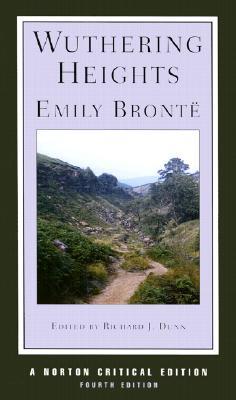
Tony’s Review: Wuthering Heights

Wuthering Heights


3/5 – Spoilers

There are a few books, which – though I’ve never read – I have an idea of what they are about. Wuthering Heights was one of those.

I thought, from what I’d picked up through cultural osmosis, that it was a love story between moody Heathcliff and wild Cathy, set on an English moor. I thought there would be windswept vistas and empty moors, lovers kept apart by fate or society.

But no…no…that’s pretty much not what happens.

For a start, Cathy dies halfway through and the story only touches on her violent relationship with Heathcliff…and she ends up marrying another man. So much for loving him then.

Their relationship can by no means be called “love” and is more like passive-aggressive hostility. It doesn’t seem as much as though they care for each other as drive each other to insane anger.

Heathcliff is less moody and more downright psychotic; he’s mean, spiteful and bitter, perhaps for the sake of it. But he justifies this by saying he ‘loved’ Cathy and resents anyone else taking her. Stalker, anyone?

So the story is less about Heathcliff and Cathy, and more about Heathcliff’s desire for revenge and retribution. He treats everyone around him as a kicking stool, and doesn’t hold back from assaulting them whenever the mood takes him. He abuses his nephew, he abuses Cathy’s daughter (also confusingly called Cathy – she marries Linton, which is the last name the other main family in this story. I had to keep a family tree to keep them straight for a while). The man is an absolute raving lunatic, and he should have been locked up.

The fact no one seems to have the nerve to stand up to him is startling. Not one member of his family reported him for cruelty or malice – perhaps it was a sign of the times that families kept themselves to themselves, but most of the characters seem almost as unbalanced. At one point, someone threatens to cut out someone’s tongue; they bite down on the knife and dare them to.

This isn’t a love story. Heathcliff isn’t a man you’d want marrying your daughter, any more than Cathy is a woman you’d want marrying your son.

The setting of the book was a surprise as well. I was, as I said, expecting windswept moors, but most of the action takes place indoors. In places this made it seem like a play, with simple, interchangeable sets as backdrops.

The structure of the story is interesting as well. Mostly, a servant relates the tale through her third-person lens, recalled from twenty years before (with perfect recall, apparently).
Another reviewer said the third-person narrative hadn’t been developed when this was written, and sometimes the servant’s story is further filtered through a conversation she had with someone else; there are hints that she might be an unreliable narrator, in her descriptions of the two Cathy’s.

The hardest part of the book to read was Joseph – wow, his accent is thick. I asked a friend from Yorkshire (where the book is set) to read a bit of his dialogue out, and he couldn’t figure it out either. There were a few plot holes – at the end, a shepherd boy says he’s seen the ghost of Heathcliff and Cathy (One) on the moor. At that point, Cathy One has been dead twenty years; but that’s a minor point.

Did I enjoy this book, even though it wasn’t what I expected? I did, although the main characters weren’t nice people and nobody I would want to spend any time with again.

IAM Review…Medusa by Tony Talbot

Guest Feature

To finish our Indie Author Month for 2014, I thought I would surprise my fellow author/blogger Tony with my review of his latest book Medusa. I hope you’ve enjoyed the event this year, it’s been a little quieter on features, due to my technical problems, however, I hope you’ve liked the features from the authors you’ve met and perhaps found a new writer to try…

Mel x

Medusa-ResizeMy Review

Well, I finally got the time to knuckle down to some reading for fun last week and it has started really well: I just finished Tony Talbot’s great new book Medusa. This is the second book of Tony’s I’ve read and I was not disappointed.

We meet Lissa Two – captain of a strange ship with some interesting technical skills – in an apparently post-apocalyptic world of water. Giant ‘seasteads’ form the main areas of civilisation and Lissa uses her ship – Connie – and the particular powers she has, to salvage items for sale in the underground souks in her own seastead home. A random meeting with a man thrown from a strange flying machine; the mysterious disappearance of an apparently strong seastead and Lissa’s own questions about Connie provide the ingredients for a fast-paced, cocktail of adventure.

I really like Tony’s writing style, he has a real way with words (helpful if you’re a writer, I know!) But what I mean, what really stands out in this book for me, was his ability to create a world you felt completely transported to: there is beautiful description throughout the book, whilst he walks his characters through the fast-paced plot, leaving you the feeling that you could reach out and touch the world Lissa inhabits. Now and again, I would find myself noticing something, not because it jarred, but because it just flowed so naturally. Unfortunately, some of the best examples I highlighted would need spoilers to explain – so I’d say you have to check it out to know what I mean.

Medusa is one of those books you get sucked into quickly and struggle to find a place to pause, when reading – you just want to know ‘what next’ the whole time. Especially once Lissa’s questions start taking her down interesting paths, it gets even harder to stop: I read the second half of the book in one day. And it was worth it! 🙂

Overall, I’m going 4.5* for Medusa, I thought the characters, pace and writing in the book was even better than Eight Mile Island, the main reason it gets the same rating is because I loved the way EMI sucker punched me in it’s concluding chapters. I didn’t get quite the same left-field shock as I did with that one, but overall, I would say I enjoyed Medusa more and if you’re thinking of trying one of Tony’s books, this is the one I’d recommend.

Recommended for: fans of dystopian YA / post-apocalyptic world settings; I think people who liked the relationships in Angelfall would enjoy this, as well as Hunger Games / Blood Red Road fans looking for something with a feisty female protagonist in an unusual setting.


Tony’s review: The 5th Wave, Rick Yancey

 1

3/5

Cassie Sullivan may be one of the last humans left. The alien attack has wiped out most of humanity in four waves of increasing destruction.

It took me just over four days to read this. I started on Thursday night, and would have gone straight through the night if I didn’t have to get up the next morning. By the time I’d put it down, I was 20% of the way through, thoroughly hooked, and I finished it over the weekend.

It didn’t matter that the first part of the book was all back-story. What grabbed me was how compelling and plausible that back-story was. The aliens weren’t dumb enough to land and start with death-rays and city busters; instead taking out humanity in four swipes from orbit. Score: seven billion to zero.

The book split into two converging stories about 25% way through, which led to some twists that I could see coming a mile away (Although for a page or two, I did wonder if I had one of them pinned down). The second story strand was the brutal boot-camp training of teenage (and younger) soldiers for the fight back against the aliens. Or are they aliens? Trust and the destruction of trust is one of the themes of the book, a call back to fifties sci-fi films where the aliens (ie communists) look just like us.

Short, snappy chapters, tumbling stream of consciousness sentences stripped to the bone – Yancey’s writing style is fantastic, tripping along, ripping away everything but the most essential details. I wish THE ROAD by Cormac McCarthy had been this good.

Where Yancey seems to struggle is with his social interactions. Conversations that don’t make much sense to the reader and some convoluted syntax didn’t give me much insight into their relationships. Cassie immediately falls for the first handsome boy she comes across, despite her mistrust of him and his motives, and despite warning herself not too. Although for a pleasant change, there isn’t a love triangle going on between Cassie and the two main male characters in the story.

An excellent book where it comes to action and the end of the world, but it falls off when the characters have to talk to each other.

Tony’s Review: Clockwork Angel by Cassandra Clare

https://i0.wp.com/upload.wikimedia.org/wikipedia/en/thumb/4/43/Clockwork_Angel_1.jpg/220px-Clockwork_Angel_1.jpg

3/5

Tessa Gray descends from a boat from New York to Victorian England, expecting to meet her brother, but a very strange and sinister pair of sisters kidnap her instead. Tessa finds herself pulled into a “Downworld” of magic, spells, vampires and demons, as she searches for her brother. Rescued by an organisation calling itself The Enclave, Tessa discovers she’s the focus of some very unwelcome attention, beings that will stop at nothing to possess power she didn’t know she had.

I’ve never read any Cassandra Clare before, and the book starts off really strongly. I can see why people like her writing. I felt immersed in Victorian London, smelling it and tasting it along with Tessa. For the first few chapters, the book rattled along.

Then it all fell apart for a while. There must be close to a hundred pages of exposition after Tessa is rescued by The Enclave. She sits and wanders around The Institute, while everyone tells her what sort of world she’s fallen into.

And there’s a chapter which really bugged me: Two of the main characters interview a businessman to see if they know anything about Tessa’s brother, and other matters. It could have been covered with a reported speech conversation about as short as this: “We went to see Mortmain. He doesn’t know where your brother is, but he seems to know more than he should about Downworld.”

It didn’t need a chapter. It didn’t need a chapter that head-hops out of Tessa and into two other characters. Nowhere else in the book does it do that. It was about this point that I realised I was reading exposition and nothing much else was going on apart from Tessa falling in love with the (obligatory) two boys at the same time.

Hmmm, love triangle with supernatural creatures, where have I seen that one before? At least these two are the best of friends and don’t let Tessa come between them.

However, the pages of exposition were quite subtly done – It did take me seventy pages to realise there wasn’t much else going on – and by then the pace was picking up again, enough to keep me reading until the end of the book. There was a neat twist close to the climax that reverberated right back to the start of the book that kept things interesting.

One of the joys of the book is its strong sense of location and atmosphere. Clare writes wonderful little details – moonlight streaming through a window, the stench of The Thames, long shadows and dark corners – to wrap you up in the world. Although she does need to know that in England in summertime, twilight goes on for hours. She has Tessa looking out of a window at sunset and a page of dialogue later it’s dark. At least, I hope Clare thinks it’s summertime – we don’t get much daylight at eight pm in winter.

The characters are another of the strengths of the book. Will and Jem flash witticisms off each other like a comedy duo, lightening the mood with comic relief; Tessa gives as good as she gets back at them, refusing to back down when faced with the moody Will.

Will…he’s an interesting character, a brooding Heathcliff and a Byronic hero, a wastrel like Sidney Carton in A Tale of Two Cities. Yet, like Sydney, you know his heart beats with passion and fire. I kept seeing Sydney Carton in every description of him – he does lean against things a lot, and has the same subtext of vulnerabilities, you sense. A 19th century Han Solo, waiting for his princess.

Jem was the yang to Will’s ying – sensitive, caring, passionate. Fragile to Will’s indestructible.

I never got the impression there was any contest between which of them Tessa would choose, so I couldn’t call the relationship they had a love triangle. Maybe a right angle one if it was; Tessa was always going to choose…ahh, but that would be a spoiler.

I knew going in that this was book one (Thanks for telling me on the cover – I hate books without a resolution that turn out to be trilogies), so not all of the questions were answered, not all of the villains dispatched or the threads wrapped up.

All in all, a skilful tale, filled with a great sense of place and atmosphere and witty dialogue. The exposition let the book down for me…it could have been fifty pages shorter.

I believe I read this is a prequel to The Mortal Instruments series, but I haven’t read them and didn’t need to to enjoy this one.

I’m in no rush to read Book Two or Three  (Why does everything need three books these days anyway?), but if I stumble across them one book-bereft day, I’ll probably pick them up.

Tony’s Review: The Rainbow Maker’s Tale, Melanie Cusick-Jones

13448440

3/5

The sequel to Hope’s Daughter follows Balik’s storyline through the same events of the first book, told from his POV.

It’s an interesting choice for a sequel, and it fills in a lot of the blanks from the first book. I really liked Balik’s logical self-sufficient approach to life, and his approach to solving problems. He learns that trusting someone isn’t a weakness, but a strength – indeed, towards the end of the book, Cassie has to save him.

The world building was as strong as Hope’s Daughter, and this time we got to see more of the way the station worked. At the climax of the book, there’s a brutal torture sequence that makes me glad I’ve never upset the author enough to be interrogated by her!

It’s obvious Cusick-Jones has done her homework on medical and technological procedures – all the technology and biological information seem logical and consistent with what’s going on.

The pacing was good as well, the characters always on the move and the chapters never lingering too long.

It did suffer a little though, from knowing what was going on in Hope’s Daughter, and knowing how it played out. Although the books can be read in any order, you really need to read Hope’s Daughter first. For instance, the characters mention The Collective, which won’t mean anything if you hadn’t read HD.

There were a few typos that caught my eye as well – the most jarring was when Cassie says her friends have gone to the retirement quarter, not the marriage quarter, and there were a few run-on sentences that needed full stops and not commas – but nothing too major.

Looking forward to seeing where Cusick-Jones goes with the next book in the series!

Tony’s Review: Ender’s Game, Orson Scott Card

4/5

In fighting monsters, do we become monsters?

It’s the theme of this gripping book from Card. The writing is fluid and the characters dynamic and evolving.

Taken from his home at the age of six, Ender Wiggins is trained to be a killer against an alien race, a killer without remorse or pity. Terrified of turning into the bullying brother he hates, Ender is able to turn his anger to fighting mock battles in battle school, where a generation of children and teenagers are being trained to fight for the survival of humanity. At any cost to themselves, psychologically and physically.

The battles are fake and no one gets hurt, but that doesn’t stop Ender from being bullied and suffering psychologically – his brilliance is the target of envy, an envy fostered by his teachers. He responds brutally, without mercy…only feeling remorse when he’s finished.

In some ways, Ender reminded me of the literary James Bond. Bond would kill quickly and efficently; not enjoy doing it, but doing it because he had to in order to survive, and doing it to the best of his ability. Only Ender is a child, and the stress nearly pulls him apart.

One of the problems of the book is that Ender never sounds like a child. We’re told he’s a super genius, but I don’t think any super genius would be that mature. There’s a political subplot dragged in involving Enders sister and brother, but mostly it seems to be there for padding. What’s interesting about it is the way they go about it – they go online (The book was written in 1985) and set up sock-puppet accounts, each holding different opinions and written in a different style.

The biggest problems with the book start when Ender graduates to proper military training. I won’t give away the spoiler ending, but it seems rushed.

Also, 95% of the way through the book, a super weapon is mentioned in passing that has never been talked about before. It’s dropped so casually in the conversation, I thought I’d skipped a page. Half a page later, it happens again. “It will go straight through the Ecstatic Shield.” Oh, that’s all right then. So what is an Ecstactic Shield, since no one has ever talked about one before?

The epilogue seemed a little strained and too long as well. If the book had ended a chapter after the climax, it would have worked better. Instead Card seems to struggle to shoehorn extra plots in to work up to a sequel, and the book drags its feet to the last page.

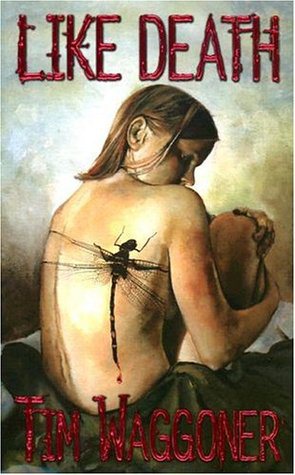
Horrorfest Review…Like Death by Tim Waggoner

likedeath

This book needs a bit of an intro before you read my review… it was truly strange.

Synopsis

Scott Raymond is a man haunted by his past and terrorized in the present. As a young boy, he witnessed the brutal murder of his family, but there is so much of the gruesome tragedy that he simply cannot remember — including the identity of the killer or why Scott alone was spared. The memories won’t come, but the trauma won’t go away.

Scott is an adult now, still emotionally scarred but learning to deal with it. He has come to Ash Creek to write about a different mystery, a six-year-old girl named Miranda who has disappeared in broad daylight one year ago. Here, Scott meets another girl named Miranda, who bears an uncanny resemblance to the one who’s missing — but this one’s a teenager. She will draw Scott into the bizarre hidden world known as Shadow. A world where nightmares are very real . . . and very deadly.

What the synopsis doesn’t tell you

Anything, even things just barely on your level of perception will be thrust into this world of crazy! If you’ve ever dreamt strange things that kinda freaked you out when you woke up, this will likely talk about and explore some of them! It wasn’t creepy (well not to me) but I wanted it to be. Perhaps I’ve just done a good job of creeping myself out of late. On another note, everything in this book has a latent sexuality to it. If not immediately, down the track some sort of sexual innuendo will be made about it.

Who I would recommend it to

Anyone interested in a complete mindscrew.

Having said that, it doesn’t ring true to horror, so some horror fans would be disappointed; it’s not even totally gore, though it is probably closer than horror. It’s not even in or outside of the science-fiction realm either. It contains some aspects of mystery and some crime-thriller themes. It seems to be a mash of a lot of genres, just a very gruesome one.

Review

Like Death: I’m not 100% certain as to why the book was called Like Death I think perhaps the PR guy thought ‘complete mindf*ck’ wasn’t appropriate. Even something relating to darkness or evil would have been a bit more appropriate in my opinion.

Don’t rush into this story if you can’t handle gore and horror. Don’t rush into it if you can’t stand constant WTF moments. Don’t rush into it if you don’t like talking/reading about killing, screwing, blood, guts, and all other manner of darkness.

This book was certainly all of those things; it was deep in the world of a sick mind (Scott Raymond’s, the main character). There was a lot of sexual innuendo mixed in with the horror and gore; everything seemed to be tinged in boobs, nipples, penises and sex. It did get a little, dare I say it, boring, tedious, same-same.

There were things I did enjoy. Some of the craziness was absolutely unexpected. I liked that feeling of being completely thrown off balance by a twist in the story. I also found the ending to be a bit odd, but I felt that it was a good ending to this truly strange book.

I didn’t feel creeped out by this book. I wanted to. Some of the scenes were heading down that path, but I didn’t feel the tension, I didn’t feel goosebumps on my skin or the hairs on the back of my neck standing up. This left me feeling a little disappointed.

 ———————————–

Hope you’ve enjoyed today’s Horrorfest review, here’s a little more about the author, Lynxie, who blogs at Coffee2words

Coffee2words is me at my most basic in terms of my writing. I drink copious amounts of the darkly, rich stuff and attempt to convert it into at least partially amusing or interesting written word. I am sure those of you who check back here from time to time will see various spatterings of my work adorn the pages of my blog.

In other aspects of life, I enjoy reading, reviewing the books I read and interacting with the over 10 Million members on goodreads. I have spent a great deal of my life with my nose shoved between the pages of a book, and more recently pressed against the screen of my kindle. On a good week, I read between 1-4 books and I endeavour to review each of them. Reviewing is still quite new to me, having only picked up my quill late in 2011, I am still finding my own style.

When I’m not writing, reading or stuffing my husband’s or my own face with food, you can find me out walking my beautiful Border Collie dog, Tammy, frequenting the gym or sewing up a storm in my sewing room.

Thanks for taking part in our Horrorfest Lynxie 🙂

Horrorfest Review…Live Undead by Steve Warren

LiveUndead

ReviewStars-4

Live Undead – a wicked ride slick with blood, guts and fangs

Synopsis: The first installment of the Undead Chronicles.

Live Undead tour the country, bringing their blood-slicked shock rock to out of the way dives and underground clubs. Their obsessed fans follow them from city to city, unaware of the band’s horrifying secret. The lacerated throats and acts of self-mutilation isn’t simply makeup and effects – it’s all real. The members of Live Undead are vampires. They prey on the black-clad, disaffected, and depressed teenagers who flock to their shows, while leaving a trail of dead bodies in their wake.

Depressed, sexually confused, and bullied at school, Nothing desperately longs for escape. He dreams of rock and roll stardom and thousands of adoring fans, but will settle with knowing what it’s like to be special. That’s the question he needs answered when he finally gets his chance to meet Live Undead.

Eric’s life has been in a downward spiral ever since his pregnant girlfriend went missing thirteen years ago after a concert. When Eric stumbles across Live Undead, he’s shocked by their uncanny resemblance to the band that had played the night his life changed forever.

Inspired by splatterpunk novels of the late 1980s and early 1990s, LIVE UNDEAD contains depictions of explicit sex, gruesome horror and graphic violence. Reader discretion is advised.

Thoughts: 133 pages. While not for everyone, this book was fairly easy to digest in terms of writing style. It took me two days to read.

Where to buy: You can buy from Amazon on kindle for $2.99.

Review: Live undead will not be a book mainstream book readers will read, it has far too much death metal, hard rock and gore in it, but there will be a loyal group where it will make its mark.

Akin to the cult following of the band ‘Live Undead’, the book too will likely find a niche with the horror/gore fans. I must admit, however that while I am no horror/gore enthusiast, I didn’t find this book to be overly offensive. Perhaps it is that through the reality of today’s society that we are becoming desensitised to this subject, but while definitely in the gore realm, it wasn’t truly in your face.

There is a lot of sexual violence, blood, fetishism and murder among other things, so if these areas bother you, don’t pick this one up!

I think even more-so others will be put off by the large amount of gay sex in this book. This too could be another area for potential fans, I am sure there is a group of M/M fetish/horror/gore fans out there.

Add to this wicked little tale a dark undercurrent of paranormal themes, including the non-sparkly vampires, a very heavy dose of hardcore music exposure, and you have yourself a tidy read. (Blood and guts aside of course).

The writing is clear, the plot reasonably well developed and a few twists thrown in to keep you guessing, the ending is a bit of a let down, but I feel there will be a continuation down the track that will probably fix that. I personally would have stopped after the mention of Hollywood.

If you want a comparison for this book, think Marilyn Manson meets a twisted Twilight meets an episode of Law and Order. Give it a try!

*NOTE: The author provided me with an electronic copy of the book in return for an honest review*

 ———————————–

Have you ever read any books dripping with blood? Why or why not? Let us know in the comments below. Hope you’ve enjoyed today’s Horrorfest review, here’s a little more about the author, Lynxie, who blogs at Coffee2words

Coffee2words is me at my most basic in terms of my writing. I drink copious amounts of the darkly, rich stuff and attempt to convert it into at least partially amusing or interesting written word. I am sure those of you who check back here from time to time will see various spatterings of my work adorn the pages of my blog.

In other aspects of life, I enjoy reading, reviewing the books I read and interacting with the over 10 Million members on goodreads. I have spent a great deal of my life with my nose shoved between the pages of a book, and more recently pressed against the screen of my kindle. On a good week, I read between 1-4 books and I endeavour to review each of them. Reviewing is still quite new to me, having only picked up my quill late in 2011, I am still finding my own style.

When I’m not writing, reading or stuffing my husband’s or my own face with food, you can find me out walking my beautiful Border Collie dog, Tammy, frequenting the gym or sewing up a storm in my sewing room.

Thanks for taking part in our Horrorfest Lynxie 🙂

Tony’s Review…Tomorrow When the War Began, John Marsden

5/5

Tomorrow was one of the first YA books I read as an adult. My wife had read them, and kept telling me to read it. I bought Tomorrow When the War Began, and was blown away by it.

Re-reading it, it’s got me hooked all over again.

Marsden has an uncanny ability to get right into the heads of his characters, to make you think and feel exactly as they do. Every emotion and sensation, every smell and nuance comes alive on the page. Although a story about teenagers going through a war isn’t new, Marsden brings a new angle to it. If you ever want to know how shooting someone – even an enemy of your country – would really feel, it’s right here. How the vomit would rise in your throat, how the cold fear would lock up your legs and your brain as bullets fly towards you. How watching your best friend for life get shot would make you feel.

This is no Hollywood film where death and emotion are cheap. We go through everything the main character goes through, the highs and the lows.

The YA field and the world have moved on since this was published in 1993, so none of the characters has a cell phone or smartphone (A scene they changed in the movie with good comic effect), and oddly, the characters feel at first like a 1950s bunch with their dialogue. None of them swear – even the ‘bad kid’ never utters a profanity. Not that they need to; just a reflection on how YA evolves.

One of the things I noticed on a re-read is how Marsden lets our imaginations fill in what the characters look like. Beyond describing them in basic details, like the colour of their hair and their eyes, everything else is left to us. I didn’t realise until the re-read that Ellie the main character is stocky, for instance.

Every character starts as a stereotype, simple for the effect of blowing those stereotypes out of the water. Lee the quiet boy becomes a killing machine. Homer the clown becomes a leader. Fi the gentle becomes brave and utterly fearless. Never judge by appearance, Marsden shows us, and here is why.

It’s more of a character driven story as well, I now realise. In some ways, the war is secondary to the characters and how they evolve. Marsden wants us to see them change, and the agent for that change is not really important.

Simply superb. Marsden should be regarded – and in some places he is – as one of the best YA writers there is, and it’s books like this that make you realise why.

He really is that good.