Tony’s Review: The Ask and The Answer, Patrick Ness

6043849

3/5

The sequel to “The Knife of Letting Go” picks up straight where it left off – Todd and Viola have arrived at Haven…but they’ve been beaten there by the mayor of Prentisstown, who now calls himself President Prentiss of New Prentisstown.

Todd and Viola become separated, and spend the rest of the book in different camps – Viola in “The Answer” a group of terrorists / freedom fighters who want to overthrow Prentiss, and Todd, who is left with the mayor.

There are no easy answers or black and white mentality for either of them. Todd is faced with hard choices, and the President brainwashes him effectively into watching and performing acts of cruelty and torture against the indigenous population – a case study of Milgram’s experiments (http://tinyurl.com/5tjxs) on dehumanising, and a chilling echo of genocide. Dehumanise a section of your population, see them as subhuman, and you can do anything to them. Stick yellow stars on them or brand them with an iron. Lock them in a prison camp and watch over them with rifles.

Similarly for Viola, whose opposing group of women are just as ruthless as the President. They have no qualms about blowing up barracks where soldiers sleep, or using bombs that only become live when you pick them up.

There are no heroes in this book. There are no winners. Todd and Viola do the best they can with the situation they find themselves in; like a real war, their hands come out covered in blood. How they deal with what they’ve gone through is what makes them the people they are.

Only three stars though, because once again Ness leaves the book on a complete cliff-hanger – it’s becoming a habit for him. Luckily, I don’t have to wait for the sequel. And Ness’s genocide and not-black-and-white war sometimes gets lost on the way through the 500+ pages, meandering a little until it seems to find what sort of ending he’s going for.

I’m reviewing the final part of the trilogy “Monsters of Men” next month.

Tony’s Review: The Knife of Never Letting Go

File:Knife of Never letting Go cover.jpg

4/5 – Spoilers throughout

Todd Hewitt lives in a strange village on a distant colony world…a village where there are no women, and all the men (and all the animals) can hear thoughts…that is, every thought. This Noise – as Todd calls it – is constant, a mash of every waking and sleeping thought; enough to drive men away from each other into isolation or lose their sanity. It’s covered in the book with changes in font and size, a really nice idea – (if you look at the first example, you can see Aaron thinking Todd Hewitt? by the way)

Todd has been told that the village where he lives is the only one left on the planet; and since there are no women, one day that will die out as well…

When Todd stumbles across something in the local swamp – a silence, a hole in the noise of the world, he has to investigate. And everything he’s been told is a lie…

It took me three or four chapters to settle into this, but once I did, it rocketed away and I couldn’t finish it fast enough. Other reviewers have complained about the constant danger-escape-danger-escape format, and the bad language, but I didn’t notice any of it. I was swept into Todd’s world, his stream-of-consciousness narrative, and I was eager to finish it.

As for the bad language, did they read the same book? Todd uses ‘effing’ – and then says, ‘…except I didn’t say effing.’ His language is never worse than that. Puzzled over that.

Todd has a great narrative voice, a real treat. He uses words like direcshuns and creechers, and when Viola shows him his crashed spaceship, it takes him a minute to work it out. I like that; no telling here, just all show.

There were plot twists I saw coming thirty pages back from where they appeared – Todd is told there are no women on the planet, so it was inevitable that the silence, when he finds it, is going to be a girl; he’s told that the village where he lives is the only one left on the planet – so it’s inevitable that the rest of the world exists and is populated. I also worked out about half-way through that Prentisstown was a ‘penal colony’ (I didn’t know why though, that was a startle.)

The world Todd travels through is rich and verdant, vividly described and created. When Todd comes across creatures he doesn’t know the names of, all he can do is marvel at them; he has no names for them, so neither do we. The people he meets all have different viewpoints on life – and different accents. I read the dialogue of the first people he meets in a Scottish accent; it was simply how they sounded to me, along with another family that sounded Dutch. This is a world full of everyone, not just a homogenised colony.

Also refreshing is his attitude to Viola. He’s never seen a girl before, so he doesn’t act any differently around her, or think she’s incapable of action because of her gender; nor does he fall instantly in love, or even romantically attached to her – she’s a friend like any other to him. There’s a wonderful moment towards the end where he realises he can use Viola’s body language to tell her moods. It’s a real insight for him, and a wonderful piece of writing.

The book is rich in symbolism. Todd and Viola travel through an unspoilt world to Haven – only a letter short of heaven – always being told that hope is lying there…salvation awaits them if they can only make it.

The knife Todd is given takes on a character of its own as well. He’s given the choice again and again to kill, and he can feel the power of life or death this inanimate object gives him. How he uses it shapes and defines Todd, and he begins to realise a man who kills isn’t who he wants to be. He will not kill, even in self-defence, even under extreme provocation.

Except that’s where part of the story breaks. Todd kills a local intelligent alien – a Spackle – attacking him viciously without provocation; two pages later, the incident is all but forgotten. Yet he refuses to kill Aaron (who is virtually a Terminator – that boy does not stay down!) and the price he pays for letting Mr Prentiss Jr live is high.

Frontier life is brutal, and the violence in the book is brutal as well, not shying away from describing gory details, especially in Todd’s battles with Aaron near the climax.

Some of Todd and Viola’s actions aren’t logical – why are they walking? Why don’t they steal a horse? They could travel most of the way by boat, for instance, and it never occurs to them.

The most wonderful part of the book is one quite a few people seemed to have picked up on – Manchee the dog. Originally, it seems, he’s just there for comic relief, but he turns on the dog loyalty as the story develops, a shining example of dog-dom, unswerving in his devotion to Todd and Viola. No Disney animal here though – his life is poo and squirrels. He’s the star of the show, without doubt.

And it was inevitable that he would die. Unnecessary, but inevitable. Heart-breaking as well, but I saw it coming ten pages before it happened.

There are parts of the book that didn’t work for me. The climax is a cliff-hanger, and I should have felt manipulated by it, but I don’t (Then again, I don’t have to wait for the sequel!). Todd is told things and doesn’t relate them to the reader until a hundred pages further on, a bit of a cheat there, especially for a first-person present tense.

Worst of all is exposition that’s about to begin when –
Oh sorry, I got called away there.

Annoying isn’t it? Imagine a conversation being interrupted by a random horse-rider and then the characters moving on, even though they could have continued their conversation as before.

Luckily, I spotted when it was and wasn’t going to happen, and it produced more of a rueful smile than annoyance. But it was starting to get old.

In some ways, this book is manipulative. It knows what buttons to push, when to hold a finger over those buttons and not push them. Sometimes it holds the finger over those buttons for two hundred pages before pressing them. Todd and Viola are constantly in danger and escaping it, but it doesn’t feel repetitive.

But I didn’t feel manipulated. Like good magic tricks, no one cares if the tricks are good and the reveals are worth it. And they are worth it.

The best trick in the book loops right back to the start of the journey – Todd wonders which fork in the path to take, and when the Mayor arrives at Haven before him, we find out what would have happened if he’d taken the other one. Nice touch. Very nice touch.

I already have the library looking for the sequel. Count me in.

(Review of the sequel “The Ask and The Answer” next month)

Tony’s Review: Wuthering Heights

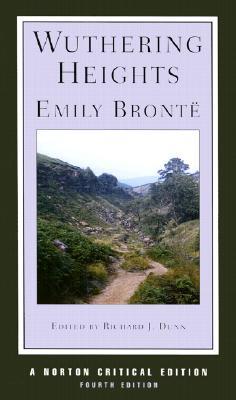
Wuthering Heights


3/5 – Spoilers

There are a few books, which – though I’ve never read – I have an idea of what they are about. Wuthering Heights was one of those.

I thought, from what I’d picked up through cultural osmosis, that it was a love story between moody Heathcliff and wild Cathy, set on an English moor. I thought there would be windswept vistas and empty moors, lovers kept apart by fate or society.

But no…no…that’s pretty much not what happens.

For a start, Cathy dies halfway through and the story only touches on her violent relationship with Heathcliff…and she ends up marrying another man. So much for loving him then.

Their relationship can by no means be called “love” and is more like passive-aggressive hostility. It doesn’t seem as much as though they care for each other as drive each other to insane anger.

Heathcliff is less moody and more downright psychotic; he’s mean, spiteful and bitter, perhaps for the sake of it. But he justifies this by saying he ‘loved’ Cathy and resents anyone else taking her. Stalker, anyone?

So the story is less about Heathcliff and Cathy, and more about Heathcliff’s desire for revenge and retribution. He treats everyone around him as a kicking stool, and doesn’t hold back from assaulting them whenever the mood takes him. He abuses his nephew, he abuses Cathy’s daughter (also confusingly called Cathy – she marries Linton, which is the last name the other main family in this story. I had to keep a family tree to keep them straight for a while). The man is an absolute raving lunatic, and he should have been locked up.

The fact no one seems to have the nerve to stand up to him is startling. Not one member of his family reported him for cruelty or malice – perhaps it was a sign of the times that families kept themselves to themselves, but most of the characters seem almost as unbalanced. At one point, someone threatens to cut out someone’s tongue; they bite down on the knife and dare them to.

This isn’t a love story. Heathcliff isn’t a man you’d want marrying your daughter, any more than Cathy is a woman you’d want marrying your son.

The setting of the book was a surprise as well. I was, as I said, expecting windswept moors, but most of the action takes place indoors. In places this made it seem like a play, with simple, interchangeable sets as backdrops.

The structure of the story is interesting as well. Mostly, a servant relates the tale through her third-person lens, recalled from twenty years before (with perfect recall, apparently).
Another reviewer said the third-person narrative hadn’t been developed when this was written, and sometimes the servant’s story is further filtered through a conversation she had with someone else; there are hints that she might be an unreliable narrator, in her descriptions of the two Cathy’s.

The hardest part of the book to read was Joseph – wow, his accent is thick. I asked a friend from Yorkshire (where the book is set) to read a bit of his dialogue out, and he couldn’t figure it out either. There were a few plot holes – at the end, a shepherd boy says he’s seen the ghost of Heathcliff and Cathy (One) on the moor. At that point, Cathy One has been dead twenty years; but that’s a minor point.

Did I enjoy this book, even though it wasn’t what I expected? I did, although the main characters weren’t nice people and nobody I would want to spend any time with again.

Tony’s Ramble: Ten books that made me the reader I am today

A fellow blogger Becky Day recently posted (here) about the books that have made her the reader she is today. It’s a fascinating thought, and one that’s impossible to resist. How do you decide which books you read when you look at all the ones you can pick?

I have read a LOT of books since I started around the age of six or so. I have no idea how many, but my Goodreads count is 426, and those are only the ones I can remember reading or have added to my bookshelves.

I know there are ones I’ve never added – I have a complete set of Star Trek movie novelisations and short stories based on the original episodes by James Blish sitting on my shelf at home, for instance, and that’s just the tip of the literary iceberg.

But I managed to pick out ten which I think define me as a reader. The ones that made me look at the world a little differently, or the ones that I simply loved and read over and over.

(Looking over this list as I type the author names, I just realised I only had two females. Doesn’t mean I haven’t read any, just interesting to note. I think the ones I have picked pitch some literary weight though, certainly for me.)

Anyway, in no particular order:


Bedknob and broomstick, Mary Norton (Review)

B & B was the first book I remember reading independently, and for that it’s made an indelible mark. I remember reading non-fiction at the little library in my primary school – books full of trivia like the size of dinosaur teeth or the world’s smallest plant – but this is the first time I think I ever tried fiction. I fell in love with the simple story and read it over and over again. Even bought myself a new copy a few years ago…and the magic was still there.

If I hadn’t read this, it would have probably been another fiction book I read first…but who knows, I might not have developed the early skills to sit and read and enjoy fiction as much as I still do. I might have hated it!


Tomorrow when the war Began, John Marsden (Review)

When I first met my wife in 2001, I hadn’t read any young adult books in years. Mostly, I was in to movie novelisations and Stephen King and Dean Koontz. Young adult to me was of the level of “Oh, dear, I farted {giggle}” – and I hadn’t seen anything to convince me otherwise.

My wife told me to read this and Marsden changed it all for me. Here were intelligent, well created characters you lived and breathed with, characters you laughed and cried with, characters you climbed inside of. He’s a big influence on me as writer as well, and I’ve read almost everything he’s ever written.


Lord of the rings, JRR Tolkien

Now this is an odd one. I have never read Lord of the Rings, or The Hobbit, so why is it here?

I think the books we don’t pick say as much as much as the ones we do. I tried LoTR, I really did. I loved the movies…but the books…just plain bored me. I never got past page one of LoTR or The Hobbit, and to this day I’ll never read a book where they name a sword. It’s not pushing any of my buttons, folks!


Day of the Triffids, John Wyndham

Way before anyone knew the phrase “post-apocalyptic”, here’s John Wyndham in 1951. The world goes blind overnight, and the survivors struggle to rebuild their lives and start a new society. The story is creepy as hell and the scenes of a crumbling London and England fifty years ahead of its time…and it started my ongoing fascination with post-apocalyptic fiction.


Star Wars Episode IV, Alan Dean Foster (as George Lucas)

This is the novelisation of Star Wars, and it started a long love affair for me for movie novelisations, which for a while I was actively seeking out in bookstores, (remember those?). Some of them were good – like this one – and some of them bad (Yes, you, Close Encounters of the Third Kind). The book is good enough to stand alone without the movie, and I’ve still got it on my bookshelf – along with five other Star Wars novelisations! Entertainment, pure and simple, and I love dipping into them.


IT, Stephen King

One of my aunts had an extensive library of horror fiction in her spare room – some heavy stuff like Graham Masterton and Dennis Wheatley – and a collection of King. When I’d stop there for the weekend, I’d always pick one up, never quite daring to read it at midnight or one in the morning. IT (for those of you who don’t know) is 1100 pages of book, so it’s understandable I’d be intimidated by it even if it wasn’t horror.

But I found myself sucked in to it once I started it, and it started a love – and hate – relationship with King ever since. Some of his books don’t cut it for me (Needful Things and The Dead Zone), but mostly I’m in for a good time with Uncle Steve.


A Tale of Two Cities, Charles Dickens

One of my parents books is an old copy of aToTC, bound and made sometime in the 1940s. I started it one day, not really knowing who Dickens was or what made him write it – or even when. Although the language was weird and it took a while to get started, I really got into it. I haven’t stopped reading Dickens or classics since, coming back to this one again and again and getting a little something different from it each time.


Diary of a Young Girl, Anne Frank

Surprisingly, I didn’t have to study this at school, and it was quite a few years later that I picked a copy up. Anne was a blunt girl, not mincing words about anyone, but what got me was her simple hope and a wisdom she had beyond her years, and I symbolically have the book beside my 19th century Dickens and other classics. After I read this, I realised all you need to be free is to see is a blue sky, even if it’s glimpsed at from a behind a black out curtain. I still look at the sky sometimes and remember that.


Nineteen-Eighty Four, George Orwell

How startling it is to read this, in an age of internet snooping and CCTV on every street corner, with traffic cameras that keep records for five years. How easy it becomes to hate someone because the media says you should. How easily we slip, uncaring and indifferent, towards the world Orwell imagined.


Lightning, Dean Koontz

Koontz is often bundled with King as a horror writer, and some of his earlier books were certainly that. But Koontz has transcended his genre. He doesn’t exactly write thrillers, or horror, or comedy, but mixes them all together into a wonderful smorgasbord. When he gets it right – like the generational time-travelling story of Lightning, the first of his books I read – his prose is powerful, his characters engaging.

When he gets it right, you simply cannot put a Koontz down, and when he gets it right, there’s no one quite like him. Which is why I keep reading them…even when he gets it wrong.


I hope you enjoyed the list! Any thoughts on what books define you as a reader?

IAM Review…Medusa by Tony Talbot

Guest Feature

To finish our Indie Author Month for 2014, I thought I would surprise my fellow author/blogger Tony with my review of his latest book Medusa. I hope you’ve enjoyed the event this year, it’s been a little quieter on features, due to my technical problems, however, I hope you’ve liked the features from the authors you’ve met and perhaps found a new writer to try…

Mel x

Medusa-ResizeMy Review

Well, I finally got the time to knuckle down to some reading for fun last week and it has started really well: I just finished Tony Talbot’s great new book Medusa. This is the second book of Tony’s I’ve read and I was not disappointed.

We meet Lissa Two – captain of a strange ship with some interesting technical skills – in an apparently post-apocalyptic world of water. Giant ‘seasteads’ form the main areas of civilisation and Lissa uses her ship – Connie – and the particular powers she has, to salvage items for sale in the underground souks in her own seastead home. A random meeting with a man thrown from a strange flying machine; the mysterious disappearance of an apparently strong seastead and Lissa’s own questions about Connie provide the ingredients for a fast-paced, cocktail of adventure.

I really like Tony’s writing style, he has a real way with words (helpful if you’re a writer, I know!) But what I mean, what really stands out in this book for me, was his ability to create a world you felt completely transported to: there is beautiful description throughout the book, whilst he walks his characters through the fast-paced plot, leaving you the feeling that you could reach out and touch the world Lissa inhabits. Now and again, I would find myself noticing something, not because it jarred, but because it just flowed so naturally. Unfortunately, some of the best examples I highlighted would need spoilers to explain – so I’d say you have to check it out to know what I mean.

Medusa is one of those books you get sucked into quickly and struggle to find a place to pause, when reading – you just want to know ‘what next’ the whole time. Especially once Lissa’s questions start taking her down interesting paths, it gets even harder to stop: I read the second half of the book in one day. And it was worth it! 🙂

Overall, I’m going 4.5* for Medusa, I thought the characters, pace and writing in the book was even better than Eight Mile Island, the main reason it gets the same rating is because I loved the way EMI sucker punched me in it’s concluding chapters. I didn’t get quite the same left-field shock as I did with that one, but overall, I would say I enjoyed Medusa more and if you’re thinking of trying one of Tony’s books, this is the one I’d recommend.

Recommended for: fans of dystopian YA / post-apocalyptic world settings; I think people who liked the relationships in Angelfall would enjoy this, as well as Hunger Games / Blood Red Road fans looking for something with a feisty female protagonist in an unusual setting.


IAM Writing Tips…Pace Yourself

Guest Feature

Today Tony is with us to talk about the magic of pacing…

———————————————–

Pacing in books is a bit of an odd thing. You’re reading at the same speed as you normally do, but suddenly the story is whipping by in a blur and you can’t stop reading.

How do writers do it?

It’s magic tricks actually, an illusion – and some simple illusions at that. Magicians aren’t supposed to tell you how it’s done, but what are we here for if not to share? And it’s not like you can’t Google this and get the answers anyway. 🙂

At first, I didn’t hear his movements in the trees behind me. The forest was beautiful this time of year, the naked trees clothed in ermine snow, nature reduced to a frozen slumber. As I breathed out, the condensation steamed up my glasses and the world turned momentarily foggy and blurred. My feet in the heavy boots crunched and squeaked through the unbroken snow, toes starting to freeze.

I twisted on the spot when the branch cracked behind me, scanning the frigid world as the hairs on the back of my neck rose and stretched.

That wasn’t a deer, I thought.

Nothing moved, but I knew he was watching me. Every shadow was suddenly malevolent and dangerous.

I heard the breathing first: Short, ragged gasps. Like a man running, from my left somewhere.

Coming closer.

Trying not to show how freaked out I was, I turned away slowly and walked on. Faster now, though. Focusing ahead and behind, trying to hear how he moved as I moved. The way he stopped when I stopped.

It didn’t matter how much I hurried my pace. He always kept up with me. Mewling to myself, I turned my head, still seeing nothing, but hearing him breathing beside me, ever closer.

My nerve snapped and I gave up the pretence, taking to my heels and starting to run, pummelling the snow so the white clods flew from my heels, trying not to slip on the now treacherous ground, pouring my strength through my lungs and into my aching legs, the air cold-burning my throat as it cascaded into me, breath streaming back like a silent scream.

I urged my dying legs to push me faster, faster, until my lungs burned with the agony of it, the cold taste of steel in my throat like a blade pushed into my larynx.

It wasn’t until I felt the hand on my arm that I stopped, dragged off my feet by the powerful backwards tug. I spun, lashing with an arm, hand forming into a fist. He batted it away easily, the side of my hand smacking into nothing.

My brain struggled to catch up with what I wasn’t seeing, not having time to react as the all-too-visible knife flashed towards my heart, the last thing I ever saw.

 I heard his voice around the exhalation of his breath when he spoke, the last words I ever heard.

“So. The invisibility cloak works then.”

I’ll break it down into how it usually works.

  Approach.

 At first, I didn’t hear his movements in the trees behind me. The forest was beautiful this time of year, the naked trees clothed in ermine snow, nature reduced to a frozen slumber.

As I breathed out, the condensation steamed up my glasses and the world turned momentarily foggy and blurred. My feet in the heavy boots crunched and squeaked through the unbroken snow, toes starting to freeze.

The approach is the setup for what comes later. Take as much time as you want over this part – in some ways, the slower the better. A good example is a section of “The Shining” by Stephen King, where Danny knows something is going on in one of the haunted hotel rooms and investigates. King doesn’t put Danny in the bathroom where he wants him – he starts off with Danny outside the closed hotel room door and spends three pages on the approach.

Anticipation. 

I twisted on the spot when the branch cracked behind me, scanning the frigid world as the hairs on the back of my neck rose and stretched.

That wasn’t a deer, I thought.

Nothing moved, but I knew he was watching me. Every shadow was suddenly malevolent and dangerous.

I heard the breathing first: Short, ragged gasps. Like a man running. From my left somewhere.

Coming closer.

Trying not to show how freaked out I was, I turned away slowly and walked on. Faster now, though. Focusing ahead and behind, trying to hear how he moved as I moved. The way he stopped when I stopped.

If you show an explosion, you get a bang for a second or two and nothing else. Show a countdown clock ticking down, and the tension can be kept as long as you like – countless movies have been made with nothing else driving the story but a countdown timer, after all. Anticipation is what keeps you reading and watching.

Also, notice what I’m doing here. The sentences and paragraphs are shorter – one of them only two words long – and the descriptions of the world around the character gone apart from describing the shadows. You read those 103 words faster than you read the 68 in the first segment. You didn’t have a choice.

Another way of speeding up the pace is a favourite of Dean Koontz. Have short, snappy dialogue without attributes that pull you down the page:

“Did you hear that?”

“Hear what?”

“That breathing.”

“Creepy.”

“Just a little.”

Also, try changing your tense – past tense shifted to present works really well. Your character is reacting, not just remembering. Just remember to change it back when you’ve finished.

Trying not to show how freaked out I am, I turn away slowly and walk on. Faster now, though. Focusing ahead and behind, trying to hear how he moves as I move. The way he stops when I stop.

My weapon of choice is more of a tumbling style though – run the sentences into one so they blur:

I heard the breathing next: Short, ragged gasps, like a man running, from my left somewhere.

Coming closer.

Trying not to show how freaked out I was, I turned away slowly and walked on. Faster now, though, focusing ahead and behind, trying to hear how he moved as I moved, the way he stopped when I stopped.

And you can combine them of course – tumbling sentences in present tense, whatever works the best.

 Reveal and Aftermath

My nerve snapped and I gave up the pretence, taking to my heels and starting to run, pummelling the snow so the white clods flew from my heels, trying not to slip on the now treacherous ground, pouring my strength through my lungs and into my aching legs, the air cold-burning my throat as it cascaded into me, breath streaming back like a silent scream.

I urged my dying legs to push me faster, faster, until my lungs burned with the agony of it, the cold taste of steel in my throat like a blade pushed into my larynx.

It wasn’t until I felt the hand on my arm that I stopped, dragged off my feet by the powerful backwards tug. I spun, lashing with an arm, hand forming into a fist. He batted it away easily, the side of my hand smacking into nothing.

My brain struggled to catch up with what I wasn’t seeing, not having time to react as the all-too-visible knife flashed towards my heart, the last thing I ever saw.

 I heard his voice around the exhalation of his breath when he spoke, the last words I ever heard. “So. The invisibility cloak works then.”

In terms of pacing, the running paragraph (My nerve snapped…) is one sentence of 66 words. There’s more internal world than external as well – no more looking at how wonderful the trees are; as readers we only care now if the ground will give up its traction, how cold that breath is.

Look how short it is. I spent 173 words getting this character freaked out enough to run for their life – I give them 66 words to describe it. The imagery has changed as well – from soft ermine snow at the start to the taste of steel now.

Your reveal can be a red-herring of course – this could be a deer following our character. Or it could be foreshadowing for a reveal later in the book and we never know at this point what it is.

In some ways, the reveal is the quickest part of the whole process. In the 407 words of this story, the reveal is 76 words and two paragraphs (It wasn’t until I felt the hand…), and one of those runs straight into the aftermath.

To go back to the example of “The Shining” – Once Danny is in the bathroom where a ghost waits for him, King only spends half-a-page describing it before going into the aftermath.

And don’t forget that aftermath by the way; give your readers some closure – or leave them hanging if this is the end of a chapter.
IAM Review: “Beyond the Shadows”, Anna Hub

Guest Feature

It was a delight to have Anna here yesterday for our interview, and today Tony reviews her first novel “Beyond the Shadows”…

———————————————–


3/5

What would happen if your shadow was trying to consume you? Selena Parker is about to find out…

Selena is leading a normal life until a man in a restaurant tells her to watch her shadow. Dismissing his concerns at first, she comes to realise it’s moving and shifting on its own. She places a hand on it, and falls through to a primitive jungle world, then again and again, each time spending less time in the real world.

Selena’s responses are entirely realistic when she realises she can fall through her shadow. She dims the lights and researches mental illness, wondering if she’s going quietly mad while she tries to continue her normal life. She quickly comes to realise that even the dimmest lights cause shadows though, and knows she can’t fight back against it.

It doesn’t stop her fight though; Selena is an adaptable character who refuses to accept the inevitability of the jumps to and from the jungle. And when she’s forced to accept the reality of what’s happening to her, she adapts again. She learns how to survive in the wilderness, what berries and bugs are edible and how to make a fire. She tries to warn her family what will happen to her. When she is finally, irrevocably trapped in the jungle, she shifts her focus, trying not to linger on the family and life she’ll never see again.

In the jungle she meets Braydon – the man who first warned her of the shadows – who seems to have given up on ‘normal’ life quicker than her and settled to life in the jungle. Braydon begins to exhibit signs of being a ‘Hunter’, a semi-supernatural human with enhanced strength, agility and senses. Together they move out of the dense jungle and towards a settlement of humans who are also trapped at the edges of the jungle.

It’s a great concept for a story…how can you hide from your own shadow? And it was that which pulled me through the first half of the book. Selena’s attempts to keep up a normal life and her resourcefulness when it came to researching survival techniques and tracking down a comatose Braydon drew me to the character. I loved the way she dealt with the things life was throwing at her and got on with it. There isn’t a moment when she gives up.

I liked the world of the book as well, the way that distances ‘over there’ equate to distance ‘over here’. Her upstairs bedroom is on a rock; her living room is a cave under that rock. It’s all logical and consistent. What was missing was a full sensory experience: I wanted to know what that jungle smelled like and the assault of the colours on her eyes. Was the sky blue over there?

Where the book starts to lose a little of its power is with Braydon. I found him to be two-dimensional next to Selena, and I had the impression that if Selena could have found another guide in the jungle, she probably would have. Partly, he’s such a foil for her it’s hard to empathise with him; he’s quite negative to Selena’s optimism. There didn’t seem to be much chemistry between them beyond the basic need to survive and share body heat.

The antagonists of the book – The Hunters – don’t make much of an appearance either. We’re only told what they are capable of and don’t see them in action much  – one anonymous woman being chased, that’s about it. The main threat in the jungle is the remarkable cats with whip-tails, which is danger enough without the Hunters being there.

What also didn’t work for me was the transition from jungle to village of survivors. From being adaptable and resourceful, Selena seemed suddenly powerless when she was there, becoming quite passive and weak. The village transition takes place about half-way through the book, and from then on, Selena seemed almost a secondary character in her own story.

The book needed a few more edits. There are a lot of run on sentences (the author told me she grimaces over them now too), but it seemed to suit the narrative voice of Selena.

For a first novel, this was pretty good. A nice concept with the shadow-portals and a strong (for the most part) main character and a consistent world.


Tony’s Review: The Grapes of Wrath, John Steinbeck


2/5

In the dustbowl depression of 1930s America, the Joad family from Oklahoma move to California out of desperation, lured by the promise of a mythical land of endless food and well paid work that doesn’t exist.

For the first half of this book, I loved it. Steinbeck alternates each chapter between the Joads and a bigger picture of half the country on the move, hungry for work and hungrier for food. The travels along Route 66 were full of drama and tension and the characters well developed.

It was a delight to travel along with them, poor and desperate as they were, dignified in their poverty, hoping as they did that they would find what they were looking for…but knowing that they wouldn’t, hoping at least for some resolution for them. Some of the writing was beautifully poetic, especially in the wider-world chapters.

It was when they arrived in California that the story crumbled and stalled. There were long passages that went like this:

Tom pushed open the matchbox and took out a match. He struck the match against a piece of sandpaper and took the flame carefully to the lantern, and lit the lantern with the fragile yellow dancing flame. The lantern lit with a mellow dancing light against the walls of the shack. Tom sat back and warmed his hands on the feeble heat coming from the lantern.

How about we try this, Mr Steinbeck…?

Tom lit the lantern from a match and sat back, warming his hands on the feeble heat coming from it, the light dancing on the walls.

…and then we can get on with the story. How would that be? No? Okay then, I’ll sit through the same drawn out descriptions every time someone does something, no matter how minor.

What that happened throughout the last third of the book, it really dragged it down. Steinbeck also decided that he only really needed two characters (Ma and Tom), and the rest drop into the background and become two dimensional and superfluous. He might as well have killed the rest on the journey to California for the impact they have in the story.

And the ending. Well, it just…ends. There are no conclusions, and we never find out what happens to the family. It’s like Steinbeck died halfway through and didn’t finish the story. In fact, I just checked online to see if my copy was missing a dozen pages. Nope.

Here’s how sucky the ending is (Skip it if you don’t want spoilers):

The Joad’s are flooded out of their shack of the week, and they come across a barn. Rose of Sharon (huh?), who has just undergone a still-birth, gives an un-named starving man her breast milk. The End.

WTF was THAT?

After four hundred pages, some of the most wonderful and poetic language, that’s IT?

Do the family starve? Do they drown? Do they go back to their shack after it dries out? Would it have killed him to write an epilogue? At that point I was glad to finish the damn thing and be done with it.

No more Steinbeck for me. After the flat characters of “Of Mice and Men” and making me care about a desperate family and then leaving me hanging, he’s had his chance.

Tony’s Writing Tips: That’s what he said

I stumbled across a blog the other week. I won’t tell you who it belonged to, but they were giving a writing tip on ‘using alternatives to he said / she said’. They gave quite an impressive list of adjectives and managed not to include any adverbs (-ly ending words). It was well thought out and presented.

But that’s not why I’m here. I’m here to tell you exactly the opposite:

He said – she said is absolutely fine.

Seriously – don’t worry about it and don’t look for anything else; most people are reading the dialogue and not overly wondering how your characters are saying it. Give them a context and they’ll be happy.

The only exception to this is rule I would suggest are asked and replied. Feel free to use those as much as you need.

Let’s do an example and see which one you think works the best:

 Adjectives

I sprinted to the boulder and dived behind it, so close to the stone that it radiated cold back against my cheeks. I waited a second longer, then when I didn’t hear anything, I dared raise an eye above the marbled edge of the rock. The S’loths hadn’t moved from the fire, not even stirring to look in our direction. So far so good.

I looked back over my shoulder. Jack still stood at the edge of the forest, hesitating. I waved him towards me, but it was another long minute before he sprinted towards me. He mistimed his dive and smacked into the boulder with far too much noise, not able to hold in a cry of pain.

“Quiet!” I hissed.

“Sorry,” he whispered.

I waved him to silence and peeked over the rock again. A S’loth yawned and stretched, but nothing else was moving.

“What do you see?” he inquired.

“They aren’t moving…just sitting there. We might be able to go around them,” I breathed.

Jack rose beside me, peering over my shoulder, his mouth a centimetre from my ear, his breath close enough to stir the hair. “Are you sure?” he wondered.

Nothing wrong with that, you might think. Works, doesn’t it?

Yes, it works…but I think you’re over-egging the pudding. Give your readers some credit for their intelligence. The context tells them your two characters aren’t shouting, doesn’t it? They know when one of them has asked a question, don’t they?

He said – She said

I sprinted to the boulder and dived behind it, so close to the stone that it radiated cold back against my cheeks. I waited a second longer, then when I didn’t hear anything, I dared raise an eye above the marbled edge of the rock. The S’loths hadn’t moved from the fire, not even stirring to look in our direction. So far so good.

I looked back over my shoulder. Jack still stood at the edge of the forest, hesitating. I waved him towards me, but it was another long minute before he sprinted towards me. He mistimed his dive and smacked into the boulder with far too much noise, not able to hold in a cry of pain.

“Quiet!” I said.

“Sorry,” he replied.

I waved him to silence and peeked over the rock again. A S’loth yawned and stretched, but nothing else was moving.

“What do you see?” he asked.

“They aren’t moving…just sitting there. We might be able to go around them,” I said.

Jack rose beside me, peering over my shoulder, his mouth a centimetre from my ear, his breath close enough to stir the hair. “Are you sure?” he asked.

Just for another idea, here’s the way I would write it. Strip out the said and dialogue attributes as much as you can – fillet your dialogue down to the bone. This has the effect of speeding up the pace as well –the stripped dialogue drags you through the story.

Filleted

I sprinted to the boulder and dived behind it, so close to the stone that it radiated cold back against my cheeks. I waited a second longer, then when I didn’t hear anything, I dared raise an eye above the marbled edge of the rock. The S’loths hadn’t moved from the fire, not even stirring to look in our direction. So far so good.

I looked back over my shoulder. Jack still stood at the edge of the forest, hesitating. I waved him towards me, but it was another long minute before he sprinted towards me. He mistimed his dive and smacked into the boulder with far too much noise, not able to hold in a cry of pain.

“Quiet!”

“Sorry.”

I waved him to silence and peeked over the boulder again. A S’loth yawned and stretched, but nothing else was moving.

“What do you see?”

“They aren’t moving…just sitting there. We might be able to go around them.”

Jack moved close beside me, peering over my shoulder, his mouth a centimetre from my ear, his breath close enough to stir the hair. “Are you sure?”

Give your readers a clear enough scene and they’ll know who said Quiet! And who apologised for it – without you having to lead them through it.

Cover Reveal! “Medusa” by Tony Talbot

Medusa-Resize

Well, it’s taken me a while, but here it is! My latest book is live today!

“Lissa Two is a thief of the ocean cities, struggling to make enough money to clear her debts and take care of her traumatised sister, scratching a meagre living as best she can.

So she has enough worries without her life getting more complicated…but when a boy named Hattan literally falls from the sky, she can’t just let him drown.

It’s a decision she comes to regret, a decision that will change not only her life, but the lives of everyone she loves.

If they survive…”

Amazon Paperback.

Amazon Kindle.

It’s FREE for the first weekend of publication. As are four of my short stories – Fidget, Black Shark, Out of Step and Blind Date.

As always, thanks for reading and supporting independent authors!