Tony’s thoughts…Why your story needs a McGuffin

I was working on “Book Five” this week, and there was a section that was bothering me – I needed a character to be kidnapped, but couldn’t figure out a logical way of doing it. After I solved the problem (That’s the great thing about writing – I get to kidnap people and no one calls the cops!), it occurred to me that the character is a McGuffin.

A wha? What’s a McGuffin? You might ask.

A McGuffin is something in a story that is important to the characters, but is otherwise irrelevant to the plot, and is (In most cases) completely interchangeable with something else.

You with me? No? Okay.

Here’s an example. In Raiders of the Lost Ark, the Ark of the Covenant is a McGuffin. Change it from “The Ark” to “The Necklace”, and the plot of the film doesn’t change. Change it a “The Crystal Skull” and the plot is the same. Change it to “The Sandwich” and the plot is the same.
Bear in mind, a McGuffin can also be something abstract, like power or money – it doesn’t have to be a physical object.

The McGuffin drives the story forward, but its nature isn’t important. Alfred Hitchcock was a master of these. He said, “In crook stories it is almost always the necklace and in spy stories it is most always the papers.”
George Lucas thinks the McGuffin should be something the reader-viewer cares about. Sometimes it’s not obvious what the McGuffin is either; Lucas says the McGuffin in Star Wars is R2-D2 – the thing that all the characters are chasing or protecting, in other words.

If anyone out there has read my own book Taken, the McGuffin is the character Sacmis – Amon, my main character, spends most of the book trying to find out who she is, and by the time he finds out, it’s irrelevant; he’s discovered other things about his world that means he doesn’t need to know. But his need to discover who she is what drives him forward.

The McGuffin also ties into something fundamental about characters in stories: They have to want something – a character who doesn’t want something shouldn’t be there. A sandwich, a crystal skull, a necklace. Or a Lost Ark of the Covenant. That will be your McGuffin.

In other words, at the centre of your story is an object, or an idea, something that everything else spins around, but is almost completely interchangeable. The man who craves power could as easily be the man who craves money.

Now, if you don’t mind, I’m off to make myself a sandwich.

Does your story have a good McGuffin? Comments below!

Tony’s Review…Tethers by Jack Croxall

3/5

Karl and Esther, both 13 years old, both bored by their restrictive Victorian lives, stumble across a mystery in the village where they live. It quickly leads them from their quiet land-locked lives to the coast of the UK and then back again to its heart before the climax, making some friends and very dangerous enemies along the way.

Jack Croxall has a pleasing, old-fashioned style of writing, an almost “Famous Five” feel to his words and language. The pacing is perfect, shifting the book forward at a nice clip and not lingering too long. I needed to keep reading!

The characters of Karl and Esther are fleshed out and full of life – their flaws and imperfections as well. I love that Karl can’t climb through windows as elegantly as Esther, nor can he sword-fight as effectively. Esther isn’t just a passive Victorian girl either, going weak at the knees at the first sign of danger, but is a kick-ass heroine in her own right. I loved the reaction of Karl when he sees the ocean for the first time; it really made me connect with the character.

The secondary adult characters were all nicely done as well, but I kept expecting them to have their own agendas. Perhaps an unwritten rule of YA is “Never trust anyone over the age of 30”, and I kept expecting a heel turn from them. I got the impression they were holding a lot back from Karl and Esther. Karl would announce a discovery or a clue, and the two men traveling with them would nod and smile as though it was expected. They put me on edge, and I was expecting something dark from them.

The accents of the characters dialogue were nice, apart from Scot Shona, who didna speak like this, but did speak like this. That was a flaw I would have liked fixed; everyone else speaks in a realistic voice.

I would have liked the two teens take on more of the danger themselves, but the adults take a lot of it. It is a YA book after all, and I don’t read YA for the grown-ups to have all the fun. On the other hand, it was nice to have at least competent adults on hand, and the kids did manage to do most of the important stuff.

There were a few typos I noticed, and a few grammar errors – a run on sentence here and there and a missing speech mark – but nothing that bumped me out of the story.

A delightful, fast-paced read with an old-fashioned feel to the structure. I enjoyed it a lot. (Tony Talbot)

All Author Blog Blitz!

Banner

Today is the blog blitz, organised by author Y. Correa, mod of the Indie Author Support Group on Goodreads – you can find out more about the group and Y here. For our piece on the blitz we’re featuring young adult writer Stacey T. Hunt as our guest! Tony is a guesting at this blog, whilst Mel is appearing at author Stephanie Hurt’s blog.

Stacey Hunt Stacey T. Hunt is a life-long Canadian whose love of sci-fi and fantasy, videogames, reading, and techno music played heavily on her writing of the smash hit young adult books: The Cascade Adventures Saga.

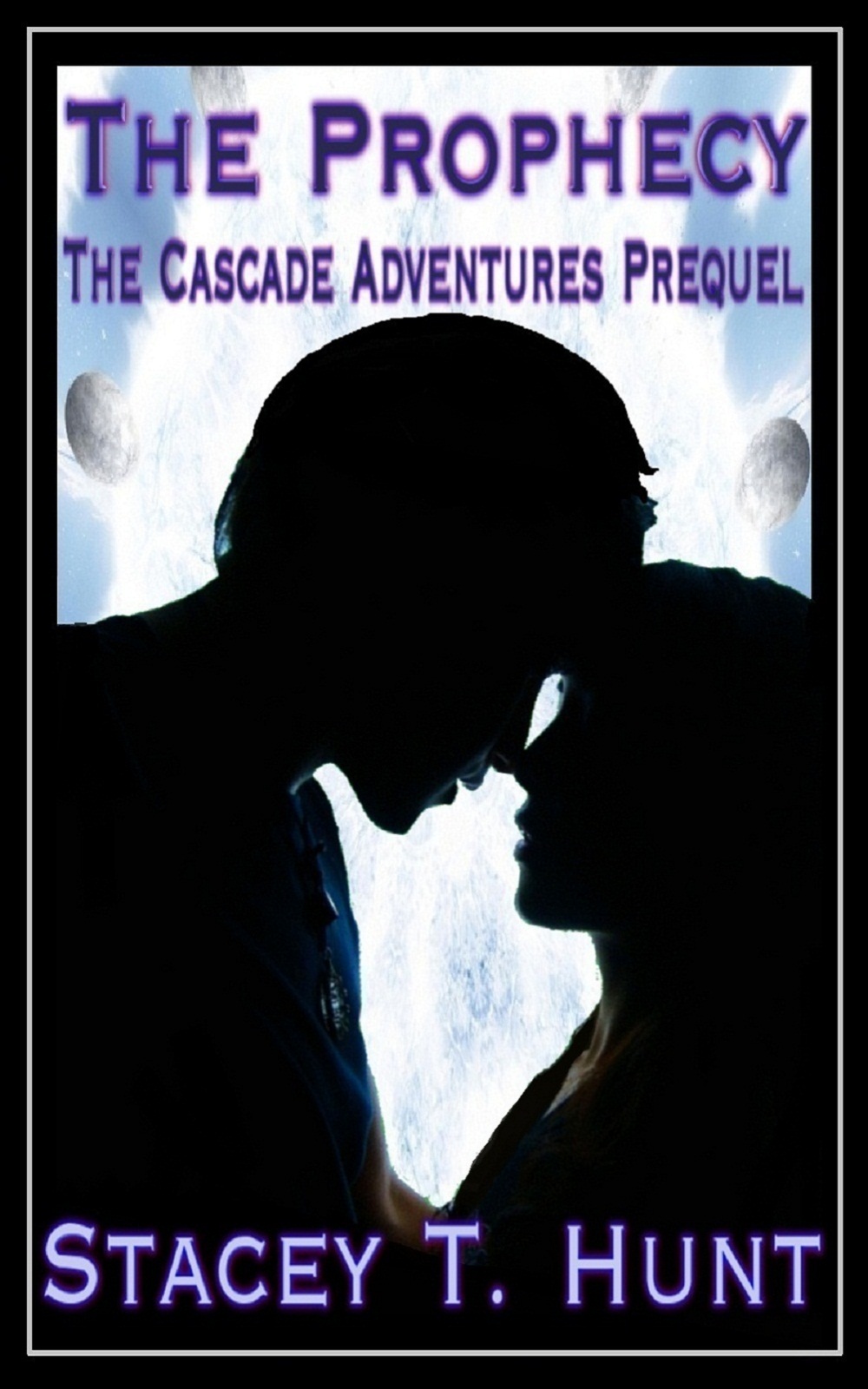
The ProphecyThe Prophecy
In this thrilling new adventure, a deadly group of terrorists known as The Predatorials rise under the command of their leader, Zorgoth, who has a deadly goal and an enigmatic apprentice by the name of Zorren whom he is enrolling in King Casimir’s School, of which students who attend have a chance to become the next ruler of Planet Cascade. The world hangs in the balance as a torn Cascada must choose who to save — her best friend, Meldon, from falling into the darkness and joining the shadowy divison of the Predatorials, or Zorren, after he won her heart. He’s the mysterious new guy with a dark power and devious ties to Zorgoth.

Tony’s Thoughts…Finishing A work in Progress

In September 2012, I blogged about the start of something new. Well, now it’s nearly finished! Crack open the champagne and celebrate with a pizza. Woohoo, when I finish Book Five, let’s roll that puppy out to Kindle and the world!

Except, of course, I won’t have finished it at all.

I’ll be nowhere near finished. In some ways, I won’t have even started.

What I will have is 50k-60k words of a first draft story, a story I wrote just for myself and posted extracts on Facebook just for fun.

So here’s what happens next…

Draft Zero

I suppose most people would call it a first draft, but I’m going to call it draft zero. Draft zero finishes with me writing ‘The End’. There are words in zero that no one else will ever see…because now I start the re-writes, and with the re-writes come the deletions and the inserts. A suggestion from Stephen King is that drafts should always be 10% shorter when you’re finished, and as I much as I try to follow it, sometimes it’s 10% longer. It tends to balance out though, between the scenes I want extending and ones I want cutting.

What I’ll be doing is looking at the notes I made for myself when I write – I put them in bold so I can see them easily – and I’ll be working my way through the whole book, looking for ways to drop in the extras – or not, as the case may be. I’ll be cleaning up my grammar and characters as I go and making it look a little prettier.

—-

Wow, so you’re done right? I hear you say.

—-

First draft

Ahh yeah, sure I am. Sure. I. Am.

Here’s one of the strangest things you do as a writer. You take your (what is now) first draft, print it out carefully, and then: Put it in a drawer for six weeks and forget it.

Yep. Spend the best part of a year writing a book, and then do your best to forget it exists. Write something else. Learn to juggle. Get some fresh air – I hear that’s nice, although I don’t get much of it. Whatever you do, do not touch it.

How will you know when the day is right to pick it up again? It’s one of those annoying answers, because for me, I just know. Sorry, I don’t have a better answer than that.

So one day in the future, when you know you’ve forgotten that you ever wrote this pile of papers, you take out your first draft and you do exactly what you did with draft zero: Edit it again, rewrite where you have to, take parts out, put them back.

The reason I like to do this with a printed copy is that the change of format really does help me see mistakes. I can look at it as a reader, and not as a writer, and I can see the changes I’d want to make it a book I’d want to read. Killing the parts that don’t add to the story. And this is when it gets weird people, because there are parts in there you don’t remember writing. Which is pretty freaky when you think about it.

—–

Now you’re going to self-publish it?

—–

Second Draft

Sure. After this:

Wow. This is a biggie. I’m actually going to show someone else what I’ve been doing in the spare bedroom since September. For me, that person will be my wife. She’ll – hopefully – pull it apart and tell me where the plot holes are that I didn’t see…and I’d rather it was her than a reviewer on Amazon. She’ll correct the grammar and spelling mistakes that got by the spellchecker (and she’ll complain about my two word paragraphs).

Back for another round of editing, although at this point it might only be a sentence or two.

—-

So it’s got by Mrs Talbot, and it’s ready to go?

—-

Third Draft

Yeah, right. (<—There’s one of those two word paragraphs….)

NOW it goes out to my beta-readers; the first people in the world who are likely to want to read it. More edits? Maybe, but they may love it as it stands and I might be lucky.

Beta-readers are a new one for me on this book, so I’ll get back to you on that one.

Fourth Draft

With Eight Mile Island, I used a professional YA editor (Jennifer Moorman) for the first time, and I’m going to be running the manuscript by her this time as well. Last time she spotted a major flaw in EMI that my wife and I missed, so I think it’s worth it.

And after Jennifer has been paid, I’ll be thinking about a book cover. But there’s enough back and forward between myself and Jennifer to call the next step…

Fifth Draft

Wow, it’s been a long way getting here. How long has this taken? That depends on how quickly my beta-readers read it, how quickly Mrs Talbot read it, and a dozen other things. And don’t forget those vital six weeks sitting in a drawer.

But NOW Book Five is finished. Now I can order the pizza! Now all I have to do is start promoting it. And converting it to Kindle. And the formatting of the Lulu.com paperback…

—-

So after all that?

—-

Start thinking about Book Six, of course…

Coming Soon…Blog Blitz – 15th June

Banner

Just a quick heads up to let you know that Tony and myself will be taking part in the first ever Author Blog Blitz, from one of the Goodreads groups. Keep your eyes out for our featured authors on 15th June – and our own features on their blog!

IAM Guest Post…Why I Write Indie

Guest Feature

We’re nearly at the end of Indie Author Month – IAM2013 – and to close the event we’ll be featuring some special posts today from the authors who contribute most frequently to Aside from Writing. For our first feature of the last day, regular Tony Talbot is here to tell us why he is an indie author. 

————————–

Believe it or not, way back in the mists of time (I’m talking pre-2009), there was a mark of shame upon certain writers.

This mark meant they wandered the literary world, lost and forgotten, their voices echoing, unheard. They were The Unworthy, the ones who failed the climb The Five Steps of Publishing. Instead, they toiled in the mines and the valleys and could only look at the shining lights on the summits, dreaming and writing their dreams.

They were The Self-Published.

They all dreamed of one thing, these lost men and women. They dreamed that one day they would find themselves the most precious gifts of all – an agent and a publisher – and their voices would be heard across the world.

Those on the mountains scorned those below. Not good enough, they would shout, loud enough to be heard in the valleys and the mines. The insults would fly from the hills: Self-published! Vanity Press! Might as well throw your money away! No one wants to read what you’ve written! Not for us!

The music makers and the dreamers of dreams below would tell themselves anyway that they were good, they were worthy, that one day They Would Find an Agent, that someday their voices would be heard. They told themselves that, and toiled on.

And so it began to change. There were whispers of rebellion down in the mines. Fires were Kindled. Words were Smashed. In Nooks and crannies down in the dark, things began to change. Slowly at first, but they changed.

The men and women of the valleys slowly stormed the hillside Palaces of The Agents, broke down the Gates of The Publishers and simply rolled over them. No longer would they be needed.

The Lost had found the power of digital light in their hands, and the light was good, the light was powerful. The light had set them free.

***

I was one of those who toiled in the valleys and looked skyward. I was one of those who dreamt of agents and publishers, of seeing my name on a bookshelf in a bookstore (They still had those in 2010, would you believe).

For a while, I think I was getting there. I jumped through all the hoops the agents wanted, some of them incredibly restrictive: Submit only one story at once, double spaced, one sided, loose leaf, first three chapters only, Times New Roman size 12. We do not accept emails. (Seriously. What century were these people in?)

I got a few interesting replies, but if an agent looks at an extract and thinks it won’t sell a million copies, they aren’t interested, and they weren’t. Fair enough; they have mortgages to pay like the rest of us, but what that lead to was a blinkered vision of what they wanted.

You have a short story of 3000 words? Forget it.

Book of Poems? Hold the phone away from your ear until I stop laughing.

Want to publish your book on the 19th century sewage system of Vienna? No chance.

And it was a stigma, that’s what the writing magazines and books called it, a mark on your failings as a writer and human being if you couldn’t get an agent and had to…(rinses out mouth)…self-publish.

It was a dark time for the rebellion.

 ***

It took me a while to realise I didn’t need an agent. I’d already written two books and was starting a third when I read a magazine article about electronic self-publishing. That was when I decided to join the revolution and storm the gates. (This same magazine was one of those who looked down upon the self-published as the lowest of the low – I picked it up again recently, and how their tune has changed!)

So I joined Amazon’s publishing program. I joined Smashwords. Later, I joined Goodreads and Facebook and Twitter and Booklikes, and I did guest posts and blog tours and all the other electronic stuff I do alongside making people and places up for fun. I joined them because I wanted to be in the revolution. I joined them because I wanted my voice to be heard.

 ***

I self-published my first short story on Amazon – The Trunk – on Christmas Day, 2010. Mainly because my mother-in-law had received a Kindle for Christmas and I wanted to see if I could send her the story, and it seemed a good place to start, with something small like that.

Something small. The Trunk is a VERY short story – about 2000 words – about a small boy who hides from the Holocaust. No conventional publisher would ever have touched it; there would be no profit in printing something that short.

I’ve made about $40 from sales of The Trunk, but more importantly to me, there hasn’t been more than two months when I haven’t sold at least a copy. I’m as delighted to sell one a month as when I sell twenty.

Even more important to me, I’ve had reviewers comment that it made them cry. My writing is out there, it’s in the world and making people cry, it’s making them think. I’m pretty proud of that and not ashamed to say it.

And not an Agent in sight.

***

The Agents told me I was not good enough, that self-publishers were the lowest of the low, with no talent and no voice. The people who matter – the readers – tell me the opposite, again and again.

Yes, I stormed The Palace of The Agents. I screamed with the rest of The Lost that we are good enough. We will be heard across the world.

I’m proud to be an Indie. Hear me roar.

IAM Book of the Day…Eight Mile Island

Guest Feature

Guest Feature

Our featured author today is blog regular Tony Talbot – take a look at his latest fantastic YA novel: Eight Mile Island…

———————————-

About the Author: Tony Talbot was born in the 1970s and started writing in 2008 after a dream he had and couldn’t shake. Eight Mile Island is his fourth book. Tony regularly contributes to the Aside from Writing blog and so look out for future features and posts from this great author.

Welcome to Eight Mile Island. 

Dylan James is used to boarding schools. He’s been thrown out of so many in the past two years, he’s lost count. So when an elite academy in Oregon offers him a place, he doesn’t think he’ll be there more than a week.
 But Eight Mile Island isn’t like anywhere Dylan has been before. In the dense forests around the school, there are things that look human but aren’t.
Things that are hungry, and waiting.
But that’s just the start of the mysteries, mysteries that mean Dylan may never escape. Even if he wants to…


Want to know more? Check out the links!

Website: http://www.tony-talbot.co.uk

Twitter: @authortony

Facebook: https://www.facebook.com/tonytalbotwriter

Amazon: http://www.amazon.com/author/tony-talbot


IAM Guest Post…Editing a Story into Shape

Guest Feature

It’s the start of Indie Author Month – IAM2013 – and who better to get us started than blog regular author Tony Talbot? In a special feature, Tony takes us through how he approaches editing a book – and when you’re an indie author, this is a vital part of the writing process. 

————————–

Stories are never complete until the editing is finished…and editing is never finished. I’ve run over my books six times, had three different people look at them…and still had people find typos and flaws.

But this is a typical editing process for me for a very short story. I started with a single word and started typing, making up things as I went along, some of which made it to the final edit and some didn’t. I’ll try to explain as much as I can as I go along…

If you’re new at this, some of these edits come from experience. The more you write, the more you know what you want to aim for. There’s a passage in Misery by Stephen King, where he compares writing with firing a long-range missile. It could be aimed to land exactly where you want…but you have enough explosive power in the nosecone, close enough is good enough.

Notes at the bottom of each story.

Extinction(1) – First Draft

               “You really think we’re the last?”(2)

Fitch stubbed out his cigarette on the stone balustrade of the bridge and tossed it one-fingered over the edge into the seething water. “Have to be. We’ve only seen that one guy last week, the one in Penzance.”

Wilson pursed his lips and rested his hands on his palms. “We should have done something about him.”

Fitch shrugged away Wilson’s concerns. “Like what?”

Wilson sighed. “I don’t know. I keep thinking we should have told someone and then I remember there’s no one to tell. Still it don’t feel right.”

“Yeah. Still. It’s all happened so fast, nothing feels right.”

Wilson lit another cigarette and offered the pack to Fitch, who shook his head no.(3)

They turned away from the balustrade and continued walking through the dead streets.

“Day of The Triffids.” Wilson said from behind a cloud of cigarette smoke. They’d found themselves on The Mall, strolling towards Buckingham Palace. (hand in hand) (4)

“We’ve done that one. Dawn of the dead.”

Wilson shook his head. “Doesn’t count. No zombies.”

“Mm, yeah, that’s one thing to be grateful for. Twenty-Eight Days Later.”

“That a good one?”

“You haven’t seen it? That one’s great. Come on.”

Fitch pushed open the gates of The Palace and they strolled inside (the entrance hall). They looked round for a few minutes, then at each other with raised eyebrows.

Wilson whistled. “Veryyy nice. This is what my taxes did, eh?” He stretched himself out on a long and luxuriant sofa.

Fitch kicked a leg of the sofa and laughed. “You’re getting mud on it. Her (his) Maj’ would not be pleased. Come on, there’s got to be a DVD player (bluray) here somewhere.”

Wilson raised his head from the sofa. “You really think they got a copy of…what did you call it?”

“Twenty-Eight Days Later.”

“What about ‘lectricity?”

Fitch walked over to a bank of switches and flipped some (them). Chandeliers of spun crystal turned the (semi-dark) hallway into a blazing corridor of light.

Wilson stared upwards at the beads of hard light (and followed Fitch down the hall). “You got to love Her Maj’ (Charlie). Should have known (he’d) she’d have her own generator.”


***

Wilson tossed the last of the popcorn into his mouth and chewed thoughtfully. “I don’t think it counts.”

Fitch stretched beside him and looked shocked. “Huh? What are you talking about man?”

“Well, they were zombies. In a way.”

Fitch shook his head. “Engineered, mate. Engineered. Human weapons research, or whatever it was they were doing.”

Wilson pursed his lips and tilted his head towards the roof of the private cinema. He crossed his arms. “If you’re having that one, I’m having The Stand.”

Fitch made a disgusted noise. “Oh, God, not this again. Give me a break.”

Wilson crossed his arms tighter. “If you can have Rage in Twenty-Eight Days later, I can have Project Blue (Captain Trips) in The Stand.”

“Well, fine, then. Have it. See if I care. I hate Stephen King.”

Wilson put a hand on Fitch’s arm. “Oh, come on. Don’t be like that.” He rose from his seat and walked towards a wall of blu-rays, shoving his hands in his pockets.

Fitch came up behind him and squeezed his arms around his waist. “Sorry.”

Wilson twisted his head and kissed his cheek. “Ass.”

“Ditz.”

They laughed simultaneously.

Fitch looked at the wall of blu-rays. “What else have they got?”

Something caught Wilson’s eye. “The Birds! How did we miss that one?” (5)

Fitch frowned. “Does it count if there are still people?”

Wilson sighed. “I don’t know. I’m just making this up as I go along.” He waved the blu-ray at Fitch. “Want me to stick this in?”

Fitch blinked. “I don’t want to know where.”

Their laughter rolled down the empty hall into the empty city and across the empty planet, until it faded to dust. (6)


Notes

The bits in brackets are what I came up with as I typed.


(1) The title came from the WRITERS BLOCK, book. I opened it and came across a spark-word: EXTINCTION.


(2) So my original thought was ‘the last two humans throw themselves off a bridge, after discussing what they think will come next, what will happen, etc.’ Hence the discussion and the seething water.


(3) They had other ideas and went for a walk through London instead!


(4) At this point I decided they were gay; it has no bearing on the story whatsoever, but makes them a little more ‘real’ to me. Plus all these end of world stories are always man + woman and I wanted to be different. So they start talking about end of the world films and books, obviously an ongoing conversation. Since they were walking through empty London, 28 Days Later and Day of the Triffids came to mind.

There was an old advert for Kit-Kat chocolate bars where the two characters are road-line painters. One of them is trying to find a new topic of conversation, and it went something like this through the advert:


Character 1: Football.

Character 2: (Talked about that in) Liverpool

(They walk a little further)

1: Horse Racing

2: Ascot

…Etc…


(5) This was going to be The Sound Of Music, but I decided it was too stereotypical to have two gay characters watching it. Then I remembered The Birds; since birds are what will be left after we’ve gone.


(6) This is almost a straight lift of a last line from a Ray Bradbury short story I AM MARS, about a man left alone on Mars for years.


Now the edits… (Underlines are inserts, cross outs are…well, cross outs)


Extinction – Edits


“You really think we’re the last?”

Fitch stubbed out his cigarette on the balustrade of the bridge and tossed it one-fingered over the edge into the seething water. “Have to be. We’ve only seen that one guy last week, the one in Penzance.”

Wilson pursed his lips and rested his hands on his palms. “We should have done something about him jumping.” (1)

Fitch shrugged away Wilson’s his concerns. “Like what?”

Wilson sighed. “I don’t know. I keep thinking we should have should’ve told someone and then I remember there’s no one to tell. Still it don’t feel right.” (2)

“Yeah. Still. It’s all happened so fast, nothing feels right.”

Wilson lit another cigarette and offered the pack to Fitch, who shook his head. no.  (3)

They turned away from the balustrade and continued walking through the dead streets. They’d joined hands and found themselves on heading down The Mall, and strolling heading towards Buckingham Palace before Wilson spoke again. (4)

“Day of The Triffids.” Wilson said from behind a cloud of cigarette smoke. They’d found themselves on The Mall, strolling towards Buckingham Palace. (hand in hand)

“We’ve done that one.” Dawn of the dead.”

Wilson shook his head. “Doesn’t count. No zombies.”

“I am Legend.”

“Yeah, that’s good. Chuck Heston or Will Smith?”

“Oh, Chuck. Has to be Chuck every time.”

“Dawn of the dead.” (5)

Wilson shook his head. “Doesn’t count. No zombies here.” (6)

“Mm, yeah, that’s one thing to be grateful for. Twenty-Eight Days Later.”

“That a good one?”

“You haven’t seen it? That one’s great. Come on.”

Fitch pushed open the gates of The Palace and they strolled inside the entrance hall. They looked round for a few minutes, then at each other with raised eyebrows.

Wilson whistled. “Veryyy nice. This is what my taxes did, eh?” He stretched himself out on a long and luxuriant sofa.

Fitch kicked a leg of the sofa and laughed. “You’re getting mud on it. Her His Maj’ would not be pleased. Come on, there’s got to be a DVD player bluray player here somewhere.” (7)

Wilson raised his head from the sofa. “You really think they got a copy of…what did you call it?”

“Twenty-Eight Days Later.”

“What about ‘lectricity?”

Fitch walked over to a bank of switches and flipped some them. Chandeliers of spun crystal turned the semi-dark hallway into a blazing corridor of light.

Wilson stared upwards at the beads of hard light and followed Fitch down the hall. “You got to love Her Maj’ Charlie. Should have known he’d she’d have her his own generator.”  (8)

***


Wilson tossed the last of the popcorn into his mouth and chewed thoughtfully. “I don’t think it counts.”

Fitch stretched beside him and looked shocked. “Huh? What are you talking about man?”

“Well, they were were zombies. In a way.”

Fitch shook his head. “Engineered, Engineered, mate. Engineered Engineered. Human weapons research, or whatever it was they were doing.” He waved towards the now blank cinema screen. (9)

Wilson pursed his lips, and tilted his head towards the ceiling roof of the private cinema and . He crossed his arms. “If you’re having that one, I’m having The Stand.”

Fitch made a disgusted noise. “Oh, God, not this again. Give me a break.”

Wilson crossed his arms tighter. “If you can have Rage in Twenty-Eight Days later, I can have Project Blue Captain Trips in The Stand.”

“Well, fine, then. Have it. See if I care. I hate bloody Stephen King.”

Wilson put a hand on Fitchs arm. “Oh, come on. Don’t be like that.” He rose from his seat and walked towards a wall of blu-rays, shoving his hands in his pockets.

Fitch came up behind him and squeezed his arms around Wilson’s his waist. “Sorry.”

Wilson twisted his head and kissed his Fitch’s cheek. “Ass.” (10)

“Ditz.”

They laughed simultaneously.

Fitch looked at the wall of blu-rays. “What else have they got?”

Something caught Wilson’s eye and he pulled at it out. “The Birds! How did we miss that one?”

Fitch frowned. “Does it count if there are still people?”

Wilson sighed. “I don’t know. I’m just making this up as I go along.” He waved the blu-ray at Fitch. “Want me to stick this in?”

Fitch blinked. “I don’t want to know where.”

Their laughter rolled away from them through down the empty hall and faded into the dust of the dead city. and across the empty planet, until it finally faded to dust. silence. (11)


Notes


1. I wanted to be specific about what they’d seen the suicide doing. It’s also more of a hook to the rest of the story. Why didn’t they do anything about a suicide jumping?


2. Making Wilson’s language a little less formal.


3. Most people who shake their head mean no.


4. Lose a bit of stage direction; I’m more interested in getting them to Buckingham Palace than how they walk there. I moved this up from after Wilson’s dialogue to make the conversation terse and speed things up a little so they would get there faster. Short fragments of dialogue pull you down the page.


5. I added this snippet about two versions of I am Legend just for fun.


6. Trimming dialogue for pacing again.


7. Changed Her Majesty to His Majesty and changed DVD to Blu-ray. Pushes the story a little further into the future.


8. Bit of unnecessary stage direction, we don’t really need to know that Fitch is following Wilson, and following on from point 7, changing the monarch again.


9. They needed to watch the film somewhere!


10. Added stage direction so we can tell who is doing what to who.


11. I really thrashed around with the ending, to give it the loneliness I wanted.

And here’s the final product…

Extinction – Final


“You really think we’re the last?”

Fitch stubbed out his cigarette on the balustrade of the bridge and tossed it one-fingered over the edge into the seething water. “Have to be. We’ve only seen that one guy last week, the one in Penzance.”

Wilson pursed his lips and rested his hands on his palms. “We should have done something about him jumping.”

Fitch shrugged away his concerns. “Like what?”

Wilson sighed. “I don’t know. I keep thinking we should’ve told someone and then I remember there’s no one to tell. Still it don’t feel right.”

“Yeah. Still. It’s all happened so fast, nothing feels right.”

Wilson lit another cigarette and offered the pack to Fitch, who shook his head.

They turned away from the balustrade and continued walking through the dead streets. They’d joined hands and found themselves heading down The Mall and towards Buckingham Palace before Wilson spoke again.

“Day of The Triffids.”

“We’ve done that one

“I am Legend.”

“Yeah, that’s good. Chuck Heston or Will Smith?”

“Oh, Chuck. Has to be Chuck every time.”

“Dawn of the Dead.”

Wilson shook his head. “Doesn’t count. No zombies.”

“Mm, yeah, that’s one thing to be grateful for. Twenty-Eight Days Later.”

“That a good one?”

“You haven’t seen it? That one’s great. Come on.”

Fitch pushed open the gates of The Palace and they strolled inside. They looked round for a few minutes, then at each other with raised eyebrows.

Wilson whistled. “Veryyy nice. This is what my taxes did, eh?” He stretched himself out on a long and luxuriant sofa.

Fitch kicked a leg of the sofa and laughed. “You’re getting mud on it. His Maj’ would not be pleased. Come on, there’s got to be a blu-ray player here somewhere.”

Wilson raised his head from the sofa. “You really think they got a copy of…what did you call it?”

“Twenty-Eight Days Later.”

“What about ‘lectricity?”

Fitch walked over to a bank of switches and flipped them. Chandeliers of spun crystal turned the hallway into a blazing corridor of light.

Wilson stared upwards at the beads of hard light. “You got to love Charlie. Should have known he’d have his own generator.”

***

          Wilson tossed the last of the popcorn into his mouth and chewed thoughtfully. “I don’t think it counts.”

Fitch stretched beside him and looked shocked. “Huh? What are you talking about man?”

“Well, they were zombies. In a way.”

Fitch shook his head. “Engineered, mate. Engineered. Human weapons research, or whatever it was they were doing.” He waved towards the now blank cinema screen.

Wilson pursed his lips, tilted his head towards the ceiling and crossed his arms. “If you’re having that one, I’m having The Stand.”

Fitch made a disgusted noise. “Oh, God, not this again. Give me a break.”

Wilson crossed his arms tighter. “If you can have Rage in Twenty-Eight Days later, I can have Captain Trips in The Stand.”

“Well, fine, then. Have it. See if I care. I hate bloody Stephen King.”

Wilson put a hand on Fitch’s arm. “Oh, come on. Don’t be like that.” He rose from his seat and walked towards a wall of blu-rays, shoving his hands in his pockets.

Fitch came up behind him and squeezed his arms around Wilson’s waist. “Sorry.”

Wilson twisted his head and kissed Fitch’s cheek. “Ass.”

“Ditz.”

They laughed simultaneously.

Fitch looked at the wall of blu-rays. “What else have they got?”

Something caught Wilson’s eye and he pulled at it. “The Birds! How did we miss that one?”

Fitch frowned. “Does it count if there are still people?”

Wilson sighed. “I don’t know. I’m just making this up as I go along.” He waved the blu-ray at Fitch. “Want me to stick this in?”

Fitch blinked. “I don’t want to know where.”

Their laughter rolled away from them through the empty hall and faded into the dust of the dead city.
Tony’s Review: The Sacrifice, Charlie Higson

5/5

Everyone over the age of 14 has been consumed by a virus that essentially turns them into zombies. Only the children are immune…for now, maybe.

This is number four in what Charlie Higson is now planning to make a seven book epic, and there’s a sense of things being set up for the later books, especially in the later chapters. There’s a change in the behaviour of the adults, for good and bad – the good guys get an ally, and the bad guys get a leader.

This is a book without fault. There isn’t a single wasted character or event, no matter how minor, and all the strands of plot tie up at the end and then leave room for more books (apart from DogNut, who I’m sure will appear in Book Five or somewhere down the line…).

What’s getting hard after four books and a gap of a few years between them, is to get the timeline sorted out. Events in this book overlap events in the other three, and it’s hard to remember who all the characters are in the previous books and their ‘status’ in this one. But that’s a minor niggle.

Higson goes to lengths to point out that the monsters inside – the children who decide to lead the children – are as dangerous as those outside. There are shades of Lord of The Flies in Ed and Little Sam and the situations they find themselves in, and I think the comparison is a worthy one.

This is not a book for the squeamish. A nine year old boy gets flogged, anyone can die (and they do), and the fights against the adults are long, bloody and vicious. It doesn’t go into extravagant details, but it doesn’t shy away from them either. Be warned: This is the book Stephen King would write if he wrote YA.

The real star of the show are Little Sam and the delightfully batty (or is he?) The Kid, who talks like Alex from A Clockwork Orange but is sharp as a sat-on-box-of-pins. Sam’s grim determination to find his sister and then The Kid is one of the underlying themes of the book – and there are so many: dictatorships, loyalty, sacrifice, friendship, not judging people by their appearances, rebuilding society. Everything is packed in there, but nothing feels rushed or thrown in. This is a book carefully constructed to make you think and reconsider, and I’m already hungry for the next three sequels.

Tony’s Thinking: Finding an Old Friend


A few years ago, I was wandering through the library at the school where I work, and there was a book seller vending his wares. Just on the spur of the moment, I asked him if he had Bedknob and Broomstick by Mary Norton.

And he did. Wow. Nostalgia trip! It was like finding an old childhood teddy bear in a forgotten cupboard.

You see, B&B was one of the first books I read independently when I was about six, and I devoured it. The plot was simple, the characters easy to grasp and I loved that book. I still love it, and sometimes still even quote it (“It’s cheaper to spit in a bus”, “Pale hands, my heart is singing…”). I read it over and over, and it soaked into me.

I was utterly transported by it, carried away for the first time I could remember. My love of books and writing is all down to this. Here is where it all started for me.

As a result, B&B is part of who I am today. It got me into reading, and there’s been nothing I’ve ever read since that has given me such simple pleasure. Flicking through it again years later, I was still captivated by it, like finding a childhood toy that can still transport your imagination to another world. It was like stepping back to being six years old again.

I was swept away by it when I reread it, and that’s something every book should do to you. Take you away from where you are and drop you somewhere else, whether it’s by magical bed like in B&B or Platform 9-3/4 of Harry Potter.

There’s an elemental power in the first book we remember reading, something that stops with us for the rest of our lives. One of the reasons I love reading – and one of the reasons I love writing – is to write something like this: Something that doesn’t leave you, but becomes part of who you are as you go through life.

I haven’t come close to writing anything as elegant as B&B yet, which is why I keep trying. I don’t think I’ll ever come close to anything like this wonderful and powerfully simple little story that captured my imagination and then set it free again.

Thank you Mary Norton. Thank you more than I could ever tell you.


Have a favourite childhood book? Leave your comment below.