Horrorfest Short…Ooze

Ooze

by
Tony Talbot

The last candle is nearly burned out now; I don’t have long to finish this letter. I only hope to G— that someone finds it before the thing is too late to stop.

The slithering has begun from the apartment next door again. It’s louder this time; hungry again, no doubt, after the ingestion of the landlord. I can see the wall to my left – the one that abuts the neighbouring room – bulging and heaving with it, and a little more of The Ooze comes through the wall every time, suppurating like a sebaceous cyst with its greased creamy whiteness, sliding down to the floor and writhing there, tendrils reaching with a blind hunger towards me.

But I must not look at the thing, or it will drive me to Bedlam or beyond, seduce me with its awful power until I am unable to resist. It wants me, and I am unable to resist for long. Write on, write on, and only sweep the candle flame to those pseudopods that quiver too close to me.

If I leave nothing else to this world but a memory of me on this parchment, then I had better start at the beginning.

Or as far back as matters, anyway.

***

My name is not important; nor how I came to be dragged so low as to require such a sordid lodging as this. Enough for me to say: I was important once, called upon by leaders and thinkers; but fortune blew my vessel into a reef and shipwrecked me on an island of misfortune, washing away all I was and all I held dear.

It was all I could do to flee my life and its burdens with a few pennies and a shirt upon my back, and for a while, I stumbled from friend to friend and home to home until my welcome was as worn out as my spirit. I took myself from the last of them…Lor, only two days ago! So long it seems, when one does not dare sleep.

I found myself, after a blank wandering of hours, down at the edge of the detritus of the river, staring at the black abyss that rolled by me, contemplating its cold waters while rats scurried by and other nameless insects crawled over the sorry remains of my boots, seeking the taste of my skin as though I were already a feast for the eaters of the dead.

 Would that I had jumped into the seething darkness! So quick it would have been, so painless. Instead, some aboriginal survival instinct recalled me to myself and I stumbled on, following the river downstream, past broken warehouses and slattern houses that stared at me with unseeing eyes, into a heathen wasteland far beyond civilised man.

So I found myself here, the last boarding house on the last street; decrepit, worn down, leaning into the river that was ready to claim it, much as I was. I banged on the miserable excuse for a door until the landlord appeared, his appearance a broken mirror of the building he kept.

His odiferous stench repulsed me, until I realised my own body smelt no better. He held a weak lantern to his face; it was half eaten away by a pox, the cavity of his nose and mouth a gaping hole of black shadow, one eye a sightless storm of albumen. Mangy tufts of white hair, matted and yellowed, spun from the scaly desert of his scalp.

“Waddawant at this ‘our?” He shouted, his breath sickly with weak gin and rotting meat.

“I…I want a room. Any room. For a few nights, at least,” I stammered.

The landlord looked me up and down. “You look like a gent, but can ee pay though, squire? Can ee?”

I held out the limp remains of my coin purse and he snatched it from me with superhuman speed, opening it with rapacious hunger.

“Just one room left. Right over the river.” The landlord turned and showed me his hunched back, taking the circle of light with him as he retreated into the house, his slippered feet slapping the floor with a dull, irregular thwap, thwap, thwap. I followed him with alacrity; he had not returned the coin purse, after all.

Along leaning and twisting corridors of mould and damp we walked, the naked boards beneath my feet warped and twisted with river rot, walls off kilter and bulging like a boiled body with gas gangrene. Multi-legged black and grey shapes on the walls scurried away from the feeble lantern, whispering feet returning after we had passed. I bit my lip as we walked deeper, trying to still the urge to run from this place. Only the thought that I had nowhere else to go kept me from taking to my heels.

Eventually, we came to a feeble threshold, an excuse of a door. A few slats of wood with gaps large enough for my arm to fit through, a frame that had probably never been straight. The landlord waved the lantern at the door and left without another word, the halo of light and weak warmth departing with him. Before the light fled entirely, leaving me in unutterable darkness and the thrall of its insectile minions, I leapt for the door and barged my way through it.

The single room consisted of one bed, one table and three unlit candles with a lone Lucifer match and striker. A high window shone a small square of olinaceous wan moonlight upon the floor, or all would have been nothing but shadows. Prodding the bed, I shifted the larger rats from it before I sat down; they went sulkily enough off to the corners of the room, plotting their revenge on me, no doubt. Then I noticed the yellowing pieces of parchment and the pen and ink beside them; but having no reason to write (at least then) I ignored them and lay on the bed, presently to sleep.

 ***

It must have been three or four hours later, in the deadest hours of the night, when the chanting woke me.

At first, it slid into my dreams of the better life I had left behind as a low moaning. As H— and I sat on the riverbank again (in my dream) and picnicked, the singing began from nowhere; I was not alarmed at first, but then the stridency and immediacy increased until I awoke in a cold sweat.

That was when I heard the first woman scream.

I rolled instantly out of bed, my impulse to rush to the high window and see if I could raise the alarm. Then another scream, rising from the room beside mine. I had taken a step towards my own door, intending to offer my aid, when another scream stopped me. A different timbre, I realised; a different woman.

And something else I realised as well, with a start that made me colour. The women had not cried in terror, but in the extreme pleasures of a sensuous release; and as the screams reverberated around me once more, I felt myself stir from their intensity. Drawn against my nature and my will, I placed my ear to the parboiled flesh of the wall, feeling its slippery fecundity intimate against my cheek.

The cabalistic chanting began again, a low sound, getting louder and faster, pulsing in a fevered heartbeat, and then the screams came again and again. My eyelids fluttered and my brain submerged in a miasma, drowning in the primal sounds. I felt myself tugged and pulled towards the carnal noises, seeing the vile street-women who must be screaming with such abandon; certainly, no lady would permit herself such pleasures!

I saw them ravaged and writhing beneath their brutish men, submissive to every whim; and suddenly I could see myself standing over them, engorged as never before, eager to pleasure them and myself, my essence splattering their bodies, eyes, lips, tongues, hungry and longing. I shuddered and shook with an ague, a hunger to be among them more intense than any I had ever known.

Disgusted with my base instincts, I ripped myself away from the wall and lay down again, seeking a solace in slumber. But the chanting and screams of pleasure did not cease, and as I lay on my bed, only the thin wall between us, my body conspired against me, my sanity fighting against the primal throbbing, pulsing, lure of the song. I bit my knuckles until they bled, until the pain shouted down my tumescent loins, and I covered my ears with my hands until the muscles locked and they ached for surcease.

Suddenly, without realising I had moved, I found myself outside my neighbours apartment, my fist raising to demand entry; but the instant I knocked, the noises ceased and silence crashed around me and swept over me. Only a low hooting of some riverboat passing on the river outside broke it as I stood there, irresolute.

My body slowly returned to my cold control, and I began to imagine I had dreamt the whole incident. So, feeling emboldened and now willing to complain, I raised my hand to knock again at the rude door, but it swung open as if pulled before I could touch the rotting wood.

 ***

The room was larger than mine, stripped bare of all furniture and fittings, nothing more than a box of mildewed walls and low ceiling. I recoiled, my eyes wide, when I saw that on the floor in the centre was a large chalk circle and heathen star of some kind, surrounded by extinguished black candles.

Some pagan mass, I thought, stepping across the threshold. Ungodly thing that the circle was, I felt my eyes and my body drawn to it again as I studied the room. I managed to look away long enough to study the floor and walls, but the weak moonlight conspired against me; it was several minutes before I saw the bodies.

Three women and a man, all bereft of clothing, huddled in the corner. The women were of the low sort my imagination had thought them, their nakedness shocking, their pale white skin torpid and flaccid with the look of death. The man was slumped over them, a rough brute of a creature, obscene, with body hair as thick as a hound.

Despite my revulsion I went to them, but as I suspected, all three were dead by some means unknown. I backed away from them for a step, but then came back, puzzled. I pushed my fingers against the arm of the man. I was able to squeeze it completely flat; there was no resistance, as though the bones and flesh had been sucked out of him, leaving only a bag of skin; but there were no other injuries I could detect.

While I pondered this, there was a movement at my feet. Suspecting one of the women to be still alive, I tugged the man out of the way. Sliding over the skin of the woman was a turgid off-white cream, about a pint, that slithered and roiled over her breasts and pudenda. Naturally, my mind associated it with a masculine discharge and my expression twisted in disgust.

But as I watched, The Ooze thickened and groped blindly towards me, somehow aware of my presence. I felt my brain slipping; I should have been repulsed, but felt myself pulled to it, feeling myself stir and thicken as I had when I heard the women scream in pleasure.

I longed for its touch on my bare skin, for its silky creaminess to possess me and devour me. Observing The Ooze slide around the body of the naked dead woman aroused me as much as the carnal chanting. I longed to shed my inhibitions and cavort with it and her as I would with a Bohemian lover, to pleasure myself with them both in a total moral abandon. I shuddered, and not from revulsion.

A tendril reached my hand and I turned it over so it could fill my palm with its smoothness. Entranced, I watched it slide along my wrist, titillating the nerves along my fingers with a lovers touch, stimulating every nerve ending with intense pleasure.

For luck, some part of me broke then; some part of me recalled my failing sanity. I gagged and flicked The Ooze from my hand with a violent gesture, and it splattered against the wall. It rose towards me, hungry blind fingers seeking my skin. I turned and fled from it in a terror of madness, noting as I did that more of The Ooze rose from the centre of the chalk circle from wherever these foul people had called it, writhing and pulsing, seducing and repelling.

 ***

I found the landlord asleep at his desk, his feet raised and his head back, the gaping maw of his mouth and nose a black hole in his face. I shook him awake without preamble and recounted the events of the evening in a hurried remembrance.

He was unimpressed. “Bloody gent, knew I shouldna let you ‘ave a room.” He leaned back in his chair, his arms folded, obviously unwilling to move as he studied me with his eye.

“For the love of G— man, come and look! If nothing else, for the poor souls who died tonight,” I implored.

He rolled his eyes towards the heavens and hauled himself slowly from his chair, taking up his lantern with a sullen slowness, lighting it from the spluttering gas, grumbling to himself under his voice. I bade him hurry only once, and he gave me the short side of his tongue, threatening to sit down and sleep again if I said another word. I bit my lips shut and said nothing more.

I followed the feeble halo of light as we walked with sulky slowness towards my room. I pointed mutely along the corridor, the door down there now shut again.

“Bloody gents,” he ejaculated, stumbling the last few steps with me behind him. He raised the lantern and knocked once. Receiving no reply, and about to give up, I pushed the door open for him; it was not locked and swung open easily. The landlord took a step into the room and then stopped, swearing once. My body locked up behind him, cold terror unmanning my legs and arms.

He waved the lantern outwards to each corner of the room and then spun back to me. “Don’t think much of yourn sense of fun, mister. Good mind ta arsk you to leave.”

“What…what do you mean?”

“This rums empty as your ‘ead.”

I pushed past him and stared at the corner where the bodies and The Ooze had been a few minutes earlier. “No…they…they were-“

The landlord had stopped listening to my rantings, and was studying the chalk markings on the floor behind me. “That’s bloody queer. What’s…wazzat stuff in the middle?”

Cold water poured down the back of my neck and circled my waist, my legs turning to ice. “Don’t look at it. For G— sakes man, look away.”

“Nowt to be ‘fraid of is there…it looks…looks-” His voice trailed off, his eye growing wide. A leer grew and stretched his cheeks upwards. “Oooaye, nowee, ‘ow about that. Mmm, thar’s nice.” His free hand stretched slowly down to the creamy albumen at the centre of the circle and he cackled with a low lascivious need. “Oooh, thar’s…thar’s…lovely, lovely darncing stuff.”

I turned towards the circle myself, and then felt the pulse in the back of my head start to rise, and my body start to rise with it. Smashing myself on the nose with a fist, I broke the spell of the thing before it had me, turning away from it, trying to drag the old man away.

He fought me every step, the lantern cavorting wild shadows on the walls. “Lemme go, lemme go to it, it won’t hurt ee,” he moaned, his eye glued to The Ooze as it writhed towards his feet.

In desperation, I snatched the lantern from him and hurled it at the circle; a ball of yellow flame rose to the ceiling and was gone, and I had to hold my sanity with both hands when I realised it was contained within the circle and nowhere else.

The effect of the flame upon The Ooze was instant; it recoiled and retracted on itself, hissing with a sound of pain that penetrated to the back of my brain. But the effect was only temporary. It gathered itself and spat a tendril to the landlord’s hand and wrist, encasing them in a foetid grip. The old man’s eye rolled back and he groaned in what I took to be pain; but as the ooze spread along his arm, I could clearly see the pleasure etched in his crude face.

I tugged against him, pulling him away from the growing ooze, but the struggle was an uneven one; not only was I fighting The Ooze, but the old man’s twisted intentions. The old man hauled me backwards, and when he bit me viciously, I had to release him. I made it to the door and hung on to the frame with a death grip, turning at last at the scene in the room.

The Ooze had the old man up to the shoulder now, and with his free hand, he was divesting himself of the last of his clothing, tearing at his skin in his eagerness, his excitement obvious. As I watched in a mute, fascinated horror, compelled to watch, The Ooze fastened itself upon his member and began to slowly pulse. The old man shuddered with intense pleasure and his eyes rolled up and closed.

Then around his arm, the grey goo grew red, a red flecked with white; it seemed to squeeze his body in a lethal embrace; as it did, it grew and swelled, pulsing as it sucked the very blood and shattered bones from his body through his very skin. Now I understood the injuries of the hirsute heathen whose body I had examined earlier; and thence it must have devoured the remains of the bodies while I had sought out the landlord, as a spider will devour its prey from the inside out.

When the old man screamed for the last time, a high note that shook the rafters of the old building, my nerve snapped and I ran for my life back to my room without thinking. I flung myself upon the floor and berated my weak nerves; thrashing my fists and head against the floor until I fell into a welcome stupor.

It must have been an hour before I came to myself again; when I did, the eternal damned night had at last ended and feeble daylight shone upon me. My first impulse was to flee, and I staggered to my feet and to the door.

I had taken but one step when I saw The Ooze, coiled at the base of my weak threshold of a door, quiescent for now, throbbing with a slow torpid life. I felt myself begin to slip into its foul erotic mesmer, and tore my eyes away while I could.

Hastily I looked around the room, retreating to the high window. I forced open the frame and shouted across the dank river, my voice lost in the vastness of the empty vista it revealed. I shoved my shoulders against the lathe, but came not even close to being able to squeeze myself through the tiny gap.

Trapped! I realised. It must only be the daylight that had saved me so far; I reasoned as The Ooze reacted so strongly to fire, that perhaps it must sleep during the day.

Fire! I groped for my three candles and the Lucifer match, my hands shaking with palsy so badly I had to strike the match four or five times before it caught. My fingers danced to the first candle, and I wafted it to the door, waving away the turgid grey pseudopods; but alas the flame wasn’t sufficient to ward them off completely; and I could not look at them for more than an instant without feeling myself fascinated by them, entranced by their wretched beauty.

I retreated again to my bed, husbanding the candle; too late, I realised that when darkness came again, the candles would be the only protection against it. I contemplated setting fire to the room, but the dampness of the wood around me divested me of the notion. In this rot, nothing would burn.

I had been on my bed but an instant when the wall beside me bulged with a foul life and tendrils slid through the growing cracks; I realised The Ooze must be filling the room next door, straining to escape its confines. I retreated to the desk, holding the candle out as a benediction, waving away the pseudopods that reached for me.

And having nothing else to do but wait for death or salvation, I took the pen and started to write.

***

The light has faded again, and the last candle is at the smoking end of its wick. Around my feet, The Ooze has covered the floor, sliding tendrils across my ankles and up my calves, questing upwards. Oh, the sensation of it, the longing I have to feel its light touch against my skin! I shall not be able to write much more without succumbing to it; I grow tumescent again, aching and aching for it. Already it curls around my fingers, tugging my pen away.

Anon, I shall blow out the candle – and with it my life – but I must resist for as long as possible; I thought I heard voices on the river an instant ago, an alarm raised, but I do not have the strength or desire to rise to the window and find out.

I look back upon the last few months, at the ruin of my life, and The Ooze offers me a peaceful solution to all my problems if I go quietly. I can almost hear it, whispering to me with a lover’s voice, promising me peace. Is it too much to ask for a last kiss in the dark, even if the kiss means certain death?

The Ooze promises me something I had never thought I would feel again, a sensation I thought I would never experience.

I can only hope.

Tony’s Review…Tomorrow When the War Began, John Marsden

5/5

Tomorrow was one of the first YA books I read as an adult. My wife had read them, and kept telling me to read it. I bought Tomorrow When the War Began, and was blown away by it.

Re-reading it, it’s got me hooked all over again.

Marsden has an uncanny ability to get right into the heads of his characters, to make you think and feel exactly as they do. Every emotion and sensation, every smell and nuance comes alive on the page. Although a story about teenagers going through a war isn’t new, Marsden brings a new angle to it. If you ever want to know how shooting someone – even an enemy of your country – would really feel, it’s right here. How the vomit would rise in your throat, how the cold fear would lock up your legs and your brain as bullets fly towards you. How watching your best friend for life get shot would make you feel.

This is no Hollywood film where death and emotion are cheap. We go through everything the main character goes through, the highs and the lows.

The YA field and the world have moved on since this was published in 1993, so none of the characters has a cell phone or smartphone (A scene they changed in the movie with good comic effect), and oddly, the characters feel at first like a 1950s bunch with their dialogue. None of them swear – even the ‘bad kid’ never utters a profanity. Not that they need to; just a reflection on how YA evolves.

One of the things I noticed on a re-read is how Marsden lets our imaginations fill in what the characters look like. Beyond describing them in basic details, like the colour of their hair and their eyes, everything else is left to us. I didn’t realise until the re-read that Ellie the main character is stocky, for instance.

Every character starts as a stereotype, simple for the effect of blowing those stereotypes out of the water. Lee the quiet boy becomes a killing machine. Homer the clown becomes a leader. Fi the gentle becomes brave and utterly fearless. Never judge by appearance, Marsden shows us, and here is why.

It’s more of a character driven story as well, I now realise. In some ways, the war is secondary to the characters and how they evolve. Marsden wants us to see them change, and the agent for that change is not really important.

Simply superb. Marsden should be regarded – and in some places he is – as one of the best YA writers there is, and it’s books like this that make you realise why.

He really is that good.

Tony’s Review…Mice, Gordon Reece (Spoilers)

4/5

Shelley and her mother are mice, hiding away from the world in one of its corners. Both of them carry the scars of their battles with predators – Shelley’s at the hands of school bullies who nearly killed her, and her mother emotional scars from fights against her father and her bullying bosses.

So being mice, when a burglar breaks into their home and threatens them, they do what mice do: They hide, they accede, they submit. But Shelley snaps, pushed past the limit. And she discovers that mice have teeth, and what sharp little teeth they are. Shelley kills the burglar in self defence, but her mum realises that the police won’t see it that way…they’ll see it as murder.

They decide to hide the body, to bury the burglar in the rose bushes. The act of defiance becomes a waiting timebomb beneath them, waiting to explode. Every knock on the door makes Shelley think of police, of prison bullies who will make the ones at school look like nursery teachers.

But gradually, the two women come to realise that the teeth they used to kill the burglar are still sharp. They begin to take control of their lives, to come out from the shadows. To fight back against the people they submitted to.

And when a note from a blackmailer arrives, the two women decide to use those teeth again, this time to kill…

A fantastic premise and a wonderful idea.

I loved this book. The two characters come alive and evolve, transformed by what they’ve been through. Every stage of the plot proceeded from it’s tense (all be it slightly unrealistic) first encounter with the burglar and shot off without a pause, pulling me along with it. Will they be caught? What will happen next? What will trip them up? It kept me flipping the pages and I zipped through it.

The descriptions and world building were first class, lending the book a real sense of atmosphere and place. I had no trouble visualing the world they lived in, and I breathed in the smell of the flowers through their windows, felt the terror and the tension as they did.

I did wonder at the end if Shelley was becoming a sociopathic monster, desensitised to the violence she’s lived through. She urges her mother to shoot the blackmailer, screaming at her to do it, do it. And at the end, when she wants to return to school, she almost seems to relish the thought of a confrontation with her former bullies.

I wonder: What becomes of a mouse when it realises that it enjoys how sharp it’s teeth are?

Tony’s Review…Breathe, Sarah Crossan

3/5

Sometime after the world has starved itself of oxygen and humanity has retreated to sealed domes, our three main characters find themselves bound together in an adventure. Alina, resistance fighter, who knows the pods are an excuse for the elite to hold on to power; Quinn, the son of one of those elite; and Bea, the daughter of one of the working classes, lovelorn for Quinn who never notices her (at first, anyway).

It’s a wonderful premise of a book, the world suffocating without oxygen, and the world building and descriptions of the wastelands outside the pod are great. It’s the characters that let the book down a little. We shift from one perspective to another every chapter, first person every time, and perhaps that’s the problem. I would have liked to have stayed in Quinn’s head for longer to get to know him better, for instance. The characters voices are quite similar as well, such that I had to check the chapter headings to see who was speaking and thinking a few times.

I would have enjoyed the book more if it had been about the end of the world, the time called “The Switch”. Watching humanity fall apart into ruin was what pulled me into the book and the little flashbacks are what kept me interested. It would have been grim reading, I’m sure, but there are glimpses of the lost world that I felt needed exploring more. A character talks of when she was a death nurse, killing people who asked rather than let themselves slowly suffocate. Tell me what that was like rather than focus on the long-after. Write a prequel, maybe.

Unusually, the love triangle is between two girls and one boy, rather than the other way round. I liked that. I liked there was a character who was gay and it was the least interesting thing about him. It’s mentioned once and not again. He isn’t defined by it as though it were his only attribute.

There are inevitable loose ends – this is book one of at least two – and it felt like there was a slow build that will continue into the next book, and I never felt cheated out of the unanswered questions.

Will I read book two in autumn 2013? I think I will, just to see where it all goes and how it all ends.

Tony’s thoughts…Why your story needs a McGuffin

I was working on “Book Five” this week, and there was a section that was bothering me – I needed a character to be kidnapped, but couldn’t figure out a logical way of doing it. After I solved the problem (That’s the great thing about writing – I get to kidnap people and no one calls the cops!), it occurred to me that the character is a McGuffin.

A wha? What’s a McGuffin? You might ask.

A McGuffin is something in a story that is important to the characters, but is otherwise irrelevant to the plot, and is (In most cases) completely interchangeable with something else.

You with me? No? Okay.

Here’s an example. In Raiders of the Lost Ark, the Ark of the Covenant is a McGuffin. Change it from “The Ark” to “The Necklace”, and the plot of the film doesn’t change. Change it a “The Crystal Skull” and the plot is the same. Change it to “The Sandwich” and the plot is the same.
Bear in mind, a McGuffin can also be something abstract, like power or money – it doesn’t have to be a physical object.

The McGuffin drives the story forward, but its nature isn’t important. Alfred Hitchcock was a master of these. He said, “In crook stories it is almost always the necklace and in spy stories it is most always the papers.”
George Lucas thinks the McGuffin should be something the reader-viewer cares about. Sometimes it’s not obvious what the McGuffin is either; Lucas says the McGuffin in Star Wars is R2-D2 – the thing that all the characters are chasing or protecting, in other words.

If anyone out there has read my own book Taken, the McGuffin is the character Sacmis – Amon, my main character, spends most of the book trying to find out who she is, and by the time he finds out, it’s irrelevant; he’s discovered other things about his world that means he doesn’t need to know. But his need to discover who she is what drives him forward.

The McGuffin also ties into something fundamental about characters in stories: They have to want something – a character who doesn’t want something shouldn’t be there. A sandwich, a crystal skull, a necklace. Or a Lost Ark of the Covenant. That will be your McGuffin.

In other words, at the centre of your story is an object, or an idea, something that everything else spins around, but is almost completely interchangeable. The man who craves power could as easily be the man who craves money.

Now, if you don’t mind, I’m off to make myself a sandwich.

Does your story have a good McGuffin? Comments below!

Tony’s Review…Tethers by Jack Croxall

3/5

Karl and Esther, both 13 years old, both bored by their restrictive Victorian lives, stumble across a mystery in the village where they live. It quickly leads them from their quiet land-locked lives to the coast of the UK and then back again to its heart before the climax, making some friends and very dangerous enemies along the way.

Jack Croxall has a pleasing, old-fashioned style of writing, an almost “Famous Five” feel to his words and language. The pacing is perfect, shifting the book forward at a nice clip and not lingering too long. I needed to keep reading!

The characters of Karl and Esther are fleshed out and full of life – their flaws and imperfections as well. I love that Karl can’t climb through windows as elegantly as Esther, nor can he sword-fight as effectively. Esther isn’t just a passive Victorian girl either, going weak at the knees at the first sign of danger, but is a kick-ass heroine in her own right. I loved the reaction of Karl when he sees the ocean for the first time; it really made me connect with the character.

The secondary adult characters were all nicely done as well, but I kept expecting them to have their own agendas. Perhaps an unwritten rule of YA is “Never trust anyone over the age of 30”, and I kept expecting a heel turn from them. I got the impression they were holding a lot back from Karl and Esther. Karl would announce a discovery or a clue, and the two men traveling with them would nod and smile as though it was expected. They put me on edge, and I was expecting something dark from them.

The accents of the characters dialogue were nice, apart from Scot Shona, who didna speak like this, but did speak like this. That was a flaw I would have liked fixed; everyone else speaks in a realistic voice.

I would have liked the two teens take on more of the danger themselves, but the adults take a lot of it. It is a YA book after all, and I don’t read YA for the grown-ups to have all the fun. On the other hand, it was nice to have at least competent adults on hand, and the kids did manage to do most of the important stuff.

There were a few typos I noticed, and a few grammar errors – a run on sentence here and there and a missing speech mark – but nothing that bumped me out of the story.

A delightful, fast-paced read with an old-fashioned feel to the structure. I enjoyed it a lot. (Tony Talbot)

Tony’s Thoughts…Finishing A work in Progress

In September 2012, I blogged about the start of something new. Well, now it’s nearly finished! Crack open the champagne and celebrate with a pizza. Woohoo, when I finish Book Five, let’s roll that puppy out to Kindle and the world!

Except, of course, I won’t have finished it at all.

I’ll be nowhere near finished. In some ways, I won’t have even started.

What I will have is 50k-60k words of a first draft story, a story I wrote just for myself and posted extracts on Facebook just for fun.

So here’s what happens next…

Draft Zero

I suppose most people would call it a first draft, but I’m going to call it draft zero. Draft zero finishes with me writing ‘The End’. There are words in zero that no one else will ever see…because now I start the re-writes, and with the re-writes come the deletions and the inserts. A suggestion from Stephen King is that drafts should always be 10% shorter when you’re finished, and as I much as I try to follow it, sometimes it’s 10% longer. It tends to balance out though, between the scenes I want extending and ones I want cutting.

What I’ll be doing is looking at the notes I made for myself when I write – I put them in bold so I can see them easily – and I’ll be working my way through the whole book, looking for ways to drop in the extras – or not, as the case may be. I’ll be cleaning up my grammar and characters as I go and making it look a little prettier.

—-

Wow, so you’re done right? I hear you say.

—-

First draft

Ahh yeah, sure I am. Sure. I. Am.

Here’s one of the strangest things you do as a writer. You take your (what is now) first draft, print it out carefully, and then: Put it in a drawer for six weeks and forget it.

Yep. Spend the best part of a year writing a book, and then do your best to forget it exists. Write something else. Learn to juggle. Get some fresh air – I hear that’s nice, although I don’t get much of it. Whatever you do, do not touch it.

How will you know when the day is right to pick it up again? It’s one of those annoying answers, because for me, I just know. Sorry, I don’t have a better answer than that.

So one day in the future, when you know you’ve forgotten that you ever wrote this pile of papers, you take out your first draft and you do exactly what you did with draft zero: Edit it again, rewrite where you have to, take parts out, put them back.

The reason I like to do this with a printed copy is that the change of format really does help me see mistakes. I can look at it as a reader, and not as a writer, and I can see the changes I’d want to make it a book I’d want to read. Killing the parts that don’t add to the story. And this is when it gets weird people, because there are parts in there you don’t remember writing. Which is pretty freaky when you think about it.

—–

Now you’re going to self-publish it?

—–

Second Draft

Sure. After this:

Wow. This is a biggie. I’m actually going to show someone else what I’ve been doing in the spare bedroom since September. For me, that person will be my wife. She’ll – hopefully – pull it apart and tell me where the plot holes are that I didn’t see…and I’d rather it was her than a reviewer on Amazon. She’ll correct the grammar and spelling mistakes that got by the spellchecker (and she’ll complain about my two word paragraphs).

Back for another round of editing, although at this point it might only be a sentence or two.

—-

So it’s got by Mrs Talbot, and it’s ready to go?

—-

Third Draft

Yeah, right. (<—There’s one of those two word paragraphs….)

NOW it goes out to my beta-readers; the first people in the world who are likely to want to read it. More edits? Maybe, but they may love it as it stands and I might be lucky.

Beta-readers are a new one for me on this book, so I’ll get back to you on that one.

Fourth Draft

With Eight Mile Island, I used a professional YA editor (Jennifer Moorman) for the first time, and I’m going to be running the manuscript by her this time as well. Last time she spotted a major flaw in EMI that my wife and I missed, so I think it’s worth it.

And after Jennifer has been paid, I’ll be thinking about a book cover. But there’s enough back and forward between myself and Jennifer to call the next step…

Fifth Draft

Wow, it’s been a long way getting here. How long has this taken? That depends on how quickly my beta-readers read it, how quickly Mrs Talbot read it, and a dozen other things. And don’t forget those vital six weeks sitting in a drawer.

But NOW Book Five is finished. Now I can order the pizza! Now all I have to do is start promoting it. And converting it to Kindle. And the formatting of the Lulu.com paperback…

—-

So after all that?

—-

Start thinking about Book Six, of course…

IAM Guest Post…Why I Write Indie

Guest Feature

We’re nearly at the end of Indie Author Month – IAM2013 – and to close the event we’ll be featuring some special posts today from the authors who contribute most frequently to Aside from Writing. For our first feature of the last day, regular Tony Talbot is here to tell us why he is an indie author. 

————————–

Believe it or not, way back in the mists of time (I’m talking pre-2009), there was a mark of shame upon certain writers.

This mark meant they wandered the literary world, lost and forgotten, their voices echoing, unheard. They were The Unworthy, the ones who failed the climb The Five Steps of Publishing. Instead, they toiled in the mines and the valleys and could only look at the shining lights on the summits, dreaming and writing their dreams.

They were The Self-Published.

They all dreamed of one thing, these lost men and women. They dreamed that one day they would find themselves the most precious gifts of all – an agent and a publisher – and their voices would be heard across the world.

Those on the mountains scorned those below. Not good enough, they would shout, loud enough to be heard in the valleys and the mines. The insults would fly from the hills: Self-published! Vanity Press! Might as well throw your money away! No one wants to read what you’ve written! Not for us!

The music makers and the dreamers of dreams below would tell themselves anyway that they were good, they were worthy, that one day They Would Find an Agent, that someday their voices would be heard. They told themselves that, and toiled on.

And so it began to change. There were whispers of rebellion down in the mines. Fires were Kindled. Words were Smashed. In Nooks and crannies down in the dark, things began to change. Slowly at first, but they changed.

The men and women of the valleys slowly stormed the hillside Palaces of The Agents, broke down the Gates of The Publishers and simply rolled over them. No longer would they be needed.

The Lost had found the power of digital light in their hands, and the light was good, the light was powerful. The light had set them free.

***

I was one of those who toiled in the valleys and looked skyward. I was one of those who dreamt of agents and publishers, of seeing my name on a bookshelf in a bookstore (They still had those in 2010, would you believe).

For a while, I think I was getting there. I jumped through all the hoops the agents wanted, some of them incredibly restrictive: Submit only one story at once, double spaced, one sided, loose leaf, first three chapters only, Times New Roman size 12. We do not accept emails. (Seriously. What century were these people in?)

I got a few interesting replies, but if an agent looks at an extract and thinks it won’t sell a million copies, they aren’t interested, and they weren’t. Fair enough; they have mortgages to pay like the rest of us, but what that lead to was a blinkered vision of what they wanted.

You have a short story of 3000 words? Forget it.

Book of Poems? Hold the phone away from your ear until I stop laughing.

Want to publish your book on the 19th century sewage system of Vienna? No chance.

And it was a stigma, that’s what the writing magazines and books called it, a mark on your failings as a writer and human being if you couldn’t get an agent and had to…(rinses out mouth)…self-publish.

It was a dark time for the rebellion.

 ***

It took me a while to realise I didn’t need an agent. I’d already written two books and was starting a third when I read a magazine article about electronic self-publishing. That was when I decided to join the revolution and storm the gates. (This same magazine was one of those who looked down upon the self-published as the lowest of the low – I picked it up again recently, and how their tune has changed!)

So I joined Amazon’s publishing program. I joined Smashwords. Later, I joined Goodreads and Facebook and Twitter and Booklikes, and I did guest posts and blog tours and all the other electronic stuff I do alongside making people and places up for fun. I joined them because I wanted to be in the revolution. I joined them because I wanted my voice to be heard.

 ***

I self-published my first short story on Amazon – The Trunk – on Christmas Day, 2010. Mainly because my mother-in-law had received a Kindle for Christmas and I wanted to see if I could send her the story, and it seemed a good place to start, with something small like that.

Something small. The Trunk is a VERY short story – about 2000 words – about a small boy who hides from the Holocaust. No conventional publisher would ever have touched it; there would be no profit in printing something that short.

I’ve made about $40 from sales of The Trunk, but more importantly to me, there hasn’t been more than two months when I haven’t sold at least a copy. I’m as delighted to sell one a month as when I sell twenty.

Even more important to me, I’ve had reviewers comment that it made them cry. My writing is out there, it’s in the world and making people cry, it’s making them think. I’m pretty proud of that and not ashamed to say it.

And not an Agent in sight.

***

The Agents told me I was not good enough, that self-publishers were the lowest of the low, with no talent and no voice. The people who matter – the readers – tell me the opposite, again and again.

Yes, I stormed The Palace of The Agents. I screamed with the rest of The Lost that we are good enough. We will be heard across the world.

I’m proud to be an Indie. Hear me roar.

IAM Guest Post…What Do Teens Look For in a Book?

Guest Feature

Guest Feature

Reading is a central part to so many people’s lives. The gift of reading has positively impacted everyone who has learned to enjoy and value this marvelous treasure. I know from personal experience that books offer a refuge from the cares of the world. I have also discovered that books nourish the imagination and help dreams to flourish.

When I asked my American Literature professor, who used to teach elementary school, if he noticed any difference between students who read for fun and students who did not, he immediately replied that he noticed a very great difference. He said that children who could sit down with a book and read for hours at a time were generally more disciplined than those who never made themselves finish one. He also said that students who read are better at concentrating in school. In short, reading improves students’ abilities in school.

But what about the benefits that appeal to a person’s sense of enjoyment – such as, can reading be fun? Since my books are aimed mostly at preteens and early teens, I sent a three-question survey to a fifth grade class to see what they thought of reading. Most of these children are ten to eleven years old. I also sent the same survey to two college friends of mine who both plan to teach English when they graduate.

On the survey, I first asked them to name the three most important things they look for in a good book. Few of the fifth graders could contain their answer to merely three things; most of them mentioned four or five elements. One young lady said that she preferred the kind of books that are so intense they cannot be put down and have to be finished in one day. Another young lady agreed with her that a good book “makes you not want to stop reading.”

Some listed elements they looked for in the content of the book, and to no surprise of mine, action and adventure were the most popular. One girl listed six items she enjoyed in a book, and four of them were connected to battles. A young man agreed that fighting and action make a book exciting. A second young man also had a list of elements that made a good story, with action and adventure topping the list.

The college students who answered this question were more critical, but their answers were a little more varied. One focused almost entirely on the story, saying the narrative had to be creative, comprehensible, and thought-provoking. The other required good mechanics, “because bad mechanics are distracting.”

My second question asked them to remember a book they had read that had a particular impact on their life. I was amazed that so many of the fifth graders could recall the first book they read that made reading enjoyable. One young man mentioned reading The Boxcar Children in school and finding an entire series that he wanted to read. A young lady mentioned a series that convinced her to read more because it contained humor and action; another girl mentioned Go, Dogs, Go, which she read many times. Another gentleman remembered the first book he ever read – about a hedgehog and a swimming pool. Someone else mentioned reading Treasure Island. That was amazing to me, because I did not read Treasure Island until I was a freshman in high school – but then, maybe I was a unique case.

Others name books that taught them values. One girl described a book that taught her never to give up on her dreams. Someone else recalled a book that taught about love and self-control. Some others enjoy a more technical education from books. A young man said he liked nonfiction books regarding animals, because then he learns new things. Still others enjoyed books about action and adventure. One mentioned the Magic Tree House series, while someone else values fantasy books in general.

Another common answer – which I can most easily relate too – were those who mentioned books that swept them away to other worlds. One girl named the series The 39 Clues, saying it took her around the world by making her imagination “go wild.” A young man mentioned Shark Wars, which takes him into the ocean. In my experience, I always find that books that create their own world are the most fun to read.

The two college students told me about books that helped them understand stories better. One said that while there were many books dear to her, The Silmarillion showed her how to appreciate the effort that goes into writing. The other mentioned a book called Orcs, by Stan Nicholls, that showed him how important the perspective is to the story.

My third question asked how life might be different without books. The answers were generally curt, to the point, and horrified, from both the college students and the fifth graders. Several fifth graders mentioned a lack of learning, and how spelling and grammar would be so much harder. One girl said life would be harder because “you would be wrecking your brains by watching T.V. All day.” Several others mentioned not knowing what to do for free time. A young man claimed there would be no interest in anything without books. A young lady said life would have no meaning and there could be no happiness without books. Another girl said if there were no books, “I would have invented books so I could read them.”

For the college students, these questions had the longest answers. One could not imagine life without reading. She supposed life would be fairly normal but completely different; she also supposed that a lack of books might make her less thoughtful and more superficial. The other said he would be bored and “Plane rides would be unbearable.” He also mentioned that he would not have the insights into other people that he gained through reading. In my own experience, I know that reading expanded my world, and it absolutely increased my understanding of people. Characters in books often reveal thoughts, emotions, and fears that people in real life never let show.

I also know that without books, I could never do what I love best, which is write stories. Another fifth grader agreed with me when she said “If there were no books in my life … I would never have a dream about being an author.” I and thousands of other authors are completely beholden to books, but we aren’t the only ones. Out of all the fifth graders who answered my survey, only one expressed a wish to become an author. I also noticed that none of them had anything bad to say about the impact of books in their lives. Books are a wonderful, positive influence on everyone – not just authors.

My Photo

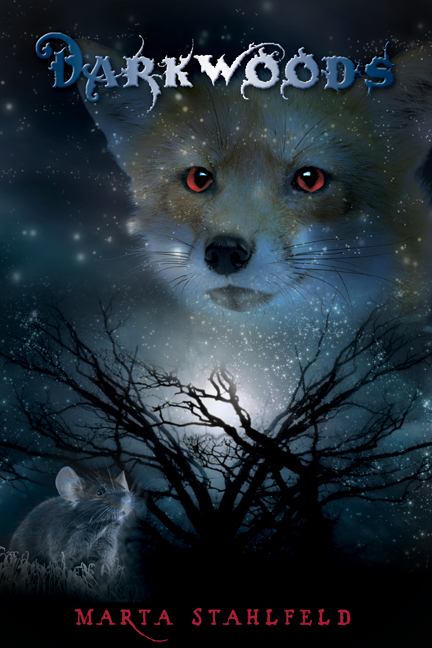
Marta Stahfeld is nineteen and going to college in Milwaukee, Wisconsin, USA. She hopes to be a teacher one day. Aside from college, where she is working on a History/Literature double major, she is writing book three in the Darkwoods series, as well as a series of short stories about the characters from the series.

Blog: http://martastahlfeld.blogspot.com/

Website: http://www.darkwoodsbooks.com/index.html

Darkwoods_Front_Cover

Pasadagavra_cover[1]

Tony’s Review: The Sacrifice, Charlie Higson

5/5

Everyone over the age of 14 has been consumed by a virus that essentially turns them into zombies. Only the children are immune…for now, maybe.

This is number four in what Charlie Higson is now planning to make a seven book epic, and there’s a sense of things being set up for the later books, especially in the later chapters. There’s a change in the behaviour of the adults, for good and bad – the good guys get an ally, and the bad guys get a leader.

This is a book without fault. There isn’t a single wasted character or event, no matter how minor, and all the strands of plot tie up at the end and then leave room for more books (apart from DogNut, who I’m sure will appear in Book Five or somewhere down the line…).

What’s getting hard after four books and a gap of a few years between them, is to get the timeline sorted out. Events in this book overlap events in the other three, and it’s hard to remember who all the characters are in the previous books and their ‘status’ in this one. But that’s a minor niggle.

Higson goes to lengths to point out that the monsters inside – the children who decide to lead the children – are as dangerous as those outside. There are shades of Lord of The Flies in Ed and Little Sam and the situations they find themselves in, and I think the comparison is a worthy one.

This is not a book for the squeamish. A nine year old boy gets flogged, anyone can die (and they do), and the fights against the adults are long, bloody and vicious. It doesn’t go into extravagant details, but it doesn’t shy away from them either. Be warned: This is the book Stephen King would write if he wrote YA.

The real star of the show are Little Sam and the delightfully batty (or is he?) The Kid, who talks like Alex from A Clockwork Orange but is sharp as a sat-on-box-of-pins. Sam’s grim determination to find his sister and then The Kid is one of the underlying themes of the book – and there are so many: dictatorships, loyalty, sacrifice, friendship, not judging people by their appearances, rebuilding society. Everything is packed in there, but nothing feels rushed or thrown in. This is a book carefully constructed to make you think and reconsider, and I’m already hungry for the next three sequels.