Guest Post…Fathers, Sons, Dominoes, and Storytelling

Our guest post today is by Andrew Cotto, author of The Domino Effect, where he considers the importance of storytelling. 

I remember talking to a friend in graduate school about a project I’d been working on outside the confines of our MFA program. It was a story about a charismatic kid from Queens, with the nickname of Domino, who gave up on the idea of being “good” after it got his head busted open and his heart ripped out. A damaged Domino escapes to a boarding school in rural New Jersey, and, there, the story follows his transformation, over a tumultuous year, from the self-centered kid he’d recently become, back to the person he was raised to be: someone who looks after others, because the way we treat people affects the way they treat people and so on. Hence the title: The Domino Effect.

I paused after my big finish, waiting for my friend’s enthusiasm to validate my work in progress.

“Umm,” she said, crinkling her nose, “Isn’t that a little moralistic?”

I shelved the project and focused on my thematically rich yet morally ambiguous literary mystery. When I finished the program, I decided to go back to The Domino Effect. This was the story I wanted to tell: it had a great voice, a complex protagonist, strong secondary characters, interesting settings, a page-turner of a plot threaded with humor and music, and themes both universal and unique. And, yeah, it was somewhat moralistic, which was something I had to figure out how to handle.

I love storytelling for many reasons. I love the images and language and devices that make the narrative art form so compelling. I love the requirements placed on imagination. Most of all, though, I love story because it can evoke empathy. It can expand the reader’s understanding of the world by allowing for immersion in the experiences of others. By being transported into the reality of other human beings, the reader can be transformed as a result. Stories allow us to connect with humanity in an unobtrusive way. And, yeah, sometimes that connection comes with a moral, though, in good storytelling, this is never overt.

One of the things I admire most about the Good Men Project is the manner which story is used to explore important matters in contemporary masculinity. While the content comes from a wide range of writers on a wide range of subjects, the message is always intended to be inclusive and devoid of judgment. They do not cast aspersions or arbitrate morality—they work exclusively within the territory of “good,” though those borders are as wide as their writers’ imaginations.

While completing my novel, I recognized my friend’s distaste for moralizing. Stories are not polemics or speeches. Writers should not dictate what is right or wrong. We must not tell people how to think or feel or behave. We show examples of human beings in motion and allow readers to take whatever they choose away, and if part of that involves a notion akin to morality—well, fine.

The Domino Effect is very much the story of a father and a son. So I tried to couch the concept that informs the book within the terms of their relationship, particularly the manner which the son admires his father:

Everyone liked my father. He was funny and smart and what people around called a stand-up guy. He always talked to me about doing the right thing. About looking out for other people and helping them whenever I could. He talked a lot about his heroes, like Bobby Kennedy and Martin Luther King, Jr. I listened. I always listened because Pop was my hero. And I wanted to be like him, talk like him, act like him and everything. So that’s why they called me Domino. Because my father’s name was Dominick and, in Italian, ‘ino’ kind of means little, so “Little Dom” translated into Dom-ino. Everybody called me Domino, except my mother who called me Daniel, and my father who called me Pal.

This relationship, and its dramatic shifts, is the heart of the book. I want readers to invest in Domino, to follow him through his journey, rooting for his redemption…or maybe not. That’s up to the reader. I’m just telling the story.

————————

Want to know more? Check out the links!

Andrew Cotto is a teacher & writer who lives in Brooklyn, NY. His coming-of-age novel, THE DOMINO EFFECT, is now available on Amazon.com. Outerborough Blues: A Brooklyn Mystery will be released in 2012 by Ig Publishing. Learn more about Andrew at his website, and follow him on Facebook and Twitter @andrewcotto .

You Tube Book Trailer: The Domino Effect

————————–

(This post was previously featured at The Good Men Project in October 2011 and was re-posted here at the request of the author Andrew Cotto. To see the original post: http://goodmenproject.com/arts/fathers-sons-dominoes-and-storytelling/ ).

Guest Post…Why is YA Fiction so Popular?

Today’s guest post is from author Suzan Battah, pondering the popularity of YA fiction today.

————————–

Young Adult Fiction has come a long way since I was a teenager. The quality of the stories has jumped a thousand percent. The length in young adult novels has expanded and exceeded what it used to be.

I remember growing up with Young Adult Fiction, quickly growing bored with the novella sized books and repetitious storylines. Between the age of 12 and 14 I was devouring books and nothing was interesting me anymore. So I ended up going straight to the Adult Fiction section in the Library, even though I got a frown from the elderly Librarian.

Fast forward to present day and wow! Young Adult Fiction is hotter than ever. And I’m going to tell you why. It’s become more edgy, readable and it pushes boundaries that it never used to do. Young Adults don’t need to be coddled. They can read a full length novel and enjoy it without losing interest. They can delve into complicated plots and multi-dimensional characters.

Not only is it more appealing to Young Adults but a new generation of older ‘Young Adult Fiction’ fans are hopping on the tracks. I’m one of them. I love coming of age stories that are complicated, adventurous and so real in that I can identify with the characters. Young Adults face more challenges with growing technology and a changing world and by bringing some type of essence of reality into YA Fiction is a big reason why it’s so popular.  I’m including all subgenres of YA Fiction in this statement because even in Paranormal, Urban Fantasy, Dystopian and Historical YA Fiction there is always a special connection between the storyline’s reality in which a reader is absorbed in.

Twilight is popular, very popular not just because of Robert Patterson being the super hunk that he is playing Edward but because so many teenage girls have fallen in love with the idea of a chivalrous boyfriend willing to do anything to protect you. This is what the story’s underlying message is,  despite his most deepest urge to taste Bella’s blood, Edward loves her enough that he won’t risk hurting her. Also, interestingly if you do take the Twilight series apart without googly, lovey dovey eyes there are plenty of flaws but it’s believable and written well enough to have collected a fantastic following of not just Young Adults but Older fans as well – including me.

Moving on to another example, Richelle Mead’s popular Vampire Academy series, after reading Twilight, I really didn’t want to read another ‘vampire’ book but I was somehow drawn to this story and after reading the series completely out of sync, I am now a huge fan of Richelle Mead. Her plots are complicated and fascinating. The characters are real, intense and emotional and what a heroine in Rose Hathaway. She fights for what she believes in with such attitude and does it well. The relationship between her and Dimitri is riddled with issues. He is her mentor after all. But this whole story is done really well. It tests the boundaries and goes beyond limitations.

And JK Rowling, yes I will include her in this conversation because the Harry Potter series though it did begin as Middle Grade novels, the series grew and developed and completed as Young Adult Fiction. She did a fantastic job in creating Harry Potter in such a way that not just Children and Young Adults could enjoy but the whole world became awed by him. Personally, I was pushed into the reading HP by a colleague at work, who absolutely loved the books. I bought all seven in one hit and read them back to back. And although I didn’t love this series,  I believe it is one of the best written, most creative series of all time. In my opinion she wasted the last book and should have put the ending of the seventh book into the sixth and be done with it.

Young Adult Fiction is so popular because it relates to all people on so many different levels. Young Adults have access to many new digital formats, inexpensive Ebooks are available and social networking is expanding to a new level where teenagers can communicate and discuss their favourite books, movies etc to a worldwide audience on the web. Word of mouth spreads quickly and can go viral on the internet. Amanda Hocking did it with her YA novels by writing stories that entertained readers and though not the best written novels still managed to build a connection. She did a great job all on her own. And all it took was for her fans and readers to start talking about it.

The Young Adult Fiction market is saturated but the success of YA comes from being able to connect with readers – a great story, complex characters with substance and you’ll have fans for life.

—————————–

About the Author

Suzan Battah is a proud Australian born author who has loved to write since her teenage years. In 2011 she published her first novel a contemporary multicultural romance – Mad About the Boy. In her spare time she weaves magical tales to entertain. Suzan writes YA Fiction -Urban Fantasy/Paranormal Romance, Regency Romance and Contemporary Romance. Other fun things you can find her doing is training at the gym and Latin/Ballroom dancing. Suzan is afraid of heights, loves most things that are sweet, has no clue about fashion and one day hopes to speak Spanish fluently and travel the world.
Want to know more? Check out the links!

Guest Post…Author Appreciation

For today’s guest post, we’re welcoming back author Charlotte Abel following her recent guest review slot (which you can read here), to talk about a subject of interest to most authors – but especially indie ones: getting reader support. For readers, this might give you an idea of the kind of things authors hope people who enjoy their books will do, as it all helps with promotion.
————————————–
If you have favorite authors that you want to help promote with about 15 seconds of effort, consider using the “like” button and tags to increase their rankings on sites like amazon.com and within search engines. It’s a simple gesture that goes a long way to giving thanks to those that provide us with hours of entertainment and happiness.
I had no idea how important those like and “useful” buttons were on the sales pages of my favorite products until I listed my own books. Not only do they determine which reviews (the good, the bad and the ugly) are shown to prospective customers but they can mean the difference between making it onto a best-seller list or not. That is one of the ultimate goals for all authors and if your willingness to just click a few tags can help that dream come true… Well, I know that I am always happy to give a little love to my fave authors.
Here’s a little video to give you ideas on other ways you could help the authors you like…
——————
Want to know more about our guest? 
Charlotte Abel is a full time writer that lives near Boulder, Colorado with her husband Pete. When she’s not reading or writing, she enjoys hiking, bicycling, and archery. Her debut novel, Enchantment, Book 1 of The Channie Series is a paranormal coming of age romance. Taken, Book 2 of The Channie Series is the action packed sequel. The final chapter of The Channie Series will be released in the summer of 2012. Future projects include a romantic thriller set in the remote Sawatch Mountain wilderness of Colorado and a Polynesian shifter series.

To learn more about Charlotte and The Channie Series, please visit: www.TheChannieSeries.com.

Guest Post…Is it Really Inspiration? by Stephen Graff

I’ve read a few passages about what has inspired some of the great novels.  Three famous horror novelists share a common thread: that their books were inspired by disturbing dreams.

Two years ago, I started writing a dystopian suspense novel called RIVER DAWN after a series of strange, recurring dreams set in an abandoned shore town.  In this town, the hotels are all empty, but reservation clerks are on duty waiting for vacationers that never show up.  I am there, with suitcase in hand.  Sometimes I am there with my wife and daughter, sometimes alone.  But we manage to secure a room for the night, and all night long, as we try to sleep, the ocean is pounding the shore with relentless fury. There is some comfort in being near the sea, but also a sense of impending doom.

For the book, I imagined a family on a journey in a future, flooded world where darkness reigns and the sea is always a force to be reckoned with.

But was it really inspiration in the traditional sense? According to one account, Mary Shelley’s FRANKENSTEIN was inspired by a strange, eerie dream involving corpses.  Nightmares also inspired Steven King with his novel MISERY and Robert Louis Stevenson’s classic horror novel DR. JEKYLL AND MR. HYDE. But it’s difficult to think of these famous authors having to find time to write in the midst of mundane schedules. Like most of the writers who venture forth into the universe of self-publishing, I struggle to find the time to write, and inspiration has to reveal itself rather quickly because I have to go run some errands, finish my tax return, take my daughter to school, walk the dog, mow the lawn, or keep a dentist’s appointment.

Perhaps we over-romanticize the writers we admire.  Robert Louis Stevenson spent much of his younger life in poor health, in bed and unable to participate in the normal pursuits.  Much of his early inspiration rose out of boredom.

Today, there are many thousands of part-time novelists; writers juggling jobs, family, and schedules.  What we end up with is the result of fleeting dreams that have to be captured and revealed quickly, between the challenges of everyday life.  I’d call it inspiration on the fly.

—————————-

Stephen Graff is the author of the dystopian novel River Dawn, available now at Amazon.

Link to

Stephen has been a teacher non-stop for 27 years, starting out in Philadelphia at a number of proprietary schools.  For the past 9 years, he’s worked as an elementary school teacher full-time, a musician/performer part-time, a free-lance writer and fledgling beekeeper in his spare time.  He lives in Woodbury, NJ with his wife and daughter. He is the author of the dystopian novel RIVER DAWN.

Want to know more? http://www.sgraffwriter.com

Guest Post…Are Book Covers and Blurbs Really Important?

Today’s guest post is by author, Emi Gayle, where she considers the importance and value of the relationship between a book, its blurb and its cover… Emi’s blog sites are two of the most visually dynamic we’ve come across, which demonstrates how she links images and books. It was the ‘Read or Not’ feature that first brought her to our attention.

Should we judge a book by its cover? Let’s find out!

——————————————————–

I have a fascination with book covers. Yes, I really do. They are my first impression to a story and often to an author. I LOVE that the paperbacks I own color the shelves in my house. No, I don’t buy them anymore, now, I ‘collect’ them virtually, on my desktop shelves and on my Kindle.

It’s the same reason why the ‘art’ in my home is of my own creation — photos of my kids and family — though I own far more of them in digital format. I realized, recently, that I’ve always been this way. I picked books off the shelf at the library ages ago, not by the contents within but by the covers. I’ve always been entranced by the visual appeal, the connection a book makes just with my eyes.

I learn the same way. In a recent work conversation, I had to explain to someone why teaching by audio-only content doesn’t work. It’s because most people are visual. So when we teach through a combination of sight, sound and tactile experience, we learn better. But I learn best by seeing. Doing, yes, but seeing? Yes. Pictures really are worth a thousand words.

That may be why I became a photographer, to showcase life, as I see it or know it, as I experience it or live it, in a medium that pleases … of all people … me!

So … I decided, about four or five months ago, to take my obsession and use it to the advantage of others. Yep! Others. How do I do that? Why?

The ‘How?’ is with a series called “If you saw it, would you read it?” tagged with the hashtag #ReadorNot. I have very distinct criteria for the selection of books for this series.

First — the cover has to be the ‘thing’ that catches my eye. It has to. Why? Because in this day and age of technology, many readers don’t pick up a book by browsing at a bookstore or at a library. They browse online catalogs. There is no tactile feel with this anymore. It’s all visual. That cover has to ‘wow’ and if it doesn’t, for the genre that it’s in, it will not get reviewed further.

Second — the blurb. Some readers don’t read these for fear it will give away the story. Others are religious about reading them because it tells them whether they might like the book. I think the blurb has to fit the cover otherwise it will bring out an inconsistency with the viewer. If the cover is awesome and the blurb sucks, what’s that going to say about the content within? You see, the blurb is the second piece that a potential reader has access to without clicking further into a book.

Yes, Amazon has the “Look Inside” and that’s great, but if the cover and blurb don’t call to a reader, they aren’t going to take the next step and look inside. It’s all the ‘outside’ that gets a book from point 0 to point 1. If you’ve won over a reader there, the content and story take over.

Since I write under two pen names (Aimee Laine and Emi Gayle), I do my weekly #ReadOrNot post about adult and YA books respectively. I, obviously, have preferences when it comes to covers. I like bright colors, boldness, neat designs and in my favorite genres of paranormal, romance and urban fantasy. Does that mean I don’t look at other genres? Nope. If a cover catches my eye — if it makes me look twice, I may, in fact, review it.

So how do I do this review? First, I analyze the cover (that was what first took my attention, right?) Then I read the blurb and analyze it. After that, I compare the two. Do they match? Don’t they and answer the question why? or why not?

Very few books have been spot on – some so disconnected when I got to the blurb that I nixed it from my review. Many have been close. Some have been amazingly connected and I added the book right then to my To Be Read pile.

Why do I do this? For books that pull me in by their cover, I want to give them a shout out. It’s just a way of helping my fellow author, but doing it in a way that I hope will help others in their evaluation of a book as well as authors and publishers in their development of a book cover and blurb. If they don’t match, readers will notice and if the cover stinks, readers won’t even take notice.

In our age of technology, where the Internet is fast becoming the place to buy books and to share information about them, the covers and blurbs are remarkably important.

——————

Want to know more? Check out the links!

http://www.emigayle.com

I post #ReadOrNot blogs on Wednesdays at http://www.aimeelaine.com/blog and on Tuesdays at http://www.emigayle.com – I hope you enjoy the series!

Guest Post…Write or Wrong? by Jade Varden (Part II)

In the second instalment of her guest post Write or Wrong? Jade Varden discusses ‘non-traditional’ publishing routes. 

(Read Write or Wrong? Part I here)

Self-Publishing

These days, writers don’t need to impress the literary agents or the publishing houses — they simply need to complete their work and get to feeling ambitious. The world of self-publishing has been blasted wide open by the Internet, providing opportunities that never existed before. But that doesn’t mean that the possibility of rejection no longer exists.

In fact, some writers are feeling it more acutely than ever. Publishing houses and literary agents often follow certain formulas. They look for specific ingredients in the books they accept and the authors they choose to favor. Books and writers that don’t meet this criteria end up feeling the sharp sting of rejection, which is all the more painful when the writer knows deep within themselves that their work is good.

Until they self-publish it…and the readers seem to hate it, too. Some who set out to prove the publishers wrong find themselves facing the pain of low readership, mean-spirited reviews and other agonizing experiences. No matter how you publish, when you publish you leave yourself vulnerable to ridicule and derision from readers. This is only tempered by the fact that you are also open to love and praise. But for some writers, even this possibility isn’t enough to assuage the pain — or even to relieve the potential for pain.

Some of the world’s greatest writers never intentionally shared their work with it. Many people are required to study the poet Emily Dickinson in school, and more than one fantastic college paper has delved deeply into her unique, somber works. But she never intended for any of us to see that poetry. Emily was a shut-in who rarely left her home, choosing instead to spend her days scribbling about the sights she saw from her window and the amazing thoughts that rolled around in her head. She asked that, upon her death, all her poetry be burned by her sisters. They had it published instead. One can only assume the same fear that kept Emily hidden away her whole life made her hide her wonderful words away as well.

The Alternative

So, to sum it up, I have very little in common with any bestselling writer I’ve ever studied. Like many writers, I’ve felt the sharp sting of rejection from publishers and from readers. I’ve struggled to get down one sentence and somehow magically sped though certain chapters. I’ve cried at rejection slips, and I’ve ignored rejection slips. I’ve felt pain and elation thanks to my writing efforts. And, like Emily Dickinson, I’ve even flirted with the fantasy of simply locking myself into a room so I can simply write in peace and try to ignore what the world thinks of it.

So I guess the question is, why the heck am I still writing? In one blog post alone I’ve expressed bitterness and anger, resentment and confusion — and I found a way to be somewhat unflattering to two popular American writers. But that’s the thing about writing: it’s a roller coaster, and it’s filled with emotion. Part of putting emotion on the page is in feeling it yourself.

And besides that, there’s only one alternative: not writing at all. What kind of fate is that for any writer? It hurts to be rejected by anyone, it’s scary to put yourself out there for everyone and it’s incredibly difficult to write an entire book from beginning to end. But isn’t all of that infinitely preferable to being haunted by the words not written?

—————————-

Want to know more about Jade Varden and her writing?

Check out the links!
Official site
Official blog
Twitter
Kindle Store

Guest Post…With Help from Mysteries by Elisabeth Foley

Whenever I read a good mystery, it makes me want to write one.

Reading is one of the best things a writer can do to stimulate their creativity, and I really believe that reading mysteries has a particularly potent effect on mine. I nearly always come away from a good mystery with a mind full of new ideas—none of them directly from the story I just read, but the process of trying to solve the mystery, and then looking back over how it was constructed after the solution is revealed, seem to set the wheels spinning in my brain. Even if I’m not writing a mystery at the time, if I find my inspiration for a project running dry, I’ll often pick up a good whodunit to refresh myself.

This past week I’ve been reading Lost Man’s Lane by Anna Katharine Green, an early American pioneer of detective fiction. She published her acclaimed debut novel The Leavenworth Case in 1878, and continued writing up through the 1920s. Lost Man’s Lane is the second book featuring one of her most entertaining characters, Miss Amelia Butterworth—a spinster lady of great propriety and determination, who is often regarded as a forerunner of Agatha Christie’s Miss Marple and other spinster detectives. Miss Butterworth assisted Green’s most frequently recurring character, the detective Ebenezer Gryce, in three books—That Affair Next Door (1897), Lost Man’s Lane (1898) and The Circular Study(1900). Miss Butterworth, who opens her narration of That Affair Next Door with the memorable words, “I am not an inquisitive woman…” is always careful to assure her readers that her “interference” in detective matters is prompted entirely by a sense of duty, though she shows a keen interest and relish in all her sleuthing.

One of my recent projects has been the creation of my own middle-aged lady detective, in the style of Miss Butterworth and Miss Marple, but with certain elements all her own. She is a widow, not a spinster. She’s not quite as forceful a personality as Miss Butterworth; she’s a kind-hearted woman who frequently employs her detective skills to help people in trouble. Though a romantic at heart, she also has a sense of humor and is eminently practical. The setting for her adventures is Colorado, shortly after the turn of the 20th century, which allows me to combine some of the drama and sophistication of Anna Katharine Green’s Victorian and Edwardian-era mysteries with the more rural setting to which I’m accustomed from writing Western stories. I can’t say positively when she’ll make her first appearance in print, but it will probably be sometime this year.

One thing I am sure of, though—if I get stuck working on one of her stories, I’ll be heading back to the bookshelf to find fresh inspiration from another mystery.

————————

Today’s guest post is by Elisabeth Foley, author of The Ranch Next Door and Other Stories, a collection of Western short stories that go beyond the standard action and adventure of the genre to focus on character and conflict. In the award-winning “Disturbing the Peace,” honorable mention in the 2010 Rope and Wire short story competition, a sheriff experiences a revelation about himself and his relationship with the people of his town, while in “The Outlaw’s Wife,” a country doctor worries that his young friend is falling for a married woman whose husband is rumored to be a wanted criminal. From the suspenseful “Cross My Heart” to the comedic romp of “A Rangeland Renaissance,” to a Western twist on star-crossed romance in the title story, “The Ranch Next Door,” these stories will appeal to a variety of readers, as well as established fans of the traditional Western.
Want to know more? Check out the links!
The Ranch Next Door and Other Stories available at AmazonBarnes & Noble and Smashwords

Guest Post…Write or Wrong? by Jade Varden (Part I)

Write or Wrong? The Fear of Rejection, Self-Publishing and the Words Not Written

Once, I went on a self-assigned journey in order to understand what sets bestselling authors apart from every other kind of author out there. I searched biographies, interviews and funny articles about famously rejected authors to find some sort of answer. It all resulted in the most intense frustration I’ve ever felt in my entire life. As it turns out, bestselling authors give incredibly annoying answers to the questions that have always mattered most to me.

The Origin Story

Most interviewers inevitably ask bestselling writers the same question: what made you write this book? I read more than one such “origin story” for some of my favorite novels, and I never could find a single author who talked about jumping up in the middle of the night to scribble down ideas, pacing around a room for hours trying to work out a complicated plot, crying and sweating over their keyboards — all that crazy stuff I do when I’m trying to write. As a matter of fact, some of the authors made it sound as though writing a bestseller is akin to falling into a puddle — “well, I was walking along one day and I tripped. And when I looked down, I had completed this incredible piece of fiction that millions of people love!”

Honestly, that’s only a slight exaggeration. Jean Auel, the author of the phenomenal Earth’s Children series, is the actual writer who inspired that metaphor. She began her breakthrough hit, Clan of the Cave Bear, as a short story. The way she used to tell it, one day she just started writing. Before she knew it, she had this massive novel in her hands. Anybody who’s ever seen the Clan of the Cave Bear in print knows that “massive” is really an understatement. Short story, indeed.

Which isn’t to say her comments are true — I’m sure they are. But at the same time, it’s still incredibly annoying. Where is the blood, the tears, the sweat, the agony and the pain?

Case in point: J.K. Rowling, author of the smash hit Harry Potter books. They are books, they are movies, they are indelibly ingrained in pop culture, they are epic. Rowling was famously rejected by 12 different publishing houses before she got a break…and the rest is history.

Did you catch that I wrote 12? Twelve! Many writers out there, me included, have received hundreds and hundreds of rejection letters. So how does it feel when you know that Lucky Thirteen is already several years in the past…and it didn’t pan out?

(Read Write or Wrong? Part II here)

—————————-

Jade Varden is the author of Justice (Deck of Lies)

A House of Cards…

When you build an entire life on a foundation of lies, it only takes one truth for the whole thing to come crashing down. I never invited the truth in. I never went searching for it. I never had any reason to suspect that the two people I loved most were dishonest with me every second of every day.

I made one bad decision, and in a single day my entire world changed. If I’m ever going to discover the truth about myself and my parents, I have to trace all the lies back to their source. I have to try to find the truth that they’re hiding.

The more I discover about myself, and my past, the more I realize that lies really are better than the truth. But now that I know the lies are all around me, I can’t stop until I’ve discovered them all. I’ll pull each lie away, one by one, and examine it to see what’s underneath…until this house of cards crumbles into dust at my feet.

I just hope I can survive the crash.

—————————–

Want to know more about Jade Varden and her writing?

Check out the links!
Official site
Official blog
Twitter
Kindle Store


Guest Post…Creative Commons by James Hutchings

Many writers, whether published or just starting out, are very nervous that someone else will steal their work, whether that be another writer using their ideas in their own stories, or someone making pirated copies of their books. When I put out a collection of my writing, I specifically gave permission for anyone at all to copy my ideas, or even to cut and paste whole stories. I also contacted the Pirate Party, a worldwide network that wants to lessen copyright, and told them that I was giving anyone permission to put my ebook on file-sharing sites. In this post I hope to show why I went against common wisdom.

Creative Commons

I used a free service called Creative Commons. Creative Commons is useful for people who want to give the general public permission to use their work, but with restrictions. In my case I didn’t mind people using my work for non-profit purposes, such as posting on a blog, but I didn’t want to allow anyone to make money off it. Similarly I wanted anyone who used it to give me credit. I could have just listed these things myself. However I’m not a lawyer, and perhaps I would have worded it wrong so that someone could twist what I said to do more than I meant. Also I could have been unclear about what I was allowing and what I wasn’t allowing. Sure, someone could email me and ask, but the whole purpose of having a written statement is so that people don’t have to ask.

Creative Commons has a series of different licenses, which give permission to do different things. They’re all legally ‘tight’, and they’re all summarized in plain language. So all you have to do is go to their site and answer a series of questions, to get to the license that does what you want. In my case I used the Attribution Non-Commercial License.

Why?

That’s what I did. But why? Common sense would suggest that I’m giving something away for free that I could be selling. However I believe that, in the long run, I’ll be better off. The main reason is that I’ve seen how many people are, like me, trying to get their writing out there. Go to Smashwords and have a look at the latest ebooks. Then refresh the page ten minutes later, and you’ll probably see a whole new lot. The problem that new writers face isn’t that people want to steal your work; it’s getting anyone to show an interest in your work at all. If someone passes on a pirated copy of my work, it might get to someone who’s prepared to buy it – and that someone would probably have never heard of me otherwise. Even if they don’t want to pay for what they read, I might come out with something else in the future, and perhaps paying 99c for it will be easier than hunting it down on a file-sharing site.

Science fiction writer Andrew Burt tells the story of someone who disliked his book, and to get back at him decided to put a copy on a file-sharing site. The effect was that he got a small ‘spike’ in sales immediately afterwards.

I also have some less selfish motives. Many people would assume that the purpose of copyright is to protect authors and creators. Leaving aside the fact that someone else often ends up with the rights (how many Disney shareholders created any of the Disney characters? How many shareholders in Microsoft have ever written a line of code?), that doesn’t seem to have been the intention in the past. The US Constitution says that Congress has the power “to promote the Progress of Science and useful Arts, by securing for limited Times to Authors and Inventors the exclusive Right to their respective Writings and Discoveries.” Note that protecting ‘intellectual property’ isn’t mentioned. The authors of the Constitution seemed to see the point as getting ideas out there where people can use them: almost the exact opposite of keeping them ‘safe’ and ‘protected’.

The original idea of copyright seems to have been a sort of deal: you have an idea, and we want you to get it out into the world where it will do some good. To encourage you to do that, we’ll give you a monopoly on its use for a limited time. After that, anybody can use it (it will enter the ‘public domain’).

A lot of people don’t know that copyright used to give a lot less protection than it does now, especially in the United States. In the US, it used to be that works were copyrighted for a maximum of 56 years. Today copyright in the US can last for over 100 years. In fact Congress keeps extending the time. In practice, they’re acting as if they never want ideas to go into the public domain.

This is great for the owners of ‘intellectual property’. But it’s hard to see how this “promotes the Progress of Science and useful Arts,” or how forever is a “limited time.” In a sense it’s a theft from the public. Anyone who publishes work has accepted the deal that the law offers, of a limited monopoly in return for making their idea known. Congress has been giving them more and more extensions on that monopoly, but doesn’t require them to do anything to earn it.

It probably doesn’t matter that much that Disney still owns Mickey Mouse, or that Lord of the Rings is still under copyright. But remember that these laws don’t just apply to the arts. Similar laws apply to science as well. So a life-saving invention could be going unused, because its owner wants too much money for it, or because it’s tied up in court while two companies fight about who owns it.

Conclusion

I’m far from an expert on either the law or the publishing industry. However I hope that I’ve given you, especially those of you who might be thinking about publishing some writing, a different take on the whole issue of whether authors should worry about their ideas being stolen. At least I hope I’ve shown you that there’s a different way of thinking about it, and that that way doesn’t require you to just give up on making money; in fact that it might be more profitable as well as better for society.

—————–

About the Author: James Hutchings lives in Melbourne, Australia. He fights crime as Poetic Justice, but his day job is acting. You might know him by his stage-name ‘Brad Pitt.’ He specializes in short fantasy fiction. His work has appeared in Daily Science Fiction, fiction365 and Enchanted Conversation among other markets. His ebook collection The New Death and others is now available from Amazon, Smashwords and Barnes & Noble. He blogs daily at Teleleli.

—————-

This article is licensed under a Creative Commons Attribution Non-Commercial License.

Guest Post…Why I Read YA, by Eric Edstrom

I ignored the YA section of the bookstore for most of my life, believing those books were strictly for teens. That prejudice ended with the Harry Potter phenomenon. I know, I know. HP isn’t quite YA, but stick with me.

Suddenly, grown-ups everywhere were seen reading HP novels in coffee shops, on airplanes, and at beaches. Whatever stigma had been associated with adults reading children’s books disappeared overnight. I happily joined this movement, as did millions of others.

With my resistance broken down, I didn’t think twice about trying a couple young adult novels I’d been hearing about. I bought, read and endlessly recommended both Little Brother by Cory Doctorow and Twilight by you know who. It wasn’t long before I started to prefer YA.

Why do these YA stories resonate with me, a grown man, several rings out from the bullseye of the target market age?

I believe it’s because authors don’t write these books for teens; they write them about teens. The condition of being a teen is one of in-between-ness: between childhood and adulthood, between dependence and independence, innocence and worldliness. If you’re a teen, the adults in your life don’t quite view you as an equal, and yet you no longer identify with children. You’re stuck.

The struggle to get out of the the in-between-ness causes endless angst. It’s amidst this glorious angst that some of the juiciest stories happen.

Here’s my theory: YA stories are myths about the journey teens must take to reach adulthood. Teens love these stories because they see their own struggles in them. But if you accept my theory, YA stories are as much about adulthood as they are about teenagerhood. And that’s why they appeal to adults.

Maybe these stories provide some wish fulfillment, like an opportunity to relive one’s teens and make different choices. Or maybe the appeal is that adults feel some paternal or maternal instinct toward the young characters.

I think it’s more than that.

In my opinion, all that distinguishes an adult from a teen is the collected sediment of years. If you scrape away the layers of cynicism and world-weariness, many adults are still teens at heart. I know I still struggle with authority, with the opinions of my peers, and I suffer continued disillusionment as one more thing I was certain was true turns out to be false.

So why I do I read YA?

It’s because, despite the fact I’m in my fourth decade, I’m still making the transition from childhood to adulthood.

P.S. And that might also be the reason I write YA.

 ————————
Thank you Eric for joining us on the blog today!
————————
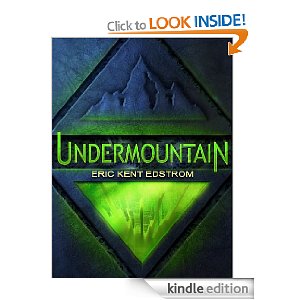
Eric Edstrom is the author of Undermountain, released in December 2011. 
Synopsis: 
Undermountain is an innovative, clever and wildly imaginative adventure. Along the way, Edstrom turns the legend of bigfoot on its head.
A group of troubled teens escape to the Canadian Rockies for a ten day excursion. All they take with them is their backpacks and their grizzled old mountaineer guide. But when Danny and Breyona encounter a creature of legend—an eight foot tall beast they tag as “bigfoot”—the hike turns into a race for their lives.Swept to the secret city of Undermountain, Danny, Breyona and their friends find themselves in the middle of a war—between their “bigfoot” captors and horrific creatures called “shriekers.” But more than their freedom is at stake. To escape, to survive, to save the Earth, Danny and Breyona must end the war … and make sure neither side wins.

Purchase links

Amazon US: http://www.amazon.com/dp/B006PHZ82W

Amazon UK: https://www.amazon.co.uk/dp/B006PHZ82W

Smashwords: http://www.smashwords.com/books/view/117435

Also available in nook, kobo, apple stores

—————————-
Meet the Author 

www.ericedstrom.com

@bigfootgrizz

@ekedstrom