Guest Post…The MANfiction Bromance

Friends or Bromance?

Friends or Bromance?

MANfiction is all about guys, so the main character will most likely be male. And when you have one, more than likely another one will be waiting in the wings, or will be central to the story, or your main character. In that case, you may have what is called a bromance. Is that such a bad thing?

In pursuit of a good story, I would argue that it’s not. Good stories can have two men working together, arguing together, and getting out of trouble together. In the end, it makes for a more realistic story. Take brothers. I fought with mine constantly, but in the end, I was a better person for being forced to fight my way out of trouble with my fists. And your main character will be as well.

So what do you need for the perfect bromance? You need the perfect complement to your main character. If your main character tends to take a step backward, you need a person that jumps in with both feet. If your main character has a mouth the size of Arkansas, you need a person that has lips sealed tighter than a man in the middle of Antarctica.

What does the bromance do? It gives your story heart, and it adds another dimension between all of the fight scenes. And your reader will certainly thank you.

Robert Downs is the author of Falling Immortality: Casey Holden, Private Investigator. A sample chapter of his MANfiction mystery debut, as well as other interesting information about the author, or his main character, can be located at his website http://RobertDowns.net
——————————–

Falling Immortality

Falling Immortality


Falling Immortality

Casey Holden, former cop, current PI in Virginia Beach, VA, screens his clients the way he screens his women, based on whichever drop-dead gorgeous woman happens to waltz through his door first and manages to hold his attention. So when Felicity Farren, widow-at-large, struts into his office asking him to solve the two-year-old murder of her husband Artis, she intrigues him. When Casey starts digging, he learns the murder isn’t what it seems to be and he doesn’t have a big enough shovel to unearth the truth. And to top it all off, his former rival at the police department, Greg Gilman, is determined to disrupt his investigation. Casey’s challenge is to learn what really happened to Artis, and why Gilman can’t seem to remove his head from his butt. And he’ll need all of his wits to complete the task.


Writing 101…The End of the World

Lots of people believe the world is going to end, and lots of that can be blamed on good fiction. A good story can instill fear in an entire population. Once upon a time, back when the TV didn’t exist, a nationwide panic was created over a radio program. The public literally believed that Earth had been invaded by an alien population. That is good writing. The end of the world can make for a great topic — just ask the Mayans. We’re still talking about them 2,000 years laterA good story is pretty powerful stuff.

The End of the World as They Know It

 
Writing about a catastrophic, world-ending event can be a heady experience. You can make it thrilling, you can make it sad, you can make it frightening and horrifying. That’s the power of the pen: you can do anything you want. But some writers take even that a little too far. Because you can’t just end a world out of nowhere. You’ve got to lead up to it, a little.
Before you can end your fictional world with some sort of catastrophic event, you have to make me care. You can’t just end an entire world without making it an emotional experience. Should I be glad this world is ending? Maybe it’s a horrible place filled with villains. Should I be sad? Was there a hero or heroine I just can’t help but love, someone who must now die along with all the rest? Should I be frightened and horrified? Maybe your world ends in a way that could make my world end, and maybe that scares me. Let me get to know the world before it ends, and meet some of the people who live on it. Otherwise, I’m going to be yawning over your descriptive passages and rolling my eyes as lifeless body after lifeless body is consumed by lava (or whatever).
To make the end of the world matter, you’ve got to add the human connection. And put some structures or natural wonders on the world while you’re at it. I’m going to feel the loss of a beautiful world more keenly than an ugly one.
And when you finally end the world, or write about your catastrophic event, do itspectacularly. Describe the screams, the smells, the pure horror of the event. After all, the end of the world isn’t something that happens every day.

———————————————–

This post originally featured on Jade Varden’s author blog in 2012.

———————————————–

Author Jade Varden is a regular guest contributor on Aside From Writing. The Writing 101 features originate from her own blog  at http://jadevarden.blogspot.co.uk where you can see more of her thoughts on writing, as well as her own books. Her debut novel Justice and sequel The Tower are available now! Read our review of Justice here.

Writing 101…Stepping Outside Your Genre

Self-published authors have to work hard to build up a fan base and to establish themselves as “real” authors in the eyes of their readers. That’s why stepping outside your genre and writing something completely different can be pretty tricky and scary business. What if you go out on a limb…and lose all of your fans? 

Outside the Box

After putting all that time and effort into building up a fan base, stepping outside that comfort zone with a totally different book is a brave thing to do (some might say foolish). While some of your fans may stay true, others may be turned off because they aren’t fans of that particular genre. That means you’ve got to start all over again, and start targeting fans in your new genre to find the readers that will be interested in this new book of yours.
It’s a lot of work, but it’s not all that different from all the marketing you’ve already done. You should re-focus your efforts with every new book you release, whether it’s in the same genre as your others or an altogether different one. Stepping outside your genre actually gives you a unique opportunity to gain an even bigger fan following, and reach out to readers you mightn’t find otherwise.
Don’t ever be afraid to make a change. One of the joys of self-publishing is that you get to do whatever you want, write whatever interests you, and let your own skills as an author develop and grow in any way you like. You don’t have to answer to anyone, uphold contracts or write sequels you aren’t really feeling. If you have to do some extra marketing to get more readers, that’s just something that comes with the job.

———————————————–

This post originally featured on Jade Varden’s author blog in 2012.

———————————————–

Author Jade Varden is a regular guest contributor on Aside From Writing. The Writing 101 features originate from her own blog  at http://jadevarden.blogspot.co.uk where you can see more of her thoughts on writing, as well as her own books. Her debut novel Justice and sequel The Tower are available now! Read our review of Justice here.

Tony’s Thinking…Might as well face it, you’re addicted to writing

Today I was waiting for a very slow (It was still going 8 hours after I started it…) progress bar to finish. I’m used to this; working in computers is often a slow and patient business, and luckily I’m a slow and patient guy, or I wouldn’t be in the job I’m in.

Anyway, while I waited, I thought I’d write something off the top of my head, just to pass the time. Came out with a pretty good 1100 word story which I might publish somewhere.

The subject of the story is a bored housewife who takes up writing to pass the time, and on a whim sends her novel away to an agent. I won’t tell you the ending, but it got me thinking:

Is writing addictive? Is there a compulsion to write? I was twiddling my thumbs, and the first thing I thought of was: I’ll write something.

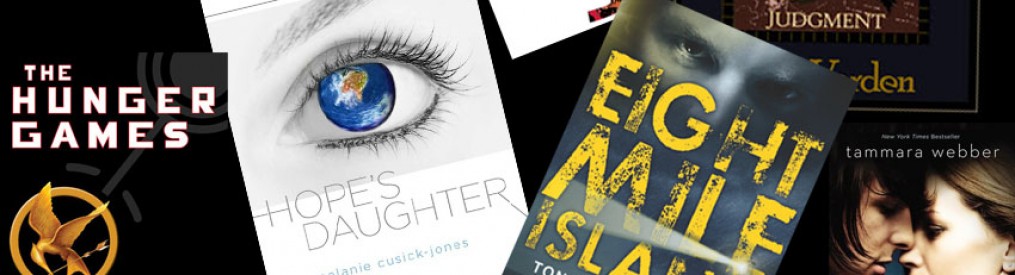
I’d just finished a seven month project to write a 35k novel (Update: That turned into Eight Mile Island), and here I was again: writing.

Here am I writing about writing, for heavens sake.

At least if I’m addicted – or obsessed – it’s quite a benign addiction; can’t see myself knocking over a fast food restaurant so I can find the money for more pens, for instance. But I would like to have some sort of life apart from hitting keys all day!

It’s fun ‘teaching’ it to people, and seeing their work and sharing it, but isn’t that just feeding my addiction?

I know I should be out there doing other things. I think there’s something called…ummm…’Fresh Air’, is it? I’d like to try that one day, just to see what it’s like. I think it comes with a side dish of ‘Exercise’, which sounds awfully strenous.

There are benefits to this addiction as well, I know. There aren’t many addictions where you earn money rather than spend it, and the more time you spend on your addiction, the more it earns you.

I’d love to earn enough to pay my mortgage, even if that wasn’t enough to take up writing full time (At the minute, I’m working on buying a new fridge!), but I can’t really imagine myself writing full time…what would that be like? How strict would you have to be with yourself to think of what you do as ‘your job: writer’, and not goof around on the internet all day. (Speaking of which, how are my sales doing on Amazon…).

So, in conclusion: Am I addicted to writing? Is there a cure? Would I want to take it if there was?

Now I have another story idea…an injection that stops creativity…

See what I mean?

Just finished…Hope’s Daughter (Melanie Cusick-Jones) *Spoilers*

Cassie and the remains of humanity live on an immense space station, taken from earth when environmental disaster wipes out the population.

At least that what she’s always been told…with the help of her friend (and then boyfriend) Balik, Cassie explores the dark secret behind Space Station Hope, a revelation that eventually leads to her fleeing for her life.

Although the book was a little slow to get started, I didn’t feel like I wanted to put it down at any point. Mel C-J created a believable world, and a mystery which kept me guessing right up to the last chapters.

Some theories I was flicking through as I was reading included Nineteen-Eighty-Four, Logan’s Run, Soylent Green…Was it even a space station, I wondered?
All of these theories were way off the mark, and close to the end, I wondered if Cassie’s parents were androids, and all of what was happening was benign. Wrong again!

The idea of a space station run by aliens so they can harvest human DNA was done with subtle hints and misdirection. At no point did I guess that was what was happening on the station.

In some places, the editing was a little rushed, and because of that, some of the nice ideas in the book slipped past me. I was too busy trying to figure out the sentence to concentrate on the story. Mel C-J did seem to need more commas so I could get a sense of what’s going on.

That was particularly bad near the end of the book, when Cassie’s father showed up. I think the scenes with him could have been cleaned up quite a bit, and the pacing slowed a little so I could absorb what was going on. I also think a bit more world building to establish the scale of the space station would have helped, and I would have liked to have seen more of the guts of the place, as it were.

I liked all the characters in the book, even breathless Ami and Olivia, who shows her humanity later in the book despite her superficial appearance and personality. Everyone was well rounded and nicely developed. I even felt empathy for the aliens, forced to harvest humans to survive.

In the end, I’d give it 4/5, mainly dropping the star for the grammar errors that needed fixing. But I’m hooked enough to start looking for the sequel!

Tony’s Rambles: The Curious Curse of the Cellular Phone

Sherlock Holmes lit his foul briar pipe and settled back into his chair, staring moodily out at the London fog.

“It has made your life much harder, Watson.”

Watson, startled out of examining his latest ApplePlum phone, looked up. “Sorry, old boy?”

“Cellular phones, Watson, cellular phones.”

“Not following old boy.”

Holmes leaned forward, his thin face harsh angles in the firelight. “No, of course not Watson, of course not. Now, observe and note.”

He leaned back again and ticked off points on his fingers.

“Firstly, description of character. I had to rely on hearsay and exaggeration. Now you bring that thing -,” (he waved towards Watson’s phone) ” – press a button, and bring me a precise image.”

“True, Holmes, true.”

“Secondly, and I use the vernacular, Watson, you understand, the vernacular. Backup.”

“Backup?”

“How can we be in any peril when you merely bring out your magic device and call for assistance?”

“Impeccably put, Holmes, but what’s your point?”

“As chronicler of my narratives, Watson, you must realise the problem?”

“No, afraid not, Holmes.”

“I will provide you examples then. Take the Hound of the Baskervilles. Someone snaps a photograph on that machine of yours, and the mystery is solved. A mysterious ghostly hound? No, obviously just a dog painted with phosphor. Add a Geotag, and tell us exactly where and when.”

“Ah, yes. That would spoil the mystery somewhat.”

“And are we in peril, Watson, when Lestrade and London’s finest can be called at any time?”

“By Lor Holmes! You’re right!” There was a pause while Watson considered. “What am I to do, Holmes? As a writer of fiction, my readers demand suspense. They demand drama.”

“There are few options, Watson. Break it. Let the potential energy run down, the battery as you would say. Leave it at home. Have it stolen.”

Watson spluttered. “What about my RSS? My Twitter updates?”

“Sorry, old friend. They have to be forfeited. You cannot write tension and drama into a story while that thing is in your pocket.”

Watson considered the slab of plastic and rare earth metals in his hand for a long moment, then placed it on the table beside him.

Holmes slapped his thighs and cocked his head to one side. “Excellent, Watson, excellent! Now if I’m not mistaken, that’s Mrs Hudson on the stairs and a woman with size four feet following. Your tension and drama are restored, and  the game is afoot, my friend…”

Guest Post…Literary Agents: Bane or Boon?

I just got an email from a friend of mine who’s also an author. She’s been on the hunt for a literary agent for several months now and was bemoaning the fact it’s been a long time since she sent off a packet to a NY agent. I didn’t have the heart to tell her not to hold her breath. She’s a good writer. That’s not the problem. The problem is an industry where common courtesy to authors–theoretically the lifesblood supporting agents and publishers–has gone the way of the dodo bird. All you have to do is pull up guidelines from any literary agent to see what I mean. There’s a long list of don’ts. I started in this business like most everyone else. I tried to find an agent. That was a little over three years ago. I’ve gotten to the point where I don’t bother anymore. Would I like someone who could open NY doors? Sure I would. But I also know when to trim my losses.

At the top of the don’ts list is “don’t call us”. Some are honest enough to tell you if you haven’t heard from them in six weeks (or six months) it means they’re not interested. I do understand they’re innundated with material and probably understaffed since indie publishers and self published authors have taken a percentage of the publishing dollar, but still, the current modus operandi places the author in a serious “one down” position.

I probably shouldn’t admit this, but I honestly have no idea why one story of mine is accepted and another that I saw as equally well-written, isn’t. Some of it is akin to chasing a moving target. I try to read webzines and magazines and anthology guidelines before I submit to make sure my material is a good fit. Sometimes an editor agrees with me, sometimes not. I’ve  been told that having ten short stories accepted in a little over two years is a great track record. Maybe. But what about the ten or fifteen other stories. The ones I either never heard back on, or where I got nice, polite rejection letters? That is one thing I’ll say for the webzines and magazines I’ve submitted to: they send me very nice rejection letters with invitations to send them more stories. That is way more than I’ve ever gotten from a literary agent.

Generally, my responses from literary agents come in the form of “Dear Author”. I took months of my time to write something and hours of my time to make sure I sent the agent exactly what they wanted and I either get nothing back, or a “Dear Author” form letter. Occasionally, for those agents still insisting on snail mail, that “Dear Author ” letter comes on half a sheet of paper. Guess those rejected authors aren’t worth the quarter penny a full sheet of paper would cost. Or, maybe those agents are being environmentally conscientious. Though, it seems if that were the case, they’d go to web-based submissions. Okay, I’ll trim the sarcasm.

Literary agents have become such rigid gatekeepers that an entire new cottage industry has sprung up. For a fee, they’ll share the secret of how to get an agent to ask for your manuscript. What’s that old saying about a fool and their money???

Kristine Catherine Rusch, a well known and respected SF/F author, says she thinks the industry is running scared. Maybe so. But still, a little dash of courtesy would go a long ways. I don’t mind rejections. I’m still new to this business and know I have lots to learn. But there must be a better way than ignoring authors or treating them as an inconvenience. If a magazine can send me a couple of sentences with something constructive about my writing, why can’t a literary agent do the same? SF/F magazines get just as many subs as agents–maybe more.

This seems like it could be a mutually beneficial relationship. Older authors, who became established before the indie rush, didn’t have any problems finding agents. Under the “new” model, agents seem to be working themselves into anachronisms. When I mentioned something about this to the small press that publishes my novels, one of the principals looked at me, raised an eyebrow and asked, “Why would you even want an agent? It’s just one more person to give money to.”

Does anyone besides me have feelings about this?

———————————-

Today’s guest post is from author Ann Gimpel and originally featured on her own blog 25th April, 2012.

If you’d like to see more of Ann’s blogging or find out more about her books, visit http://anngimpel.blogspot.co.uk/

Tony’s Thoughts: Do I need a webpage?

This is a little involved, but bear with me for a moment while I tell you a story. I’m good at that, so my reviewers say. 😉

I’ve been playing with the settings on my webpage recently, trying to iron out some random noisy statistics.

For those who don’t know, there are automated ‘spiders’ and ‘bots’ that index webpages for search engines. They crawl through the entire site, picking out keywords and then report back to their makers. Or something like that.

Anyway, I’ve been getting a lot of traffic from random places like China and South America, and as much as it inflates my ego to think that my fame spreads across the globe, looking closer tells me another story. There are bots and spiders out there that steal images and content from your site and eat up your bandwidth. In webpage terms, more bandwidth = more cost, and these bots can get bad enough to eat it all if you don’t stop them, with the result that the people hosting my webpage will turn it off.

I think the steps I’m taking to combat these bots are working, and when I look at my statistics for my webpage, I know by the traffic drop-off that they seemed to have stopped. And so does everyone else, for that matter: zero visitors yesterday. Compared to Facebook, which had thirty or so visits.

Another thing on my mind is that my webpage is ‘rented’ by me from a hosting company, and the renewal is up in December. It’s quite cheap, but money is money at the end of the day.

So here’s the thing: The sudden drop in statistics, the renewal thing have all got me thinking:

Do I need a webpage at all?

It’s in all the how-to-become-an-internet-successful-author books, right there at the top: Get a webpage, get on Facebook, get on Twitter, get yourself virtually out there and networking.

And the webpage is the least successful of all of those. My webpage sits there, passively, in a kind of Zen state. Nothing changes, except when I write another book (and I am!).

I could tweak it and put in a blog, download some applications to do that. But why? That’s what WordPress is for. I drop in links to where my books are sold…again, WordPress.

I could tweak it and put in a forum, do some social networking. But why? That’s what Facebook and Twitter are for.

I could drop in a secure store, but I’m happy to link back to my booksellers on Amazon and Smashwords.

So my point is that everything on my webpage I could spend weeks doing myself (or a small fortune paying someone else), I can do somewhere else. Simpler, faster, cheaper, more interactive. So why do I have a webpage? For instance, I’m posting this on two blogs – not my webpage.

Almost, the personal webpage is becoming redundant. The links on it point to other pages where people can at least interact with me – I’m having a fun debate on Facebook on making up some futuristic profanity for my work-in-progress at the minute.

I’m not planning to dump it tomorrow – for one thing, I get free email hosting tony-talbot@tony-talbot.co.uk, which I like.

I’ll keep you updated when the site comes up for renewal in December 2013. And where will that update be?

Not on my webpage, that’s for sure.

Are personal webpages irrelevant? What do you think?

Guest Post…from Deanna Proach

 Our guest post today – a piece told from her character’s perspective – is by Deanna Proach, author of Day of Revenge, a historical fiction set in revolutionary France, and To Be Maria, featured below. Aside from writing novels, Deanna is actively involved in her local theatre community as an actress and she’s learning the art of medieval sword fighting. You can find out more about her and her books at http://deannaswriting.wordpress.com.

——————————————

Seventeen-year-old Anya Preschnikov wants to become a famous actress but she’s faced with two problems. Her father ignores her and doesn’t have any money to support her. At school, she’s bullied on a daily basis, yet she believes that she will gain her stepping-stone to stardom if she’s accepted by her peers.

All of this changes when Maria Hernandez–an immigrant from Spain–comes to Peach Valley Senior High. Maria knows what it takes to fit in. She’s assertive, confident and she dresses suggestively, characteristics that all of the popular kids admire. Yet she sees in Anya what no one else sees: beauty and talent.

When Maria extends her hand of friendship, Anya is elated. Her rise to popularity is about to become a reality, but it ends at a house party when a boy’s rude comment sends her into a rage.

Desperate to belong somewhere, Anya and Maria seek new friends outside of school. They meet Alex and Marissa, a young couple who eagerly welcomes them into their world of parties and drugs. Anya and Maria soon find out that Alex is a drug dealer, but they are so lured by his wealth, good looks and aggressive confidence that they can’t resist his friendship. They don’t know that Alex’s gang is at war with a rival gang–one that’s run by Anya’s older brother, Adrik–until one incident puts their lives in danger’s path. To make matters worse, Alex won’t let Anya and Maria out of his sight. The two teens are forced to make a decision that’s a matter of life or death.

——————————————–

Christmas Through The Eyes of Anya Preschnikov (MC in To be Maria).
It had been published on my blog last year, then in the July Issue of ‘Supporting Authors One Read at a Time’ emagazine. But since November is closer to Christmas, I think this will go well.
Christmas. As far as I can remember, no one in my supposed family has ever celebrated Christmas. I mean, my dad’s a chronic alcoholic. And a loser. He can’t even hold onto a job. I mean, I don’t think he can. He hardly even talks to me, so I don’t know anything about the latest job he works at.Sophia, my younger sister, apparently got invited to a friend’s place for a celebration on Christmas day. I didn’t think she had any good friends. She’s quite the bitch you know. So, when I heard that she was invited out, I was quite surprised. And jealous and hurt. Of course, Sophia had to tell me that she’s spending all of Christmas Eve with that friend’s family.

“I can’t wait to spend Christmas with my best friend,” she had to tell me.

I felt incredibly insulted by that comment, so I had to ask, “Well, what about your older sister? Am I not good enough to spend Christmas with? I’m your sister for god’s sake.”

You know how she responded? She cast me a side glance and said, “Dream on, Anya. You can’t give me what I want. Besides, I’d far rather be with my friend than with you, Dad and your stupid boyfriend.”

Boy did I lay into her. “Fine! Go! A very Merry Christmas to you too. I hope you choke on your friend’s turkey while you trip over a gift.” I still don’t regret saying that to her. Ever since she entered sixth grade, she’s been a self-serving, snot-nosed little bitch. I’m so sick of her shitty attitude. Now that I think about it, I’m glad I don’t have to see her over Christmas. Hopefully, she’ll stay with her friend for the entire holiday. I’d rather spend Christmas alone than with her.

At the beginning of November, Patrick told me that his family will be spending Christmas with his relatives in Ireland. Like I said earlier, I’ve never celebrated Christmas and frankly, I’ve never liked it, but I don’t want to be alone. I’ve spent Christmas with the O’Connell’s the last four years and we’ve always had a really good time, despite the fact I don’t like Christmas. They sure know how to celebrate. Their house is always decked out with bright lights that make the snow sparkle at night.

I really like the nativity scene that they put on display in their living room. I’m not a Christian, yet I get so drawn in by the baby Jesus and his father and mother. I’ve heard the Christmas story so many times, I always think about how tough their lives were in those days and I can relate to them. They were poor, like me. There was no room for them in the inn. They had no house, no family to take them in and then they had to run far away because, if they would have stayed in Bethlehem, King Herod would have killed their only son. Whenever I think about them, I don’t feel so bad.

When I first heard that Patrick won’t be here, I was really upset. I cried for several hours after I got home from school. I’ve been secretly hoping that they’d take me with them to Ireland, but Patrick hasn’t asked me and I don’t think it would be right to invite myself. Besides, his relatives don’t know me. It wouldn’t be the same. So, I guess I’ll have to do something to keep myself from going nuts. I could really use some steady income, so I think I’m going to get a job. I’m also going to get ready for my auditions.

We have to audition for Mr. Hawthorne’s–my acting teacher–advanced acting class. The auditions are in the middle of January. I want to be an actor so bad, so I have to get into this class. It means all the world to me. So, I better get ready for it, like now.

——————————————–

Want to know more? Check out the links!

Amazon   Barnes and Noble

 Facebook: http://www.facebook.com/deanna.proach

Twitter: @deannaproach

 Goodreads: http://www.goodreads.com/author/show/4388748.Deanna_Proach

Tony’s Thinking…Making a World from Scratch

Whenever I write a story – any story, short or otherwise – the first thing I have to do is make a world for the characters to live in. It’s perhaps the easiest part of the process, but still one which needs some thinking over before you put pen to paper (or fingers to keyboard).

For a start, it’s important to think logically and sensibly about the world your character is going to find themselves in, and to adapt either your characters or your world to suit your story. If your character is in a wheelchair for example, you’re going to need some way of getting them upstairs without breaking up the story, or else confine them to one floor.

Let’s take a solid example: The haunted house. And by that, I also mean the haunted town (See Stephen King’s IT for example) or even the haunted spaceship (which is essentially the plot of Alien).

Let’s walk through those examples and see what we can do with the worlds they need.

So your character – let’s call him Joe – has found themselves in your haunted house. You want Joe to stay there, at least until the story is finished…or until Joe is…

First question about this world: Why doesn’t Joe simply leave?

I know if I was in a haunted house, logically, sensibly, I’d head for a door. But I need some walls for the story…can’t have Joe wandering off without finishing what I’ve got him here for!

The door is locked? Fine. What about a window? Bars across them?

Hmm…okay. Now I’ve got Joe looking round the little haunted house I’ve just made and interacting with it.

Can he smash the glass and shout through the window for help? No, the house is on an island. Now I’m expanding the house to the local area around it.

Can he use his cell phone to call for help? Flat battery. No signal.

The point is, whatever Joe chooses to do at this point, the little world I’ve made won’t let him until he finishes the story. Joe is going to get increasingly desperate to get out, and at some point in his wandering through the haunted house, he’s going to meet the bogeyman and one of them won’t make it out alive.

In Stephen King’s IT, he has the main characters trapped by the fact that they’re children, and only children can see the Big Bad. Where else could they go? They can’t leave exactly leave town at the age of twelve. In Alien, the crew of the spaceship are trapped inside a literal vacuum of space while the monster stalks them.

And walls don’t always have to be physical. Joe could hear his little sister screaming upstairs, and there’s no way he’s going to walk away from that. Even if he gets out of the house, he’s going to go right back in there and rescue her like a good brother.

This is a simple example, but you can hopefully see how the world has adapted as I’ve needed it to. A character who can easily walk out of a story isn’t going to make an interesting read.

So when you create a story, think about how the world you create will shape that story, and think – logically and sensibly, no matter what the genre – how you can keep your characters there until the end. Keep bouncing them against the walls you’ve made for them until they break through.