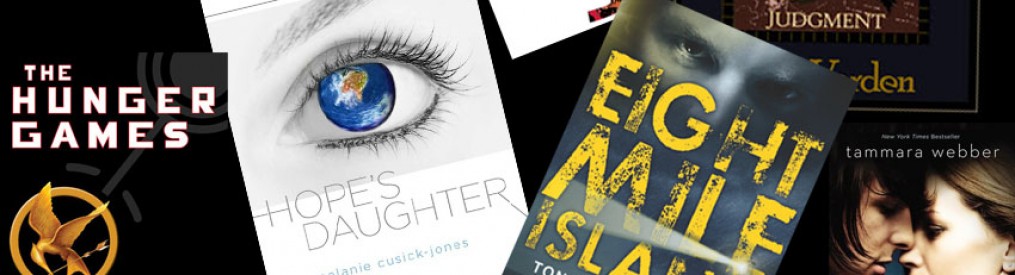
Guest Post…Is Katniss Really Better than Bella?

Following the popularity of her last post with us: A Letter to Stephen King; author Georgina Morales is back again looking at feminism in contemporary literature – particularly the books aimed at young women and girls. She’s asking Is Katniss Really Better than Bella?

———————————-

You see it everywhere; there are pictures in Facebook, reviews in Goodreads, punch lines with pictures in Pinterest. It seems like Twilight is at the butt of every joke. Edward Cullen’s sparkling, lean, loving machine has made every hardcore vampire lover retort in hatred. The pathetically insecure Bella Swan hasn’t fared much better. Her image has come to equate everything the Feminist Movement fights against.

Then came The Hunger Games movie and craziness ensued once again. Though the books were widely popular way before the movie broke out, the simple knowledge that a movie was about to be made drove thousands of new fans to the saga. Soon comparisons arouse and Katniss Everdeen became the antithesis of Bella Swan, therefore, the character that defined Feminism for the present generation.

Now, I have a bone to pick with this. I get why Bella is such a nightmare for many women. She is whinny, insecure, and unable to stand for herself. I’m an unapologetic fan of the Twilight books and even I wanted to choke her sometimes.

But let’s check Katniss’ character through The Hunger Games Saga:

  • She is the sole provider of her family in a post-apocalyptic world where you need to fight for every morsel of food. A point for her.
  • She knows how to handle a weapon and isn’t afraid to do it. Two points for her.
  • She, unknowingly, becomes the symbol of rebellion; yet, she fights hard to show the world she is, in fact, in favor of keeping the status quo. Mmm… Not so sure about this one.
  • She is not interested in having a boyfriend, first because she doesn’t want to have a family in that messed up world, and second because she isn’t sure if she would pick her best friend or the boy who saved her life. Again, not so sure this has anything to do with ‘Girl Power’.
  • Finally, it becomes clear there’s no way to stop the rebellion. Does she embrace it and volunteers to fight for a better world? No. In fact, she lets everyone use her image the way they please while she becomes a puppet in the power struggle that ensues. This is definitively not fortitude of character. As a matter of fact, Katniss spends half of the saga breaking to pieces and most of the third book literally hiding in a closet. I fail to see how this is any better than Bella’s obsession with her boyfriend.

The sort answer is: It isn’t. Feminism is a movement designed to empower women, to bring recognition to the value of women in our society and to fight for the right each one of us have to take control of our lives. Whether we choose to embark on a career in the world of finance or to dedicate ourselves to the education of our children, Feminism is the reason why we even have the option.

The problem is getting married and tending a home was the only career path available to us back in the days, therefore it is seen with shoddy eyes when a modern gal openly acknowledges her desire to do so. We look for specific traits in our females in order to select them as our new standard of ‘Girl Power’ like physical strength and open disdain (or disinterest) for men.

Katniss is both, lethal and uninterested in boys, but is she truly the encarnation of empowerment? I don’t think so.

Let me tell you, it was hard for me to come across a female character in modern literature that met my idea of Feminism, which is very sad and goes to show you why is it that our teen girls hold so hard to the few outstanding female characters they have available, however faulted these might be. But I finally found it: Hermione Granger.

Think for a moment. She is intelligent, determined, strong, and she might not be able to take a life with her magic wand, but she is powerful nonetheless. She is so, not because of how many magic spells she knows, but because she knows what she wants, what is good for her, where her weaknesses are, and she has a great moral compass. All these traits make her, in fact, a much better symbol of Feminism; a role model for our youth they can actually hope to become.

When we decide to bash a fictional character such as Bella Swan because of its interest in having a boyfriend, we are sending the message that worrying about boys is a sign of times past and a weakness. When we sing praises to characters like Katniss Everdeen for her physical strength we tell our teen girls that this one trait is so positive, it actually compensates the clear shortcomings the character shows in other areas.

Do you think I am being ridiculous? Giving way too much importance to fake and clearly fantastic novels? Well, yes! And therein lies our main trouble. We read too much between the lines. Teenage girls will worry about boys, that’s just how it is, very few of them are the actual providers of their household, and even fewer know how to shoot a gun, forget about a bow. Let’s not make the mistake of confusing physical prowess with strength of character. They like Bella? Sure, why not. Then, show them a book where the female character is worthy of being emulated and talk about it. That will take you a lot farther that trashing the latest fad. Communication is the ultimate influence to empower our youth and help them travel the murky waters of adolescence and external influences; it is the final weapon that trumps even books and that’ll make of our kids true Feminists.

———————————————-

More thoughts on this topic? Check out the links below!

Katniss v Bella on The Huffington Post

Katniss v Bella – A Feminist Analysis (You Tube)

Cage Fight – Katniss v Bella

Girls Night In – With Bella, Buffy, Katniss and Hermione

———————————————
About the Author 

Born in Mexico City, Georgina was always divided between the world of the paranormal, the religious, and science, even as a kid. Through her years in medical school, she experienced and heard all kinds of creepy tales. She, now, writes from her home in Norwalk, Ct. where she resides in the company of her husband and two young daughters. The history of the northeast, its old buildings, and its endless forests provide her imagination with a constant influx of ideas, which combined with her rich background make for her unique style. She’s also a staff reviewer for Dark River Press.

————————————–

Want to know more? Check out the links!

www.diaryofawriterinprogress.blogspot.com

https://www.facebook.com/pages/Perpetual-Night-by-Georgina-Morales/159894374059399

http://www.goodreads.com/author/show/4646361.Georgina_Morales

http://www.darkriverpress.com/reviews.html

http://www.barnesandnoble.com/w/perpetual-night-georgina-morales/1100075745?ean=9780615438405&itm=1&usri=georgina+morales

http://www.amazon.com/s/ref=nb_sb_noss?url=search-alias%3Daps&field-keywords=georgina+morales&x=0&y=0

http://www.smashwords.com/books/view/38400

Guest Post…Why I Wrote a Memoir

Our guest post today comes from author Laura Dennis – her second feature with us this weekend following yesterday’s Indie Author Spotlight ! Let’s find out more about her and her book Adopted Reality

—————————————

Why did I write a memoir? The simple answer is this: My story had to be told. It had to get out of my head.

ADOPTED REALITY is a September 11 memoir unlike any you’ve read. It’s a thrilling, psychological adventure that follows the ups and downs of bipolar, and examines relationships biological and adopted. The book follows my journey to understand myself, to learn to exist between the highs and lows, and ultimately to discover my own ADOPTED REALITY.

Before I could write, there were two issues in the way: Secrets and Time

A few years after my 2001 bipolar breakdown, I worked as a sales person for a successful medical device company. It was a fast-paced, stressful job that required high performance. I didn’t tell anyone about my bout with mental illness because I didn’t want people questioning my ability to handle responsibility.

But bipolar tendencies weren’t the only issue in play. As an infant, I had been given up for adoption. In the State of New Jersey in the late 1970s, adoptions were closed, records were sealed. Birth moms were told to hide their pregnancies and after relinquishment, to get on with their lives, and to forget about the baby.

When I did reunite with my birth mother and her family in 2001, I still didn’t feel 100% accepted in my biological family. In fact, my biological father wanted nothing to do with me. It took ten years for me to feel comfortable revealing these very personal details. Still now, I worry what people think when they read the book, specifically family members biological and adopted.

It wasn’t just the ten years I needed; I literally needed time to write. My daughter was born in 2008 when I was still working in sales, travelling 50% of the time (and even taking my daughter with me!). As the economy headed into a recession the following year, I stopped working and soon found out I was pregnant with my son.

In 2010, with a toddler and a baby in tow, my husband and I escaped to his hometown, Belgrade, where I actually found some time to write. While my children learned Serbian in their cozy preschool for a few hours each day, my memoir came pouring out.


Why not just fictionalize the story?

If I wrote a novel based on this particular story, it would lose its impact. A good part of the memoir deals with a bipolar episode I had in which I manically believed I was a spy for the Illuminati who was responsible for the attacks on September 11. In this psychotic state, as my mind rapidly deteriorated, I believed I had flown a plane into the North Tower and somehow survived.

I have a very vivid memory of these delusions, and writing a novel about it would have turned the delusion into just another spy story. On the other hand, ADOPTED REALITY sheds light into a psychological effect of trauma. Specifically, I was so grieved over the loss of my uncle on 9/11, my mind tricked itself into believing I was at fault.

The other element was my adoption. Writing about how I felt growing up, knowing I was adopted, trying to be perfect, these were life experiences whose impact is all the more relevant when coming from a place of truth. For example, the day I met the brother of my birth mom, this burly, quiet man pulled me aside and said, “I want you to know. You were always part of our family; we were always thinking about you. You were always my niece. We just didn’t know you, that’s all.”

This small, seemingly insignificant detail takes on a deeper meaning when the reader knows the conversation really happened. This is the power of memoir. In sharing the stories of our own lives, readers can connect to us and find shared experiences, feelings, and hopefully, new insights.

People have contacted me to say they struggled with mental illness, or that they experienced the happiness and sorrow in adoption—personally or indirectly, through a family member or friend. Even if readers don’t agree with everything I say, or everything I did, it’s amazing to see how a memoir can touch others’ lives.

I’d love to hear your thoughts, too!

———————————

Want to know more? Check out the links! 

ADOPTED REALITY is available on Amazon.com and Smashwords.com.

Like Adopted Reality on Facebook

Visit my website at AdoptedRealityMemoir.com

Tweet on Twitter! @adoptedreality

Or just send me a plain-old email!

laura@adoptedrealitymemoir.com

Guest Post…My Journey by Tony Talbot

 Blog regular Tony Talbot’s latest book was released last week! It looks fantastic and you can check out the book and teaser beneath today’s special guest post from Tony himself, talking about his writing journey, from first sentence to Eight Mile Island, his fourth novel. Speaking of the new book: you can enter to win your very own copy in our giveaway! **CLICK HERE**

———————————————————————-

“Even a journey of a hundred miles begins with one.” – Chinese proverb

In case you missed it, I’ve just finished writing my fourth book in four years. I know, sometimes I can’t believe it either. Four books is four times as many as some people many in a lifetime; on the other hand, to some people, it’s nothing but the start of their career.

It seemed like a good time to take a look back and see if I’ve learned anything. How is Eight Mile Island (2011-2012) different from Over the Mountain (2008-2009)? What have I learned from it all?

One of the biggest differences for me is this, what I’m typing right now. My self-promotion for OtM was non-existent. I posted about it a few times on the Amazon boards (The awful ghetto of the meet-the-author forum was still a nascent nightmare back then). I didn’t have a webpage or a Facebook account. Didn’t tweet, didn’t know about Goodreads (Did it even exist?).

I’d finished OtM and sent it off to a few agents with no real results before I read an article about self-publishing. Figuring I had nothing to lose, I commissioned a woman I work with to design me a book-cover and I started to self promote. So there were all the twists and turns of uploading to get to grips with…

Initially I started SP’ing without much enthusiasm or sales, but I’m a persistent guy and I stuck with it while I started on my second book, Taken.

I’d finished that and number three – American Girl – when I stumbled across Goodreads at the start of this year.

And that’s when things started to happen. I offered some of my books up for review, and I’m getting some good feedback now – 4 and 5 star reviews, I’m delighted to say, and a growing group of people have me on TBR lists. I affiliated with this blog, and I started my own. I have a Facebook account for myself and all of my books, a website and a Twitter account.

And all that’s happened in the last seven months! It feels like I’d been feeling around in a dark room and suddenly found the light switch.

Self promotion is as least as important now as writing the book. And tied up with that is the book itself, how it looks and reads.

Something new for EMI…I decided to commission a graphic design company to do the cover for me. It was the first thing I did after I finished the first draft, and when the cover came back, it made me realise that something that looked this professional should be professional. Having a cover so good, it felt like I should step up a gear and do something more professional as well, but what?

I looked around on Goodreads, and quite a few people were talking about editors – my wife does a first edit for me, but she can’t catch everything.

OtM wasn’t read or edited by anyone but myself before it went live on Amazon, and I realise now how much of a mistake that was. A good edit would have caught some of the typos, and polished the parts I didn’t even realise are dull. A good editor can make a difference with just a few commas and a handful of comments.

So for EMI, for the first time, I hired a professional YA editor (jennifermoorman.com), and it made a world of difference. Literally, in my case, changing one word changed the whole of the book. Editing is something I have definitely improved. Buying a Kindle has helped in that regard. Funny how the loopholes and the typos jump out when it’s a different format!

And even when Jennifer and I were batting edits back and forward, there are still things we both missed. Editing never really stops…I’m a lot easier on typos in books now I know how hard it is to pin them down. EMI went through six edits compared to OtM, as a comparison.

All of this is, of course, expensive. Facebook is free, but my web hosting and blog costs money; my editor wasn’t cheap, and my cover set me back a few pennies. I’ve spent more money on EMI than any of my other books. It’s also, with all the editing and self-promotion, a book that’s taken me longer to write.

But I look at it as an investment. Make your writing look professional and people will respond to it. Have it professionally edited…do it for your readers if not for yourself.

I exist as a writer almost exclusively virtually and digitally, and all people know about me as a writer are the things they read about me on web pages like this and my cover photo. All they have to go on is my book covers and the samples they read. There are a lot of books to read out there, and I have to – and YOU have to, if you want to be a digital writer – make life easy for them. Be good to your readers, and they’ll be good to you in return.

Do I write the books any differently now? The mechanics of writing is easier now with all the writing I’ve done. I know where the commas go and what to do with paragraphs. That’s sublevel stuff now, a foundation I can rely on. I’m still learning it though – that’s another advantage of an editor – but I can concentrate on the story now without having to worry about speech marks.

I plan them out a little more now as well. I have a magnetic board in my office (a spare bedroom…I aspire to a writers shed at the end of the garden!) where I stick up a mind-map rough idea of what I want from the book. I don’t follow it to the letter though; it’s more of a spark for my imagination.

So that’s my journey from book one to book four.  It’s been a blast, and there’s no way I’m done yet! I have a plan for Book Five already…

At this rate, I’ll be back in a few years to talk about Books Six to Ten, the books I haven’t written and the characters I haven’t shared lives with…yet.

See you in five years!

—————————————–

You can also enter to win your very own copy for Kindle in our giveaway! **CLICK HERE**

Welcome to Eight Mile Island. 

Dylan James is used to boarding schools. He’s been thrown out of so many in the past two years, he’s lost count. So when an elite academy in Oregon offers him a place, he doesn’t think he’ll be there more than a week.
 
But Eight Mile Island isn’t like anywhere Dylan has been before. In the dense forests around the school, there are things that look human but aren’t.
 
Things that are hungry, and waiting.
 
But that’s just the start of the mysteries, mysteries that mean Dylan may never escape. Even if he wants to…
———————————— 

About the Author: Tony Talbot was born in the 1970s and started writing in 2008 after a dream he had and couldn’t shake. Eight Mile Island is his fourth book. Tony regularly contributes to the Aside from Writing blog and so look out for future features and posts from this great author.

————————————–

Want to know more? Check out the links!

Website: http://www.tony-talbot.co.uk    Twitter: @authortony

Facebook: https://www.facebook.com/tonytalbotwriter

Amazon: http://www.amazon.com/author/tony-talbot

Guest Post…Ebook Piracy

Author Michael Cargill joins us today, with a guest post on Ebook Piracy and why it’s not shivering his timbers (sorry – bad pirate pun – forgive me, it’s Friday!)

———————————————–

Literature is something of a latecomer to the digital revolution.  In some ways, this is quite surprising, as it predates other forms of entertainment like computer games, film, and TV by several thousand years.  Mind you, the older generations are often the slowest to get to grips with anything new.  After all, when was the last time you heard your granddad talk about getting an Xbox?

Some of the growing pains for ebooks, have been the same ones that other forms of digital media have gone through, and still are going through.  Piracy is one such pain.

The mere mention of the word ‘piracy’ generates quite an angry response from many people, whether they are a writer, or a reader.

To those people, I say you should perhaps step back, and rethink things a bit.  I’m an indie author, and I know for a fact that my work is available to download from torrent/pirate websites.  I know this to be a fact, as it was me who put them there in the first place.

Before I go any further, I’ll just mention a few things, to provide some context.  Firstly, you won’t see me on any bestseller lists anywhere, not unless that list is based on an otherwise empty shelf.  Yes, woe is me, get out the violin and all that.

Secondly, years ago, I used to be something of a profligate pirate myself.  My hard drive was chock full of computer games, applications, films, and TV shows.  I knew lots of other people who did the same thing as well.

Lastly, I have no formal legal education, or training.  This puts me at around about the same level as that bloke in the pub, who insists that it’s perfectly legal to shoot a Welshman with a crossbow, so long as you do it outside the city walls, on a Wednesday afternoon.

Just to be clear, I have no intention of getting involved with the tedious, semantic differences between copyright infringement, and theft.  I’m also mainly talking about the financial impact of piracy, rather than the copyright side of things.

So then: why did I upload my own work to some torrent sites?  Well, “Why not?”, is my response.  At the moment, practically no-one knows about me.  My ability to market myself is largely limited to blogs, Twitter, and pinning posters up on the trees along my road.  Now that my work is available by torrents, I have added one more avenue for readers to find me.  I created threads on the torrent site forums, informing them all of what I did.  I got a few replies from people thanking me, and wishing me luck.  In the few days following on from this, I had an increase in the number of hits to my blog, from people searching for terms like “Michael Cargill author” on Google.  Prior to doing this, that had never happened before.

Of course, the usual retort to this is “You don’t get money from pirates!”, to which I say is a load of poppycock.

As I mentioned earlier, I was once a profligate pirate myself.  Yet, despite the fact that my hard drives were heaving with illegally downloaded material, my shelves were also teeming with legally purchased material as well.

And the same goes for many people who pirate things.  There are numerous studies that show that the people who illegally download the most music, are also some of the biggest purchasers of music.  This won’t be true for all of them, of course, but it is a fact that cannot be ignored.

It’s also important to recognise that just because someone illegally downloads a book, or a film, or a song, it doesn’t necessarily mean that the copyright owner has lost a sale.  For a start, pirates will often download stuff that they have no intention of ever using.  They’ll often do it, just because they can.  I mean, who wouldn’t want to download the latest version of AutoCAD if the opportunity is there…?

A quick search on a torrent site reveals that I can download the entire works of Stephen King, in about fifteen minutes.  That’s everything that he has ever published, about sixty five books in total, right there on the Internet.  Ebooks are small in size, so they take no time at all to pirate.  However, to say that anyone who downloads them all has denied Mr King of sixty five books worth of royalty fees, is wrong.

First of all, very few people will ever go out and purchase that many books at once.  Secondly, that pirate simply isn’t going to read all sixty five of those books either.  He or she may read one of them, and enjoy it.  However, they aren’t that likely to immediately read another Stephen King book.  They are more likely to read something from someone else, whether it’s pirated, or legally bought.

The reading habits of a pirate are exactly the same as those of a ‘normal’ reader.  They will talk about it to their friends, and family.  They will join in with the discussions about it on Goodreads.  They leave reviews on Amazon, Goodreads, and their blog.  After illegally sampling an author’s work, they may go on and purchase legitimate copies of their work.  This is something I did when I was a pirate.  It’s what I witnessed other people who pirated media do, as well.  It’s what some of the studies into piracy have shown, as well.

Of course, you don’t have to just take this indie’s word for it.  Bestselling author Neil Garman has taken a similar stance to ebook piracy.  He even made a video on YouTube about it, that is still available to watch, though he is someone who made his name (and fortune) long before ebooks ever existed.

It’s also worth bearing in mind that you can’t actually fight piracy, either.  For every anti-piracy method that is put in place, it is easily defeated.  Companies can spend thousands implementing an anti-piracy scheme, only to see it cracked within hours of its release.

An author could spend a huge amount of time, scouring all corners of the Internet, trying to hunt down those elusive illegal links to their work.  Yet, all that time is wasted.  It took me less than five minutes for me to put my own work up on a torrent site, but it might take days for a furious copyright owner to get something removed from a website.

Many people will say “if everyone pirated books, then authors would starve!”  Now, whilst that might be true, it’s also true that if everyone flushed their toilets at once, the sewer system would collapse.  The fact is, that not everyone will pirate books.  At least part of this is down to the fact that it requires a certain level of technical knowledge to pirate, that many people struggle to get over.  Some Kindle owners simply don’t know how to manually copy ebooks onto their device.

To be honest, I probably have more sympathy for the readers, than I do the authors.  They can be understandably annoyed when they see someone stealing books, and getting them for free, rather than paying for them.

In writing this short article, I’m not expecting to drastically change anyone’s mind.  However, the piracy debate has been raging for a long time now, and it really needs a more level-headed approach.  None of the heavy-handed antics employed so far have put so much as a dent in it.

I think we should embrace it, rather than hate it.

 —————————————–

Interested in knowing more about this subject? Check out the links!

Study: Piracy Does Not Deter the Production of Music, Films, Books – http://www.readwriteweb.com/archives/study_piracy_does_not_deter_the_production_of_music_books_films.php

Study Shows That BitTorrent Piracy Doesn’t Affect U.S. Box Office Profits – http://www.geekosystem.com/bittorrent-box-office-study/

Neil Garman video – http://www.youtube.com/watch?v=0Qkyt1wXNlI

————————————–

Want to know more about Michael? Check out his links!

Blog – http://michaelcargill.wordpress.com/

Twitter – @MichaelCargill1   Facebook

The Books…

Author Page on Goodreads

 Trailer for Underneath  http://www.youtube.com/watch?v=IUBrxs38Dkc

Smashwords

UK Amazon

Tony’s Thinking…On Losing a Story

A few months ago, I’d just finished writing another novel, and was wondering (maybe dreaming would be a better word) what would happen if I was suddenly granted my wish…to be a full time writer and at that a famous full time writer. Kind of suddenly discovered like JK Rowling, people everywhere reading one of my books.

What would my life be like? Imagine that…never having to leave for work in the morning and never having to drive through snow or rain or rush hour traffic. To sit at my desk all day and (to quote Steven Spielberg) ‘to dream for a living’.

But it wouldn’t be all regular royalty cheques and a quiet home. I know I’d get easily distracted, sitting there in an empty house. I’d be forever checking my Goodreads reviews, my Facebook friends. There would be constant pressure to Tweet my every move. Not to mention the endless meetings and flying to Hollywood to meet with Mr Spielberg for the movie deal, and the endless parties and other things I’m sure I’d hate. Would be tough, I’m sure, having to fly to the Caribbean and lie on a beach.

I digress into my fantasy there, but thinking about how my life would change set me thinking about a story, as such things do. I imagined a housewife, bored with her life. She has everything she ever wanted: beautiful home, devoted husband and adorable kids. But still she’s bored. She’s always defined by how other people see how she relates to her family. She’s always a wife, or a mother…never just her.
Finally, she starts writing one day, just to slay the boredom and the incipient feeling that life has more to offer her. She writes, and she writes, telling no one – this is something just for her. Eventually she writes a novel and sends it to an agent, and they accept it, but still she tells no one what she’s doing.

Which is where the story starts: she’s sitting at her kitchen table, looking at an advance from an agent and a publication deal that would free her from her domestic life forever. All she has to do is cash the cheque and make it to the airport, and her life is her own. The story is about how trapped she feels, and whether she’d be more free if she was suddenly flung into the spotlight.

I loved that story. I really felt for that woman and what she was going through. It might have been realistic if she just told her family what she was doing when they came home, but I wasn’t interested in that; I wanted to go through what she was going through.

But here’s the really terrible thing: I lost that story.
I thought I had it saved on at least ONE of the computers I use, or the memory sticks that hold my work, but I can’t find it. I must have saved it somewhere because (being the tech guy I am) I always hit save before I print. And I printed two copies: one for me and one for a writing friend.
I can’t find my printed copy, and I NEVER throw my work away. I have hopes my writing friend can find it and I can re-type it. I’ve even tried a file recovery…but nothing.

Why not recreate it? You might ask. That’s a hard one to explain…stories are ephemeral, flighty things, gone with a breeze. If I re-write it, it won’t be the same story. I know I won’t be able to recreate the same…intimacy…with the woman in the story, I won’t get into her head the way I did when I wrote it on a whim. I won’t know who she is as well as I did before.

I’ve never lost a story before, and it’s gone as though it never existed. And I feel bereft. I’ve lost a story and it feels like I lost a friend as well, and they’re such hard things to grasp at the best of times. I know all the arguments: hit save, hit save, then hit save again. I did. I do.
But this time it wasn’t enough. Farewell, lonely housewife.

I’ll miss you.

(Stop Press 18th June 2012: My writing friend found my story! Thanks Portia! You can read it here)

Guest Post…Best Buddies International

To compliment Frank’s guest post today, we’re featuring news about a charitable endeavour he’s taking part in. 

————————————

Frank Nappi, the author of “The Legend of Mickey Tussler” and “Sophomore Campaign,” is donating part of the proceeds from the books to Best Buddies International.
In a blog, Nappi said, “In an effort to support greater autism advocacy and awareness, I am pleased to announce that with the sale of each paperback copy of The Legend of Mickey Tussler or Sophomore Campaign between Friday, July 6 and Friday, July 27 on Amazon.com, I will donate a portion of the proceeds to Best Buddies International – a nonprofit organization dedicated to creating opportunities for one-to-one friendships, integrated employment and leadership development for people with intellectual and developmental disabilities.”
The Mickey Tussler series chronicles the coming of age of a young pitching phenom with autism on a minor league baseball team during the 1940s.
————————————————–
website:  www.franknappi.com

Guest Post…50 Shades of Censorship

Author Frank Nappi joins us again at Aside from Writing  as we re-post another piece from his own Goodreads blog. 

————————————

So public libraries in several states across the country have made the decision to pull the “50 Shades of Grey trilogy” from their shelves – and other libraries have decided not to order it at all. Not too long ago the Hunger Games trilogy experienced a similar fate – violence was the prevalent issue with this series. Some libraries have suggested the 50 Shades trilogy is too steamy and better yet others have suggested it is poorly written – paying no mind that “50 Shades” has become a best-selling worldwide phenomenon that has catapulted author E.L. James from relative unknown to superstardom. Shouldn’t libraries stock what people want to read? And these libraries are clearly saying they have the power to decide what people read. As library use dwindles with the continued growth of E-readers, Ipads, and online retailers like Amazon, the American Library Association should be encouraging libraries to appeal to a greater audience. While I myself have not read the books, and have heard from friends that the writing would not meet my standard for eloquent prose, there is no escaping the fact that EVERYONE is talking about this series….a trilogy that was borne of Twilight fanfiction originally. While I myself was not a fan of the equally popular Twilight series nor the vampire genre as a whole, as an English teacher I would be lying if I didn’t say that the fact that so many students were walking around the building with one of the books in hand didn’t make me smile. It made kids (ok…mostly girls) excited about reading and that was endorsement enough for me.

But of even greater importance is that this is censorship and censorship is dangerous. When do we stop? Where do we draw the line? And who makes that decision? There are many books that currently sit on library shelves with “questionable” content and even more books that are taught in high schools across the country that someone somewhere would find questionable. The same libraries that refuse to shelve “50 Shades” offer their patrons Lolita by Nabokov – one of the most controversial examples of 20th century literature; however that book also made the World Library’s list of 100 best books of all time. So what standard is being followed? Should we remove Macbeth from our curriculum because of the violence and witchcraft? Who decides what is appropriate?

Sanitized stories rarely have anything to offer – it is the more complex and controversial themes that stir us – it is often the evocative that challenges our thinking and our perceptions and makes us question ourselves. These are the books worth reading – these are the experiences worth having. It is why ironically the list of the most popular banned books in schools contains some of the greatest in the literary cannon – Of Mice and Men, Lord of the Flies, Catcher in the Rye, The Giver, To Kill a Mockingbird, and The Adventures of Huckleberry Finn.

I am by no means comparing “50 Shades” or Twilight, or the Hunger Games to any of the aforementioned – but as a teacher and as an author I can’t agree with the banning or censoring of books in either schools or libraries. Even the American Library Association in its Freedom to Read statement focuses on the freedom to read as guaranteed by the Constitution and affirms that it is in the public interest for librarians to make available the widest diversity of views and expressions, including those that are unorthodox, unpopular, or considered dangerous by the majority (so there seems to be some hypocrisy or at least contradiction in this latest library ban).

The Freedom to Read statement from the ALA goes on to say:

The power of a democratic system to adapt to change is vastly strengthened by the freedom of its citizens to choose widely from among conflicting opinions offered freely to them…Publishers, librarians, and booksellers do not need to endorse every idea or presentation they make available. It would conflict with the public interest for them to establish their own political, moral, or aesthetic views as a standard for determining what should be published or circulated……The people should have the freedom to read and consider a broader range of ideas than those that may be held by any single librarian or publisher or government or church. It is wrong that what one can read should be confined to what another thinks proper.

I recently had the “how much do I sanitize issue” with my own book, Sophomore Campaign. Much like the controversy surrounding the book Ernest Hemingway pronounced as the source of all modern American literature – Huckleberry Finn (and led to the recent rerelease where all uses of the “N” word was replaced with the word slave) – I had used the “N” word to showcase the rampant racism that was typical for my novel’s setting. Not everyone who worked with me to publish the book felt that its use was necessary or even appropriate. I had to decide what made sense for my audience. This of course was more an issue of political correctness rather than censorship, but still stirred up in me some of the same emotions connected to the issues I raise here.

And in the end, the romance between a college student and a manipulative billionaire may or may not be your thing – and perhaps you would prefer to read the newly released version of “Huck” or you would defend the original to the end – but nevertheless the library ban of this popular trilogy should offend you as an author, a reader, and as a lover of the written word – I can think of “50” reasons why.

———————————————

About the Author

Author – Frank Nappi

Frank Nappi has taught high school English and Creative Writing for over twenty years. His debut novel, Echoes From The Infantry, received national attention, including MWSA’s silver medal for outstanding fiction for 2006. His follow-up novel, The Legend of Mickey Tussler, garnered rave reviews as well, including a screenplay adaptation of the touching story which aired nationwide in the fall of 2011 (A Mile in His Shoes starring Dean Cain and Luke Schroder). Frank continues to produce quality work, including The Legend of Mickey Tussler: Sophomore Campaign, the intriguing sequel to the much heralded original story, and is presently at work on a third installment of the unique series. Frank lives on Long Island with his wife Julia and their two sons, Nicholas and Anthony.

(This was originally published 10th May, 2012).

——————————

Want to know more? Check out the links!

Links for both of Frank’s Tussler books as well as the amazon link for the movie that was adapted from the first book:
The Legend of Mickey Tussler
Sophomore Campaign
A Mile in His Shoes
website:  www.franknappi.com

Guest Post…Diversity in the YA World

Today’s guest post comes from Ebony who blogs at The Hundred Book Project. It was originally featured on her blog on April 30th 2012 and she’s kindly allowed us to re-blog it here for you to see. Hope you find it as interesting as we did – if you’d like to hear more from Ebony, you can check out The Hundred Book Project here. Now – on to the post!
—————————————–
 
Last month I reviewed a young adult contemporary fiction novel called Gone, Gone, Gone by Hannah Moskowitz.
I had a bit of a moment whilst reading that book, and it prompted me to write this post.
Inconspicuously slipped in, as one main character recalled another, was this line:

“His hair might not be golden blond – he’s black, so that would be a little weird – but his eyes kind of are.”

I did a double take.
It is honestly that rare to find a black protagonist in young adult literature that I had to make sure I had read correctly.
The book goes on to detail the tribulations of the budding relationship between the two characters. Did I mention that they are both guys?
That’s right; a gay, interracial teen romance.
And more amazing still, the issues that they struggle with don’t depend on their race, or even necessarily their sexuality. Those things are just a part of who they are, and beyond that they have the same problems ‘traditional’ couples experience: emotional vulnerability, family trauma, social/political issues, etc.
So, why don’t we have that kind of awesome diversity across the board in YA lit?
Teen readers are at a time when they start to form strong values and ideas. When better to acquaint them with the ideas of acceptance and moral courage – not to mention introduce them to other cultures and lifestyles? And that better way than to write life-like, relatable characters who just happen to be of assorted cultural heritage and orientation? Why do so many authors shy away from presenting the world as it is – and in a positive way, for once?
I can only guess.
Perhaps authors rush to create characters that their supposed audience will relate to. If the audience is considered to be made up of white, upper-middle class fifteen year old girls, then the prevalence of characters mirroring that stereotype is understandable.
understand it, but I don’t accept it.
In a majority of the YA books I’ve read, there are pitifully few ethnic or gay characters, let alone protagonists. It has got to stop.
Just like glorifying abuse is bad for real-world victims, when readers are shown Black or Asian characters who are mere bit players in the lives of the white protagonists (or my pet peeve, the ‘gay best-friend’ stereotype), it only serves to bolster the ridiculous idea that those societal groups are of less value. That their hopes and dreams and desires are inferior to their white counterparts’.
Why, why, why are authors not concerned with including a cast of characters which accurately represent racial and sexual diversity in the world?

I’ve thought about this question and decided it is not a conscious effort to cut certain social groups out of literature (that would be too horrible to comprehend), but rather a kind of laziness.

For white authors, I suppose it seems more difficult to write from the frame of mind of someone of a different culture, religion or orientation than oneself. But it is a worthy effort to include at least some diversity in your novel.
I don’t think there is any valid excuse for arbitrarily excluding diversity in novels, particularly those aimed at a vulnerable audience.
I can only imagine how it must feel to be a lover of young adult fiction, yet open an otherwise enjoyable book and find no central character whose ethnicity of orientation you can identify with.

Guest Post…Everyone Wants to Be a Writer

After taking over our blog this week, lovely author Patricia Lynne leaves us with her final thoughts on ‘being a writer.’

Thanks for spending the week with us – we’ve had lots of fun and loved reading Being Human 🙂

——————————–

Everyone wants to be a writer

It’s something I’ve heard a lot. Everyone says they want to be a writer. Everyone! Of course, not everyone actually does it, but 99% of people have probably expressed it at one point in their lives. Want to know a secret?

I didn’t.

I never had any intention of becoming a writer. When I was in third grade, I had tried to write a story, but a passing classmate read what I had written and laughed. I scrapped the story and never tried again. What got me writing was a dream. In it, a girl was being kept from by her vampire love by the cast of True Blood. I woke up and thought it’d be fun to write, minus the True Blood cast. Even then I wasn’t calling myself a writer or had any plans to publish the story. It was just for fun

When I finished the story, I got another. And another! So I kept writing them. It was fun, but I still didn’t consider myself a writer. It wasn’t until I started looking into publishing while writing Being Human that I thought about it. Even then I was hesitant. My college papers in English weren’t As. One I got a D on one and struggled to bring it up to a B (if I knew what I did now, I wouldn’t have gotten any Ds.) But I was confident in Being Human. It was interesting and different and I was so tired of all vampires being the same: whiny wussies. Maybe I could do this. If I could find people to help me edit it, then maybe it would be worth publishing.

Sometimes, I am still wary of saying I’m a writer. I have one book published and a short. But I never intended it to happen! Do I really deserve to say I’m a writer when all this was a giant accident inspired by a dream? I don’t know, but now that I’ve started, it’s really hard to stop writing.

 ——————————-

Guest Post…Audio Books – Modern Oral Storytelling

For today’s guest post we’re welcoming back author Clinton D Harding to the blog – Clinton’s novel Our Monsters was one of our featured books during Indie Author Month, click here to see the post – now let’s see what he has to say about storytelling today…

———————————————————-

Ever had a grandparent tell you a tale from the “ol’ country”? I think everyone has. Do you remember sitting on the magic rug for story time during kindergarten and listening to a teacher read a story aloud to you?

There is magic in that type of story delivery.

Reader and listener feed off each other. They pass emotions back and forth like a hot potato. The reader (or storyteller) brings to life each character’s hopes, their secret dreams, their rage, and their deepest fears. The listener feels each of the characters’ breathes on their ears, in return whispering awes and ohs to quench the parched throat of the storyteller.

That is the magic of oral storytelling, the communion and sharing. Long ago, this is how humans passed on their legends and myths, before writing and before reading. When the high lords and ladies prohibited the commoners from learning to read, elders would pass down a community’s histories and stories by campfire. Later bards would roam the land and pass along the oral tradition through song and poem. Either way, these oral traditions served not just as entertainment but also as connections to the past. Today modern society has television, film and video games. Stimulating, yes. Most people can read, sure, but hardly anyone willingly picks up a book (fiction or nonfiction) for fun.

Fret not! Oral storytelling is not dead. It lives on in audio books.

When I was in fourth grade you would find it easier to pull out my teeth than get me to read. Shocker for those who know me today and know me to always have a book at hand. Around that same time movie theaters were playing the Shadow starring Alex Baldwin. I was excited because the Shadow is one of the characters Bob Kane used as inspiration to create Batman and I was/am nutty for anything related to the Dark Knight. Because I was excited for the “Shadow” film, that Christmas my grandparents bought me a set of re-mastered recordings of the Shadow radio show (on cassette tapes). I listened to those adventures repeatedly until the ribbon wore away.

The old Shadow radio show recordings from the 1930s to the 1950s were not audio books. A cast of actors read from a script similar to the scripts used for television shows and movies. Separate crews would also add sounds effects to make the action pop. Audio books are different in that there are no sound effects and there is usually only one performer. However, the old radio dramas and audio books are not unalike.

There is a great deal of imagination needed to enjoy a radio drama and an audio book. What’s important is the emotional connection the performers in the dramas and the narrator of an audio book need to make with the listeners. For instance, when a character is engaged in a fight or running a mile, a good actor has to convey the strenuousness of that activity with his or her voice. On screen an actor can physically show the fatigue, the strain the activity puts on the body and mind. Good material is essential for this of course, the actor can only read and perform what is on the page. With good material from an author, a talented actor, and an active imagination, a story can come alive for the listener without having the visual media as an aid.

Think about it for a second. Sound activates primal feelings in us. A loud noise like a shout can startle a person. The right words spoken tenderly with love can melt a heart. A man with a good accent—take your pick from Europe—can read the phonebook and make a room full of women swoon.

The power of the voice. Intertwine a magnificent reader with a fantastic book and you have a recipe for something special, something to stir the heart.

My father has asked if hearing the same voice for all the characters detracts from the experience of the story. If hearing a male reader do the female character voices or vice versa is odd and takes you out of the story. I don’t believe so. There are some readers who do the voices so well, who take great effort to increase or decrease their tone and pitch so you can hardly notice. Actually, some of the best readers do different voices for all the characters. They tweak their voice so subtly that nearly all the voices are different, nearly, no one is perfect and the reader has only his or her own voice to manipulate (the range only goes so far). Jim Dale is crazy good on the American Harry Potter audio books. James Marsters has done a great job with the Dresden File book readings. Michael Kramer has read most of Brandon Sanderson’s novels and the Wheel of Time series and he’s fantastic.

If an audio book reader does his or her job well, has a mastery of their voice, can put every drop of emotion into each word, speaks clearly and keeps a fluid pace, then they will suck the listener in. The listener will feel that same campfire intimacy from ol’. Unfortunately these days that intimacy only extends one way, listeners get more out of the reader because the listeners cannot be there for the recording. Regardless, I don’t believe the experience is lost, it has only been modernized and made available to a wider audience.

Best of all… audio books today are more accessible. A person used to lug around twenty-plus cassette tapes or a few less CDs in order to have an entire audio book available for listening. Today’s mp3 players have created convenience much the same way eReaders have. It is so easy to carry around books, audio and other. As far as I’m concerned we’re living in a book utopia.

By no means am I trying to advocate switching over from reading a novel to listening to the audio book version as each provides a different experience. Audio books merely remind us of how storytelling was once communal, containing a closeness that connects listeners and the storyteller. And of course the reading is that much more special when the author of the novel is actually the reader. Neil Gaiman, the stud and rockstar of the literary world, is an excellent reader.

Go to audiable.com or iTunes.com and try an audio book. Personally, I enjoy listening to stories I’ve read previously, there is an added something and I often I pick up details I missed when reading.

———————————————-

About the Author

Clinton grew up in Southern California, where the sun shines all day and where most kids spend their days outdoors skinning knees and browning their flesh. He spent those same days inside, reading comics, books, and dreaming of fantasy worlds. These days he not only dreams but he creates and writes about those same worlds. In college Clinton found himself in the dregs of a business school, studying accounting. Sneaking English and philosophy courses into his schedule were the only things that kept him sane! As a result, he spent way more than four years getting a well-rounded degree. Adult books and books for kids, Clinton reads it all these days. He still enjoys traditional American comics and manga/anime from Asia, but when not writing he can also be found immersing himself in video games.

            Clinton today still resides in Southern California with his wife, Kathy and their two Scottish terriers, Mac and Bonni (wheaten and black).

————————————–

Want to know more? Check out the links!

http://clintondharding.com (official site)

https://twitter.com/#!/ClintonDHarding (twitter)

Email: cd.harding83@gmail.com

http://www.facebook.com/pages/Clinton-D-Harding/76506701006 (facebook)

http://www.goodreads.com/author/show/5381520.Clinton_D_Harding (goodreads)