IAM Guest Post…You’re Never Too Old

Guest Feature

Guest Feature

Our featured author today is Clinton Harding, a regular visitor to the blog since we ran our first Indie Author Month in 2012. We recently hosted a week-long tour feature for Clinton celebrating the release of Book 2 in the Bad Monsters series. If you missed that, or any of his previous features and guest posts, you can check them out here

Back to today – Clinton’s shared a great post on the young adult fiction genre and why you’re never too old to enjoy great books…

———————————-

YOU’RE NEVER TOO OLD…

 When you walk into a brick and mortar bookstore (the few left anyway) or browse Amazon’s list of new book releases and see books under the category “young adult” what do you expect to see? Most people will say the Twilight series of books, maybe The Hunger Games trilogy, or any other single or set of books with young adults or children as protagonists dealing with common growing pains on their way to adulthood. Now, name the target audience for these books. This is an easy one. People will roll their eyes and probably say, “duh! What section of the store are you in? Young adult.” I can hear the forehead slapping right now.

 I’m not sure the definition and categorization is correct here.  For one, I don’t believe young adult fiction is written specifically for one audience, let along one that is a less mature age group. Publishers Weekly reported in late2012 that 55% of people buying and reading these types of books are 18 years or older. I’ll buy that. A lot of my friends read young adult fiction, a couple prefer the stories to some of the “adult fiction available. Most of them were reading Harry Potter (not an “adult” fictional series) in high school when the books were just coming out and bursting into a cultural phenomenon, book that are targeted at children and not high school students or anyone older.

The young adult and children’s fiction genres have good quality reading options for readers of all ages. The writing style is generally simple, sure. Description of the setting, characters, the over physical sights in the novels are not verbose. Vocabulary is simplified. However, some of deepest world building can occur in these adolescent novels.  The narrative is rich. The characters are vibrant, individualized, fully formed.  Even without paragraph-length descriptions, novels like those in the Harry Potter series have wonderful , colorful characters that people fall in love with and the worlds they inhabitant are no less realized. These novels can tackle adult issues, sociological and political and relationships.

Going back to my original question… what aspects of the novel makes it young adult? Again, generally the age of the protagonists makes the difference. Teen protagonist saving the world, dealing with homework, bullies, dating, family issues… yup, that’s a young adult novel typically. If you’re an older reader, immersing yourself in those types of stories is childish by the standards of other people.  Same as wearing capes and tights is stupid and kid-stuff.Except for a few cases, of course.That’s the stigma that separates the genre and leads to hesitation in readers of a more mature age. Is the young adult genre childish, though? I don’t think so.

Orson Scott Card wrote in the eighties “Ender’s Game”. Originally considered an adult novel (first a short story published through the magazine “Analog”). It’s about an eight or ten year old boy named Ender Wiggin who is by all accounts a genius. Ender is sent to a military academy in space so he can learn the art of war and so later he and the other cadets can lead the fight against an alien race of insects that humanity is at war with.  The novel contrasts the lives of children and adults, how the adults treat children, how the thoughts and ideas of children are no less real than an adult’s own because a child can manipulate and destroy as easily as an adult but he or she is also capable more so of creating and helping. Overall, the novel explores compassion and cruelty and how the concepts relate to humanity and humanity’s treatment of each other and another species.

Deep stuff, right?And there is a lot more themes woven into the novel, I touched on only a few Card explored. Remember, though, “Ender’s Game” is about a boy who is about eight or ten years old. Originally “Ender’s Game” was marketed as adult science fiction. Later editions of the novel place it in the young adult category because of the protagonist’s age and that at its core the novel is a Bildungsroman, a coming-of-age story about a boys’ moral and emotional growth. Can adults enjoy the story? Of course. Can adults learning something from the story? Damn straight! “Ender’s Game” is sometimes suggested reading at military organizations, the United States Marine Corps is one such group. “Ender’s Game” is today enjoyed by adults and younger readers a like without discrimination and despite its categorical labeling.

Another example of young adult fiction with adult themes is the His Dark Materials by Philip Pullman. A number of years ago the first book in the trilogy, “The Golden Compass”, was adapted to film and starred Nichole Kidman and Daniel Craig. Box office results did not garner the property a sequel. Too bad since the material asks questions about religion, free will and the right to knowledge and how that plays into freedom and a person’s maturity. Again, main protagonist Lyria is a maturing little girl and developing into womanhood so the series is considered young adult. Its themes, however, contradict the silliness and juvenile perceptions of what most people view as an adolescent novel. If the film had done better, His Dark Materials may have found a wider popularity and acceptance like Potter or Twilight.

Should adults limit their to-read selections to what the publishing industry and general public considers adult? After all, many adolescent readers do not stick to roaming the young adult fiction shelves. They branch out. Those who like horror will find their way to Lovecraft and King and McCammon and Matheson. Fantasy lovers will read Lord of the Rings, they’ll crack open Brooks, Jordan, Erikson, or Martin. When I was in junior high and high school I was reading adult fiction. Reading young adult never crossed my mind.  What’s more is that some of the great portrayals of child heroes/protagonists are in adult novels, stories that spin a tale of how the child establishes his or her moral footing and uses those convictions to face adult challenges.

Why are adolescents allowed to read adult-marketed fiction but adults cannot venture to read young adult? Probably because someone younger reading A Song of Ice and Fire or Tales of Malazan or “The Shining” is considered mature while an adult reading Potter or some other younger title is juvenile.

Labels are the problem. Humans love to label and put things into boxes so we know what to avoid and what is acceptable. We do it to each other, to our neighbors. Genres in fiction are labels.

I always encourage people to read or watch entertainment based on their enjoyment and not popular perception. Fads fade in this fast-paced, internet, information at your fingertips world. Good novels—regardless of being adult themed or young adult themed—don’t transform into bad fiction when the census decides it’s ready to move on to the new/next shiny, noisy attention grabber.  Harry Potter—in my humble opinion—will remain a favorite of so many people because of its readership’s genuine love for the material, because the stories are good, because Rowling wrote something special. That young wizard turned on a generation to reading. Roald Dohl wrote memorable fiction that stand the test of time, regardless of the generation.  Multiple generations know about and enjoy “Charlie and the Chocolate Factory”, “The BFG”, and “Matilda”. Lord of the Rings is another example where generations later people still love the books long after the author has passed and the first generation with him, it is the introduction of many to fantasy novels.

Good fiction is a category of its own, the only category that matters.


Cover Reveal! “Medusa” by Tony Talbot

Medusa-Resize

Well, it’s taken me a while, but here it is! My latest book is live today!

“Lissa Two is a thief of the ocean cities, struggling to make enough money to clear her debts and take care of her traumatised sister, scratching a meagre living as best she can.

So she has enough worries without her life getting more complicated…but when a boy named Hattan literally falls from the sky, she can’t just let him drown.

It’s a decision she comes to regret, a decision that will change not only her life, but the lives of everyone she loves.

If they survive…”

Amazon Paperback.

Amazon Kindle.

It’s FREE for the first weekend of publication. As are four of my short stories – Fidget, Black Shark, Out of Step and Blind Date.

As always, thanks for reading and supporting independent authors!

Tony’s Review: The Rainbow Maker’s Tale, Melanie Cusick-Jones

13448440

3/5

The sequel to Hope’s Daughter follows Balik’s storyline through the same events of the first book, told from his POV.

It’s an interesting choice for a sequel, and it fills in a lot of the blanks from the first book. I really liked Balik’s logical self-sufficient approach to life, and his approach to solving problems. He learns that trusting someone isn’t a weakness, but a strength – indeed, towards the end of the book, Cassie has to save him.

The world building was as strong as Hope’s Daughter, and this time we got to see more of the way the station worked. At the climax of the book, there’s a brutal torture sequence that makes me glad I’ve never upset the author enough to be interrogated by her!

It’s obvious Cusick-Jones has done her homework on medical and technological procedures – all the technology and biological information seem logical and consistent with what’s going on.

The pacing was good as well, the characters always on the move and the chapters never lingering too long.

It did suffer a little though, from knowing what was going on in Hope’s Daughter, and knowing how it played out. Although the books can be read in any order, you really need to read Hope’s Daughter first. For instance, the characters mention The Collective, which won’t mean anything if you hadn’t read HD.

There were a few typos that caught my eye as well – the most jarring was when Cassie says her friends have gone to the retirement quarter, not the marriage quarter, and there were a few run-on sentences that needed full stops and not commas – but nothing too major.

Looking forward to seeing where Cusick-Jones goes with the next book in the series!

Tony’s Review: Ender’s Game, Orson Scott Card

4/5

In fighting monsters, do we become monsters?

It’s the theme of this gripping book from Card. The writing is fluid and the characters dynamic and evolving.

Taken from his home at the age of six, Ender Wiggins is trained to be a killer against an alien race, a killer without remorse or pity. Terrified of turning into the bullying brother he hates, Ender is able to turn his anger to fighting mock battles in battle school, where a generation of children and teenagers are being trained to fight for the survival of humanity. At any cost to themselves, psychologically and physically.

The battles are fake and no one gets hurt, but that doesn’t stop Ender from being bullied and suffering psychologically – his brilliance is the target of envy, an envy fostered by his teachers. He responds brutally, without mercy…only feeling remorse when he’s finished.

In some ways, Ender reminded me of the literary James Bond. Bond would kill quickly and efficently; not enjoy doing it, but doing it because he had to in order to survive, and doing it to the best of his ability. Only Ender is a child, and the stress nearly pulls him apart.

One of the problems of the book is that Ender never sounds like a child. We’re told he’s a super genius, but I don’t think any super genius would be that mature. There’s a political subplot dragged in involving Enders sister and brother, but mostly it seems to be there for padding. What’s interesting about it is the way they go about it – they go online (The book was written in 1985) and set up sock-puppet accounts, each holding different opinions and written in a different style.

The biggest problems with the book start when Ender graduates to proper military training. I won’t give away the spoiler ending, but it seems rushed.

Also, 95% of the way through the book, a super weapon is mentioned in passing that has never been talked about before. It’s dropped so casually in the conversation, I thought I’d skipped a page. Half a page later, it happens again. “It will go straight through the Ecstatic Shield.” Oh, that’s all right then. So what is an Ecstactic Shield, since no one has ever talked about one before?

The epilogue seemed a little strained and too long as well. If the book had ended a chapter after the climax, it would have worked better. Instead Card seems to struggle to shoehorn extra plots in to work up to a sequel, and the book drags its feet to the last page.

Tony’s Review…Tomorrow When the War Began, John Marsden

5/5

Tomorrow was one of the first YA books I read as an adult. My wife had read them, and kept telling me to read it. I bought Tomorrow When the War Began, and was blown away by it.

Re-reading it, it’s got me hooked all over again.

Marsden has an uncanny ability to get right into the heads of his characters, to make you think and feel exactly as they do. Every emotion and sensation, every smell and nuance comes alive on the page. Although a story about teenagers going through a war isn’t new, Marsden brings a new angle to it. If you ever want to know how shooting someone – even an enemy of your country – would really feel, it’s right here. How the vomit would rise in your throat, how the cold fear would lock up your legs and your brain as bullets fly towards you. How watching your best friend for life get shot would make you feel.

This is no Hollywood film where death and emotion are cheap. We go through everything the main character goes through, the highs and the lows.

The YA field and the world have moved on since this was published in 1993, so none of the characters has a cell phone or smartphone (A scene they changed in the movie with good comic effect), and oddly, the characters feel at first like a 1950s bunch with their dialogue. None of them swear – even the ‘bad kid’ never utters a profanity. Not that they need to; just a reflection on how YA evolves.

One of the things I noticed on a re-read is how Marsden lets our imaginations fill in what the characters look like. Beyond describing them in basic details, like the colour of their hair and their eyes, everything else is left to us. I didn’t realise until the re-read that Ellie the main character is stocky, for instance.

Every character starts as a stereotype, simple for the effect of blowing those stereotypes out of the water. Lee the quiet boy becomes a killing machine. Homer the clown becomes a leader. Fi the gentle becomes brave and utterly fearless. Never judge by appearance, Marsden shows us, and here is why.

It’s more of a character driven story as well, I now realise. In some ways, the war is secondary to the characters and how they evolve. Marsden wants us to see them change, and the agent for that change is not really important.

Simply superb. Marsden should be regarded – and in some places he is – as one of the best YA writers there is, and it’s books like this that make you realise why.

He really is that good.

Tony’s Review…Mice, Gordon Reece (Spoilers)

4/5

Shelley and her mother are mice, hiding away from the world in one of its corners. Both of them carry the scars of their battles with predators – Shelley’s at the hands of school bullies who nearly killed her, and her mother emotional scars from fights against her father and her bullying bosses.

So being mice, when a burglar breaks into their home and threatens them, they do what mice do: They hide, they accede, they submit. But Shelley snaps, pushed past the limit. And she discovers that mice have teeth, and what sharp little teeth they are. Shelley kills the burglar in self defence, but her mum realises that the police won’t see it that way…they’ll see it as murder.

They decide to hide the body, to bury the burglar in the rose bushes. The act of defiance becomes a waiting timebomb beneath them, waiting to explode. Every knock on the door makes Shelley think of police, of prison bullies who will make the ones at school look like nursery teachers.

But gradually, the two women come to realise that the teeth they used to kill the burglar are still sharp. They begin to take control of their lives, to come out from the shadows. To fight back against the people they submitted to.

And when a note from a blackmailer arrives, the two women decide to use those teeth again, this time to kill…

A fantastic premise and a wonderful idea.

I loved this book. The two characters come alive and evolve, transformed by what they’ve been through. Every stage of the plot proceeded from it’s tense (all be it slightly unrealistic) first encounter with the burglar and shot off without a pause, pulling me along with it. Will they be caught? What will happen next? What will trip them up? It kept me flipping the pages and I zipped through it.

The descriptions and world building were first class, lending the book a real sense of atmosphere and place. I had no trouble visualing the world they lived in, and I breathed in the smell of the flowers through their windows, felt the terror and the tension as they did.

I did wonder at the end if Shelley was becoming a sociopathic monster, desensitised to the violence she’s lived through. She urges her mother to shoot the blackmailer, screaming at her to do it, do it. And at the end, when she wants to return to school, she almost seems to relish the thought of a confrontation with her former bullies.

I wonder: What becomes of a mouse when it realises that it enjoys how sharp it’s teeth are?

Tony’s Review…Breathe, Sarah Crossan

3/5

Sometime after the world has starved itself of oxygen and humanity has retreated to sealed domes, our three main characters find themselves bound together in an adventure. Alina, resistance fighter, who knows the pods are an excuse for the elite to hold on to power; Quinn, the son of one of those elite; and Bea, the daughter of one of the working classes, lovelorn for Quinn who never notices her (at first, anyway).

It’s a wonderful premise of a book, the world suffocating without oxygen, and the world building and descriptions of the wastelands outside the pod are great. It’s the characters that let the book down a little. We shift from one perspective to another every chapter, first person every time, and perhaps that’s the problem. I would have liked to have stayed in Quinn’s head for longer to get to know him better, for instance. The characters voices are quite similar as well, such that I had to check the chapter headings to see who was speaking and thinking a few times.

I would have enjoyed the book more if it had been about the end of the world, the time called “The Switch”. Watching humanity fall apart into ruin was what pulled me into the book and the little flashbacks are what kept me interested. It would have been grim reading, I’m sure, but there are glimpses of the lost world that I felt needed exploring more. A character talks of when she was a death nurse, killing people who asked rather than let themselves slowly suffocate. Tell me what that was like rather than focus on the long-after. Write a prequel, maybe.

Unusually, the love triangle is between two girls and one boy, rather than the other way round. I liked that. I liked there was a character who was gay and it was the least interesting thing about him. It’s mentioned once and not again. He isn’t defined by it as though it were his only attribute.

There are inevitable loose ends – this is book one of at least two – and it felt like there was a slow build that will continue into the next book, and I never felt cheated out of the unanswered questions.

Will I read book two in autumn 2013? I think I will, just to see where it all goes and how it all ends.

Tony’s Review…Tethers by Jack Croxall

3/5

Karl and Esther, both 13 years old, both bored by their restrictive Victorian lives, stumble across a mystery in the village where they live. It quickly leads them from their quiet land-locked lives to the coast of the UK and then back again to its heart before the climax, making some friends and very dangerous enemies along the way.

Jack Croxall has a pleasing, old-fashioned style of writing, an almost “Famous Five” feel to his words and language. The pacing is perfect, shifting the book forward at a nice clip and not lingering too long. I needed to keep reading!

The characters of Karl and Esther are fleshed out and full of life – their flaws and imperfections as well. I love that Karl can’t climb through windows as elegantly as Esther, nor can he sword-fight as effectively. Esther isn’t just a passive Victorian girl either, going weak at the knees at the first sign of danger, but is a kick-ass heroine in her own right. I loved the reaction of Karl when he sees the ocean for the first time; it really made me connect with the character.

The secondary adult characters were all nicely done as well, but I kept expecting them to have their own agendas. Perhaps an unwritten rule of YA is “Never trust anyone over the age of 30”, and I kept expecting a heel turn from them. I got the impression they were holding a lot back from Karl and Esther. Karl would announce a discovery or a clue, and the two men traveling with them would nod and smile as though it was expected. They put me on edge, and I was expecting something dark from them.

The accents of the characters dialogue were nice, apart from Scot Shona, who didna speak like this, but did speak like this. That was a flaw I would have liked fixed; everyone else speaks in a realistic voice.

I would have liked the two teens take on more of the danger themselves, but the adults take a lot of it. It is a YA book after all, and I don’t read YA for the grown-ups to have all the fun. On the other hand, it was nice to have at least competent adults on hand, and the kids did manage to do most of the important stuff.

There were a few typos I noticed, and a few grammar errors – a run on sentence here and there and a missing speech mark – but nothing that bumped me out of the story.

A delightful, fast-paced read with an old-fashioned feel to the structure. I enjoyed it a lot. (Tony Talbot)

Indie Author Month 2013 – Aaaaaaaand, we out!

Guest Feature

All done! 

So, it’s June 1st, which means Indie Month is done for our second year…

We hope you’ve enjoyed finding out about new books and authors, reading the guest posts about why people write, and possibly found some new stories to add to your own reading lists this summer. For us, it has been a pleasure hosting such a lovely, and enthusiastic, group of authors. They’ve tweeted and re-blogged the event all over the place, and come back to check out the other authors regularly – thank you for taking part so actively.

Our giveaway winner has now been selected – congratulations to Karen E 🙂 our email is on its way to you, as I type!

This year, we featured more authors than in 2012, and were able to offer each a different type of post, so we hope you liked seeing something different. The posts attracted just under 2000 views in the month, which was also more than last year, so overall – we’re happy.

Thanks again for taking part – hopefully see you next year!

Mel x


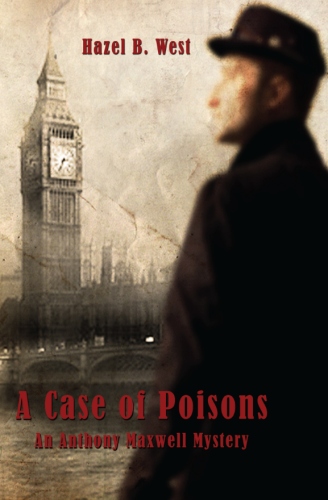
IAM Book of the Day…A Case of Poisons, Hazel West

Guest Feature

Guest Feature

Our featured author today is Hazel West – you may remember her from our February feature on her novel On a Foreign Field. Her latest book A Case of Poisons is due for release on 3rd June, today you can find out more about her in one of our special ‘This or That’ interviews.

———————————-

Hero or Villain? Sometimes, really awesome villains are harder to lose than really awesome heroes.

Pirates or Zombies? Pirates! And no, I don’t care for zombie pirates overmuch.

 Popcorn or Chocolate? Chocolate, extra dark.

London or New York? London!

 Classical or Pop? Classical; seriously most of my favorite music is way older than me.

 Elf or Dwarf? Well, if I narrow it down to Orlando Bloom or Richard Armatage, then I’m afraid I would have to choose Dwarves.

James Bond or Jason Bourne? Jason Bourne—love a guy who gets the job done without being constantly distracted by the local female life.

Early Bird or Night Owl? Night Owl, but does it still count on those nights I stay up till dawn working on something?


About the Author

I’m Hazel B. West, a self published author who currently has four published titles Freedom Come All Ye, Ballad of the Highwayman, On a Foreign Field, and By Blood or By Bond (along with it’s companion backstories) and the upcoming Anthony Maxwell steampunk mystery series. I love English, Scottish and Irish history, and use my research to write historical novels.

 Apart from being a writer, I love to read, sketch, listen to music as well as play my instruments, and drink coffee. I’m a history buff and bibliophile and would love to hike in the mountains if I didn’t live in Florida.

——————————————

A Case of PoisonsAnthony Maxwell is a private investigator, a consultant for the mostly incompetent inspectors at Scotland Yard, on occasion a writer, and always a lover of coffee. He has been working small cases for several years to pay the bills when he’s introduced to the first multiple murder case of his career early one morning, when a witness catches a man trying to unload a body to bury in a nearby graveyard. Soon the first body is joined by three more in the course of a single morning and Anthony knows this is no ordinary serial murder case. And why is the murderer targeting beggars and urchin children? If that wasn’t cause enough to worry, all the victims are covered with horrible wounds and show signs of exotic poisoning. Anthony, along with his partners Tobias—an ex-broadsman and well-know charmer—and Scamp—a street smart and talented young woman—work to find out who is murdering the helpless beggars and children in such horrifying ways. The first book in this new Victorian steampunk series takes the three companions to the limits of their abilities as they go up against canny murderers, bruisers who appear invincible, anarchist groups, and even ancient British royalty in the biggest case Anthony Maxwell has ever worked in his career.

———————————–

Want to know more? Check out the links!

Blog: http://hazelwest.blogspot.com

Twitter: http://www.twitter.com/artfulscribbler

Pintrest: http://pinterest.com/artfulscribbler/

Anthony Maxwell’s Facebook Page: http://www.facebook.com/pages/Anthony-Maxwell/978987912241341

Goodreads: http://www.goodreads.com/book/show/17557133-a-case-of-poisons

Purchase Links: http://hazelwest.blogspot.com/2013/03/purchase-links.html