Hosting…Dianna Hardy’s Flash Blog Tour

Omnibus Banner

Today we’re excited to be hosting a guest post by author Dianna Hardy, as part of The Witching Pen flash blog tour. If you have not yet read The Witching Pen series, these posts may contain spoilers, as it is now on the last book!

Dianna combines a titillating mix of paranormal romance and urban fantasy into her writing to bring you stories that are action-packed, fast-paced and not short of heat, with the focus on both character development and the plot. She writes both full-length novels and short fiction. All further info can be found at diannahardy.com

 See here for all blog tour dates and posts: http://www.thewitchingpen.co.uk/1/post/2013/08/not-long-to-go-now.html

—————————————

The Last Dragon cover front smallWith The Last Dragon being released on 4th October, we’ve been having a little recap at everything that’s happened in this paranormal fantasy romance series so far. Today I’m talking about the music of darkness, sorrow, hope and love.

In short, these are the tracks I listened to the most when writing the series, the first being Fix You, by Coldplay. It’s a gorgeous song that came to me while I was writing book two, The Sands Of Time. It captured everything that was happening in that book, from both Amy/Pueblo/Paul’s point of view, as well as Mary and Gwain’s point of view, and it brought to life the deeper layer of sorrow that underlies the series. To this day, I think that Fix You can symbolise every single character in the series, including those in The Last Dragon.

Link to YouTube: http://youtu.be/k4V3Mo61fJM

The second song that got under my skin and didn’t let go was Halo, by Beyonce. Without a doubt it’s Gwain and Mary’s song (although we can also hear Karl and Elena in it) and for me, it’s always symbolised hope. There’s something about the song that has always made me think of Mary’s exuberance and her larger-than-life personality. This song is hope and faith.

Link to YouTube: http://youtu.be/bnVUHWCynig

Now, let’s talk about the darkness. Although there are dark elements throughout the series, in terms of music it didn’t seep into me until a reader suggested the song Closer, by Nine Inch Nails to represent the series. Wow. At the time of listening to it, I was writing Lucifer, and … yeah. Let’s just say that that song brought him to life for me more than a little. In many ways, I found The Last Dragon the darkest book out of all of them for me to write (and not just because of Lucifer).

Link to YouTube: http://youtu.be/PTFwQP86BRs

Lastly, I’m going to talk about love. And the song that represents the love in this series came via another reader who suggested A Thousand Years, by Christina Perri. At first, I didn’t think anything of it, and then I was in a coffee shop a few months back, writing a very poignant Last Dragon scene and this song came on the system, and everything fell into place. The entire scene came alive under my fingers as I typed it up listening to this song; the entire series also played out in my head. So here it is – true, unconditional love; acceptance; forgiveness.

Link to YouTube: http://youtu.be/rtOvBOTyX00

Of course there were other songs I listened to as well – and you can see the readers’ choices for the series theme song here http://www.youtube.com/playlist?list=PL_BA0pQ9LrZKg_vta0koHkz-DDXCAY-lm – but those were the main ones that I hit repeat on, over and over again, to help capture certain parts of the books 🙂

Before The Last Dragon explodes into publication, read book one of the series, The Witching Pen, currently FREE to download across most retailers! See here for download links: http://www.diannahardy.com/the-witching-pen.html

The Witching Pen eBook Cover Small  It’s hard being the most powerful witch on the planet. It’s even harder when you’re a twenty-five year old virgin who’ll lose all of that power the moment you sleep with someone … that’s why Elena’s never slept with her best friend and flatmate, Karl, despite the true feelings they harbour for each other.

Elena’s about to discover that there are even more difficult things in life to deal with. One of them comes in the form of a pen she discovers one day, a pen that allows anything she writes to come to pass…

Suddenly, it’s not just her powers or her heart that’s at stake, but her very soul, as a dream demon with a seductive pull uses the pen to try and turn her away from her reality, and from Karl.

But the pen is just the beginning. Everything Elena has believed in is a lie, and her world is about to fall apart…

The entire series can be viewed here: http://www.diannahardy.com/the-witching-pen-novellas.html and mark 4th October on your calendar to know how it all ends with The Last Dragon.

Author of The Witching Pen and the international bestselling Eye Of The Storm series.

 ——————————————————————–

Want to know more? Check out the links! 

Website: www.diannahardy.com

Facebook: www.facebook.com/authordiannahardy

Twitter: www.twitter.com/thewitchingpen

The Witching Pen website: www.thewitchingpen.co.uk

TWP n Last Dragon Blog Tour List

Don’t forget! Anyone that comments on the blogs participating in the tour will be automatically entered to win one of 3 Swag packs. Dianna will pick the three winners once the Blog Tour has finished 🙂

 The Swag packs include each:
– 1 signed M’Angeal Fridge Magnet
– 1 Witching Pen Omnibus Keyring
– 1 Witching Pen Omnibus Bookmark
– 1 Witching Pen Omnibus Postcard

– 1 The Last Dragon Coming 4th October postcard

IAM Guest Post…The Joy of Sampling


Guest Feature

Today on Indie Author Month we welcome author Sara Zaske as our guest. Sara is an expat American writer living in Berlin, Germany. Her debut novel, The First, is available at all places that sell fabulous books. She’s currently revising a scorcher of a second novel called, Spitfire. You can visit her book blog at YA Fantastic Book Review.

————————————–

The Joy of Sampling

I’ll admit it. I’m a serial sampler.

I often cruise Amazon or Smashwords to download free samples of books. I probably have hundreds on my Kindle. Of course, I’m a book blogger, a writer, and an all-round reading addict, but I think every reader should sample books with the same abandon.

Why sample? Because you can. When you pick up a book at a bookstore, what’s the first thing you do? Look at the cover? Read the flap stuff? I open it and read the first line or paragraph. For me, it’s the only way to tell if it’s going to be a good book. Usually though, I like to read 10-20 pages before I decide to get it. But by then, the bookstore employees are looking at me funny.

With ebooks, you can read the first couple chapters of nearly any book that catches your eye and read them at your leisure. This is one of the best ways to discover Indie authors because let’s be honest, there’s a lot of chaff out there in both traditional and Indie publishing world. And who wants to spend time and money on a dud?

No Kindle? No problem. Even if you don’t have an ereader, you can sample books on your computer, iPad or smartphone. Smashwords allows you to sample books in almost any format. And Amazon has free apps that will turn almost any device into an ereader. (So does B&N, see the image next to Nook book buy link: example.)

Of course, sampling is super easy if you have a Kindle or a Nook. Just click Send sample on the right of a Amazon Kindle book page (example), or the Get Free Sample link next to the Buy Now button on Barnes & Noble (example).

What to look for in a sample? I probably don’t have to tell you. You know it when you read it. But here are some of the things I look for:

Grabber opening—Sets up an interesting problem from the get go, usually in the very first line

Great character— A main character who is sympathetic but flawed (problems are always more interesting than perfection)

Voice—A confident storyteller who makes no mistakes, earns my trust, and generally gives me the feeling that my imaginiation is in good hands

Start Now! A great place to begin sampling is right in front of you: this very blog. Cruise the Indie author postings from this month, click their links, download free samples, and start reading.

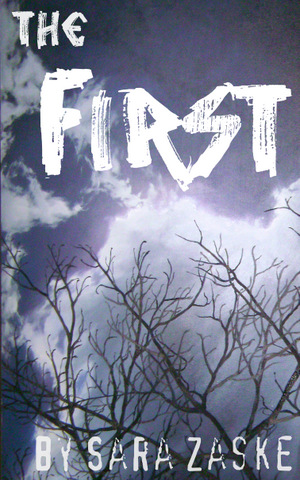
The First by Sara ZaskeI’ll give you a taste right now. Here are the opening lines from my YA urban fantasy novel, The First:

“I should have never gone to the new girl’s house. The walls didn’t need to melt, and the ground didn’t have to disappear under my feet to know that I should have stayed far away from Violet Starkey . . .“

Want more? Download a longer free sample of The First from Amazon, Barnes and Noble, or Smashwords)

IAM Guest Post…What Do Teens Look For in a Book?

Guest Feature

Guest Feature

Reading is a central part to so many people’s lives. The gift of reading has positively impacted everyone who has learned to enjoy and value this marvelous treasure. I know from personal experience that books offer a refuge from the cares of the world. I have also discovered that books nourish the imagination and help dreams to flourish.

When I asked my American Literature professor, who used to teach elementary school, if he noticed any difference between students who read for fun and students who did not, he immediately replied that he noticed a very great difference. He said that children who could sit down with a book and read for hours at a time were generally more disciplined than those who never made themselves finish one. He also said that students who read are better at concentrating in school. In short, reading improves students’ abilities in school.

But what about the benefits that appeal to a person’s sense of enjoyment – such as, can reading be fun? Since my books are aimed mostly at preteens and early teens, I sent a three-question survey to a fifth grade class to see what they thought of reading. Most of these children are ten to eleven years old. I also sent the same survey to two college friends of mine who both plan to teach English when they graduate.

On the survey, I first asked them to name the three most important things they look for in a good book. Few of the fifth graders could contain their answer to merely three things; most of them mentioned four or five elements. One young lady said that she preferred the kind of books that are so intense they cannot be put down and have to be finished in one day. Another young lady agreed with her that a good book “makes you not want to stop reading.”

Some listed elements they looked for in the content of the book, and to no surprise of mine, action and adventure were the most popular. One girl listed six items she enjoyed in a book, and four of them were connected to battles. A young man agreed that fighting and action make a book exciting. A second young man also had a list of elements that made a good story, with action and adventure topping the list.

The college students who answered this question were more critical, but their answers were a little more varied. One focused almost entirely on the story, saying the narrative had to be creative, comprehensible, and thought-provoking. The other required good mechanics, “because bad mechanics are distracting.”

My second question asked them to remember a book they had read that had a particular impact on their life. I was amazed that so many of the fifth graders could recall the first book they read that made reading enjoyable. One young man mentioned reading The Boxcar Children in school and finding an entire series that he wanted to read. A young lady mentioned a series that convinced her to read more because it contained humor and action; another girl mentioned Go, Dogs, Go, which she read many times. Another gentleman remembered the first book he ever read – about a hedgehog and a swimming pool. Someone else mentioned reading Treasure Island. That was amazing to me, because I did not read Treasure Island until I was a freshman in high school – but then, maybe I was a unique case.

Others name books that taught them values. One girl described a book that taught her never to give up on her dreams. Someone else recalled a book that taught about love and self-control. Some others enjoy a more technical education from books. A young man said he liked nonfiction books regarding animals, because then he learns new things. Still others enjoyed books about action and adventure. One mentioned the Magic Tree House series, while someone else values fantasy books in general.

Another common answer – which I can most easily relate too – were those who mentioned books that swept them away to other worlds. One girl named the series The 39 Clues, saying it took her around the world by making her imagination “go wild.” A young man mentioned Shark Wars, which takes him into the ocean. In my experience, I always find that books that create their own world are the most fun to read.

The two college students told me about books that helped them understand stories better. One said that while there were many books dear to her, The Silmarillion showed her how to appreciate the effort that goes into writing. The other mentioned a book called Orcs, by Stan Nicholls, that showed him how important the perspective is to the story.

My third question asked how life might be different without books. The answers were generally curt, to the point, and horrified, from both the college students and the fifth graders. Several fifth graders mentioned a lack of learning, and how spelling and grammar would be so much harder. One girl said life would be harder because “you would be wrecking your brains by watching T.V. All day.” Several others mentioned not knowing what to do for free time. A young man claimed there would be no interest in anything without books. A young lady said life would have no meaning and there could be no happiness without books. Another girl said if there were no books, “I would have invented books so I could read them.”

For the college students, these questions had the longest answers. One could not imagine life without reading. She supposed life would be fairly normal but completely different; she also supposed that a lack of books might make her less thoughtful and more superficial. The other said he would be bored and “Plane rides would be unbearable.” He also mentioned that he would not have the insights into other people that he gained through reading. In my own experience, I know that reading expanded my world, and it absolutely increased my understanding of people. Characters in books often reveal thoughts, emotions, and fears that people in real life never let show.

I also know that without books, I could never do what I love best, which is write stories. Another fifth grader agreed with me when she said “If there were no books in my life … I would never have a dream about being an author.” I and thousands of other authors are completely beholden to books, but we aren’t the only ones. Out of all the fifth graders who answered my survey, only one expressed a wish to become an author. I also noticed that none of them had anything bad to say about the impact of books in their lives. Books are a wonderful, positive influence on everyone – not just authors.

My Photo

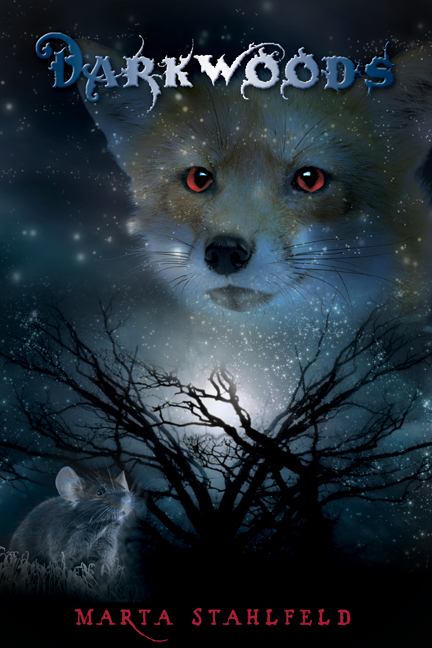
Marta Stahfeld is nineteen and going to college in Milwaukee, Wisconsin, USA. She hopes to be a teacher one day. Aside from college, where she is working on a History/Literature double major, she is writing book three in the Darkwoods series, as well as a series of short stories about the characters from the series.

Blog: http://martastahlfeld.blogspot.com/

Website: http://www.darkwoodsbooks.com/index.html

Darkwoods_Front_Cover

Pasadagavra_cover[1]

IAM Guest Post…Why I Write YA

Guest Feature

Guest Feature

Our featured author today is MB Mulhall, telling us why she writes YA books and showcasing her novel Tears of a ClownLet’s find out more!

———————————-

Why I Write YA…

I am long past what is considered my “Young Adult” years, but I find myself drawn to writing stories dealing with teens and young adults more than anything else.  I think it’s because so many people can relate to them. Even though they’re meant for teens, most adults have fond (or not so fond) memories of that time in life and can take a trip down memory lane by reading the books I write.

Young Adult novels aren’t fluff and dumbed down writing.  They deal with serious topics and situations and I think it’s important for me to bring some of those issues to light whether it drug use, gay relationships or eating disorders.  I don’t tone down the language or the severity of the situations because I want it to be as realistic as possible.

I also love the idea of first love and all that comes along with it. Those butterflies in the stomach, the worries about whether they’ll do it the right way, say the wrong thing, that first kiss.  I love to be able to recreate it and have readers relive their own memories as they read along.

There’s so much growth and self-awareness in the teen years that leaves for so many writing possibilities and character development.  Writing young adult novels allows me relive the good and bad moments of my youth and hopefully instill in those reading my books that change is possible, a broken heart isn’t the end of the world, that high school won’t last forever and there’s plenty of good times to come.

———————————–

Tears of a Clown Some girls wear makeup to enhance their natural beauty.

Some wear it to make themselves look sexy and mature, in the hopes to attract the attention of a paramour.

Darcy wears hers as a mask, a deterrent, a tribute of sorts to the musical group who got her through her parents’ messy divorce.

When she’s uprooted from her hometown in Detroit and plopped down into rural Georgia, the townsfolk don’t know whether she’s an escapee from the circus or a devil worshiping antichrist looking to kill their pets and corrupt their children.

Much to her surprise, Darcy finds herself in the middle of a bizarre love triangle; the preppy good-looking popular boy that all parents would love on one side, and the bad boy heartthrob that would have fathers sitting on their porches with shotguns and mothers buying chastity belts on the other.

Not surprisingly, Darcy also finds herself the object of cruel jokes, bullying and pies in the face. While she’s trying to stand up for what she believes in and exact revenge on those who treat her and her friends badly, she also has to decide between the two guys vying for her attention.

Will one of them really be able to see beyond the makeup and love her for her? Or will she end up just being a pawn in a long standing rivalry between the boys?

*Recommended for older teens age 15+*

——————————————

About the Author 

MB Mulhall is the author of Young adult novels, Near Death and Tears of a Clown, as well as a budding photographer. When she’s not pecking away at her keyboard or looking at the world up close through her lens, she’s got her nose stuck in a book.  A Jersey girl, born and bred, she spends much of her time scouring the boardwalks for images to capture and conversations to overhear. MB dreams of filling bookshelves with her own work  and of plastering her walls with photographs she’s taken from places around the world.

——————————————

Guest Post…from Deanna Proach

 Our guest post today – a piece told from her character’s perspective – is by Deanna Proach, author of Day of Revenge, a historical fiction set in revolutionary France, and To Be Maria, featured below. Aside from writing novels, Deanna is actively involved in her local theatre community as an actress and she’s learning the art of medieval sword fighting. You can find out more about her and her books at http://deannaswriting.wordpress.com.

——————————————

Seventeen-year-old Anya Preschnikov wants to become a famous actress but she’s faced with two problems. Her father ignores her and doesn’t have any money to support her. At school, she’s bullied on a daily basis, yet she believes that she will gain her stepping-stone to stardom if she’s accepted by her peers.

All of this changes when Maria Hernandez–an immigrant from Spain–comes to Peach Valley Senior High. Maria knows what it takes to fit in. She’s assertive, confident and she dresses suggestively, characteristics that all of the popular kids admire. Yet she sees in Anya what no one else sees: beauty and talent.

When Maria extends her hand of friendship, Anya is elated. Her rise to popularity is about to become a reality, but it ends at a house party when a boy’s rude comment sends her into a rage.

Desperate to belong somewhere, Anya and Maria seek new friends outside of school. They meet Alex and Marissa, a young couple who eagerly welcomes them into their world of parties and drugs. Anya and Maria soon find out that Alex is a drug dealer, but they are so lured by his wealth, good looks and aggressive confidence that they can’t resist his friendship. They don’t know that Alex’s gang is at war with a rival gang–one that’s run by Anya’s older brother, Adrik–until one incident puts their lives in danger’s path. To make matters worse, Alex won’t let Anya and Maria out of his sight. The two teens are forced to make a decision that’s a matter of life or death.

——————————————–

Christmas Through The Eyes of Anya Preschnikov (MC in To be Maria).
It had been published on my blog last year, then in the July Issue of ‘Supporting Authors One Read at a Time’ emagazine. But since November is closer to Christmas, I think this will go well.
Christmas. As far as I can remember, no one in my supposed family has ever celebrated Christmas. I mean, my dad’s a chronic alcoholic. And a loser. He can’t even hold onto a job. I mean, I don’t think he can. He hardly even talks to me, so I don’t know anything about the latest job he works at.Sophia, my younger sister, apparently got invited to a friend’s place for a celebration on Christmas day. I didn’t think she had any good friends. She’s quite the bitch you know. So, when I heard that she was invited out, I was quite surprised. And jealous and hurt. Of course, Sophia had to tell me that she’s spending all of Christmas Eve with that friend’s family.

“I can’t wait to spend Christmas with my best friend,” she had to tell me.

I felt incredibly insulted by that comment, so I had to ask, “Well, what about your older sister? Am I not good enough to spend Christmas with? I’m your sister for god’s sake.”

You know how she responded? She cast me a side glance and said, “Dream on, Anya. You can’t give me what I want. Besides, I’d far rather be with my friend than with you, Dad and your stupid boyfriend.”

Boy did I lay into her. “Fine! Go! A very Merry Christmas to you too. I hope you choke on your friend’s turkey while you trip over a gift.” I still don’t regret saying that to her. Ever since she entered sixth grade, she’s been a self-serving, snot-nosed little bitch. I’m so sick of her shitty attitude. Now that I think about it, I’m glad I don’t have to see her over Christmas. Hopefully, she’ll stay with her friend for the entire holiday. I’d rather spend Christmas alone than with her.

At the beginning of November, Patrick told me that his family will be spending Christmas with his relatives in Ireland. Like I said earlier, I’ve never celebrated Christmas and frankly, I’ve never liked it, but I don’t want to be alone. I’ve spent Christmas with the O’Connell’s the last four years and we’ve always had a really good time, despite the fact I don’t like Christmas. They sure know how to celebrate. Their house is always decked out with bright lights that make the snow sparkle at night.

I really like the nativity scene that they put on display in their living room. I’m not a Christian, yet I get so drawn in by the baby Jesus and his father and mother. I’ve heard the Christmas story so many times, I always think about how tough their lives were in those days and I can relate to them. They were poor, like me. There was no room for them in the inn. They had no house, no family to take them in and then they had to run far away because, if they would have stayed in Bethlehem, King Herod would have killed their only son. Whenever I think about them, I don’t feel so bad.

When I first heard that Patrick won’t be here, I was really upset. I cried for several hours after I got home from school. I’ve been secretly hoping that they’d take me with them to Ireland, but Patrick hasn’t asked me and I don’t think it would be right to invite myself. Besides, his relatives don’t know me. It wouldn’t be the same. So, I guess I’ll have to do something to keep myself from going nuts. I could really use some steady income, so I think I’m going to get a job. I’m also going to get ready for my auditions.

We have to audition for Mr. Hawthorne’s–my acting teacher–advanced acting class. The auditions are in the middle of January. I want to be an actor so bad, so I have to get into this class. It means all the world to me. So, I better get ready for it, like now.

——————————————–

Want to know more? Check out the links!

Amazon   Barnes and Noble

 Facebook: http://www.facebook.com/deanna.proach

Twitter: @deannaproach

 Goodreads: http://www.goodreads.com/author/show/4388748.Deanna_Proach

Guest Post…Orphan Heroics

Think about what defines a literary hero in speculative fiction—science fiction or fantasy. The hero must possess courage. Given. He or she must be virtuous and good. They would not be a hero if they were the opposite. The list can go on, long enough maybe to fill all the shelves in a brick and mortar bookstore. What about a hero’s background… Where does he or she come from? Not the physical place on a map, though that might matter. Rather, what type of environment does the hero grow up in before setting off for adventure, to save the world?


There was a discussion on one of Goodreads’ group boards last year. Members were discussing the backgrounds writers give to their protagonists. They were specifically asking this question: do our heroes always need to be orphans? Why cannot the hero come from a family with three brothers, two sisters, loving parents, and a modest, happy homestead? The complaint some members had was that many fantasy novels/series rarely have a protagonist who comes from a well-rounded, well-adjusted, loving family home. They said too many heroes in speculative fiction are orphans with broken homes, that this type of character has become overused.


Consider this. A boy lives with his aunt and uncle, farmers tilling a meager existence in a desert wasteland. The boy doesn’t remember his parents, they’re out of the picture before his adolescent mind can capture a memory of their faces. He longs for adventure. One day the boy comes home to find his aunt and uncle dead, murdered. His home is ravaged. A grizzled wizard sweeps the boy away to start a new life filled with adventures but with obstacles that will test his mettle and shape him into the savior for a galaxy far, far away. Oh yeah, along this hero’s journey the boy also figures out his father is the most dastardly villain in that galaxy far, far away.


Talk about a broken home. If you didn’t already guess, the aforementioned “origin” is Luke Skywalker’s beginning. He’s the quintessential hero model. Is he a tragic hero? No. Luke is good and just, a virtuous character. He does not befall a misfortune based on his own frailty, his character flaw. The tragic hero is Luke’s father, the scourge of the galaxy, Dark Vader, a.k.a. Anakin Skywalker. Alternatively, Luke is an example of a hero born of tragedy. The same type of hero a number of GoodReads members were decrying. An orphan, society’s castaway.


I maintain that the hero born of tragedy needs a catalyst to propel him or her from mediocrity to something beyond what he or she believes themselves capable of achieving. Desire is not enough. For a character to say, “I want to be a knight” or “I want to be a sorcerer” is all well and good. These are noble aspirations in a normal world, except speculative fiction is not a reflection of the normal world. Magic wielding baddies, twisted and malformed entities of evil, gods with chips on their shoulders and too much power, aliens with technology capable of blowing up a planet, all of these antagonists threaten life in any given fantasy world. To stand toe-to-toe against these threats, to prevail against these oppositions, the protagonist needs to aspire to greatness. Luke Skywalker was never going to leave Tatooine. He wanted to become a Rebel Alliance pilot but he could not escape the farm. It’s unfortunate that stormtroopers killed his aunt and uncle and destroyed the family farm but the event propelled Luke toward his destiny. Before this event Obi-wan Kenobi offered Luke a chance to leave with him and save Leia from the evil Empire. Luke turned down Kenobi. Remember? It was his surrogate parents dying, his way of life destroyed, that left Luke with no options.


Aspirations are noble. However, aspirations are not that push. Oh yeah, it’s a component of the continual flame in the belly that pulls out all the stops, but I believe it’s the source of that flame, the striking of the match that is most important. That flame is hottest, brightest, when it’s lit and fueled by a terrible event or set of circumstances. A character who stand in the ashes of his or her family, a past, has an even greater motivator underneath their feet to press them into taking not just steps forward toward a goal but leaps. Heroes take leaps. And when they think they cannot go any further, that flame guides them the rest of the way.


In history, there are stories of army commanders sailing their troops across the sea to concur lands. After landing, those commanders would burn the boats. Nowhere to go but forward, the soldiers fought harder and longer because they had no escape route. Die or succeed. If the former, they would die in the pursuit of success. Heroes with tragedy in their pasts also have no other place to go but forward.


Don’t get me wrong. Our heroes need fundamental building blocks for their moral foundations. Family units, fathers and mothers, friends, all provide those initial life lessons that first shape the hero. Potential heroes from horrible backgrounds, like a street urchin or the harlot, need positive influences in their lives in order to strive toward heroics. Instead of families these characters might have friends who sacrifice for them, save them from dangers, give them a loaf of bread despite their own bellies rumbling. Thus, positive influences, the family or segregate family (i.e. friends), are important to shaping the hero born of tragedy. I dare say it’s a necessary component.


There are also examples of hero characters that come from stable, mundane backgrounds with good homes, as opposed to the hero orphans in my initial argument. I’m referring to the shepherds, the Rand al’Thors of fantasy. But even these heroes are thrust into adventures based on tragedies. For example, in the Wheel of Time series protagonist Rand and his friends from the Two Rivers don’t necessarily want to become heroes or fight evil. An attack on their village by hideous monsters called Trolics and the intervention of a female wizard known as an Aes Sedai force Rand and his friends into their later roles as heroes and saviors. Again, the heroes are born of tragedy. In this case their families are whole (except Rand, technically, his backstory is more complex and I won’t delve into the particulars), which lends more to my point that heroes need a stable foundation of values and morals rooted by family and friends in order to make their future choices.


Some readers will disagree with me but I stand by my belief that heroes need a flame to light their path, to show them where to plant their feet along the path of destiny and fate. That flame originates from somewhere and not always from happy beginnings. Striking a match can be violent; sometimes a house catches fire and burns down. In many instances these characters are the orphans, the beggars, the harlots… the lowliest of the low. They possess hearts of gold yet are defined by family or personal misfortunes or society’s rejection. Strength and courage are their greatest weapons, sharper than any sword and mightier than a thrown fireball.


Who are your favorite heroes born of personal tragedy? Sound off and debate. Maybe you believe a hero needs only a good home and a strong foundation of morals to fight the evils of the world. Again, sound off and give examples.


———————————————-

About the Author

Clinton grew up in Southern California, where the sun shines all day and where most kids spend their days outdoors skinning knees and browning their flesh. He spent those same days inside, reading comics, books, and dreaming of fantasy worlds. These days he not only dreams but he creates and writes about those same worlds. In college Clinton found himself in the dregs of a business school, studying accounting. Sneaking English and philosophy courses into his schedule were the only things that kept him sane! As a result, he spent way more than four years getting a well-rounded degree. Adult books and books for kids, Clinton reads it all these days. He still enjoys traditional American comics and manga/anime from Asia, but when not writing he can also be found immersing himself in video games.

            Clinton today still resides in Southern California with his wife, Kathy and their two Scottish terriers, Mac and Bonni (wheaten and black).

————————————–

Want to know more? Check out the links!

http://clintondharding.com (official site)

https://twitter.com/#!/ClintonDHarding (twitter)

http://www.facebook.com/pages/Clinton-D-Harding/76506701006 (facebook)

http://www.goodreads.com/author/show/5381520.Clinton_D_Harding (goodreads)

Tony’s Thinking…Why Stephen King Missed His Calling

I’ve read quite a few Stephen King books. Not all of them by any means – I believe the list is now up to sixty two, – but I’ve read enough of them to know his writing pretty well.

We all know the genre: Joe Average (who has a habit of being a writer) finds himself in a supernatural situation, gets himself out of it – though doesn’t always survive mentally.

And fair enough, some of them are gruesome to the max – I believe all aspiring writers should read Misery, just as an object lesson to run from anyone who tells you, ‘I’m your Number One Fan’, and as a delve into the writing process.

But I digress, and back to my point.

I put it to the world: He missed his calling. The man was born to write YA.

I came across the review Em posted on here for The Long Walk, and flicking through my shelves of King today, it occurred to me that the works I think are his best are all, at heart YAs: IT. The Long Walk. The Body (Stand by Me, for those who only know the film). The Talisman. Christine. Carrie.

But what about the horror? What about the profanity? Some might ask. I’d ask if they’d read any YA recently. I’d pick up a Bali Rai and point out the profanity in there. I’d pick up a Darren Shan and show you the gore inside. He’s not written anything in the books I’ve mentioned above that couldn’t be handled by a teenager.

The simple fact is Stephen King works best when he’s writing about teenagers and children.

He knows on a fundamental level how they tick, the elemental fears that move and shake them. He knows how a dark cellar scares the lunch out of them, how sunlight gleaming from the ankle bracelet of the first girl you ever love melts your heart.

And he knows the value of childhood friendships (The Body: I never had any friends later on like I had when I was twelve. Jesus, did anyone?), the easy pain cruel parents inflict on their children – and not always physically.

That’s why his horror works so well…he knows the fears of childhood and knows we’ve all been there. Who’s never been frightened by a clown like Pennywise in IT? Personally, I don’t remember a time I didn’t find clowns scary.

Even Christine, which is perhaps a borderline case for YA, is all about the losers in high school, full of teenage angst and anger. Breaking the rules for the first time to get what you want, breaking away from your parents.

Stephen King missed his calling. He’s wasted on all those adults! YA’s should take him as one of their own!

So I put it to the world: Start a campaign. Stephen King should write YA!


Guest Post…To Kill Or Not To Kill: That Is The Question!

Many of you probably remember the Artemis myth. She’s one of the most widely known of the Greek goddesses. Her Roman counterpart is Diana. Artemis is a departure from the maiden/mother/crone depiction of women in that she was a virgin goddess. Women who attended her also had to be chaste. What she’s probably best known for, other than tending to the moon with her brother, Apollo, is righting wrongs.

Years ago when I was in Soundpeace, a metaphysical bookstore in Ashland, Oregon, I plucked a silver pendant off its black velvet backing. It was about an inch-and-a-half in diameter and had a woman with a dog by her side and a bow behind her, carrying a light. This was long before I’d studied much in the way of mythology. All I knew was that I was drawn to that pendant and had to have it. It’s been around my neck for most of the thirty years or so since then. In the intervening years, I’ve come to recognize my pendant goddess for who she is: Artemis. 


So what does that have to do with my life? Or with writing? To answer the first question, I’ve always had a finely etched sense of what’s right and have fought many a losing battle because I didn’t want to see the other side, mostly comprised of big businesses like pharmaceutical companies and insurance companies win. While my ideals may have been admirable, retrospectively, I never had a chance. The magic of writing is you can make everyone an Erin Brokovich. Remember? She took on a big corporation that was polluting water and won the largest class action suit ever.

It probably won’t surprise you to know that in real life things like that don’t happen very often, which leads us to the answer to the second question.  In fiction, they happen all the time. I think that’s why people read. At least it’s why I do. To transport myself to the world of the possible. To have heroes I can root for.  A skilled author can scare me half to death that things won’t go well, even when I know in my heart of hearts they won’t kill off the protagonist. Or, maybe they will. George R.R. Martin is quite good at that. Though, I must admit I didn’t like the series nearly so well after Eddard lost his head. It started feeling like a Greek tragedy after that.

There is a fine line to who to kill off in a story so you don’t alienate your readers. That’s something I struggle with. I might add maim and traumatize to kill. There are lots of ways an author can stress his/her characters. Each stressor adds depth to a character, but only if you can tie the wounding back in with how the character acts after it happens. The character shouldn’t overreact, but they can’t underreact either. 

To put a finer point on things, it’s easy to kill off a character no one liked in the first place. Face it, even the author didn’t particularly like them which is why you, the reader, saw them as vapid and shallow, too. This is why drawing three-dimensional antagonists is just as important as creating fully developed protagonists. The reader has to feel something when a character dies or gets hurt—other than relief because the character seemed superfluous and annoying anyway. 

To the extent fiction mirrors real life as much as possible, we can relate to it. That’s one of the reasons I set my novels in “real world” settings rather than a more typical, high fantasy world. I want that dystopian, near-future to feel real enough to make readers think. I suppose that’s my Artemis complex creeping in, but there’s not much I can do about that. One of the reasons many of Stephen King’s books work so well is they start out feeling fairly normal. The creepy, crawly elements often don’t intrude till near the end, like in Bag of Bones, for example. I don’t think the ghouls came out until the last fifty pages. By then I was so caught up in the reality of the world King had drawn—because it was my world—the addition of fantastical elements felt perfectly logical. 

What have some of your favorite books been? Why? 

What drew you in and made the world feel real? 

Who are some of your favorite fictional characters?

———————————

Today’s guest post is from author Ann Gimpel – you can find out more about her books and blogging at:  http://anngimpel.blogspot.co.uk/ It was originally published on her blog 19th March, 2012.

Guest Post…Making Memorable Villains

Making Memorable Villains

We said “mean – really mean” and from that you heard “green and lilac lycra”?

Back in April I participated in the A to Z Blog Challenge—it was a 30-day challenge in April and where your blog topic has to correspond to each letter in the alphabet. I wanted to have a lil fun with the idea so I started talking about the villains we all know and love and what we can learn about them. Well 50 villains later, I’ve learned a thing or two about the darker side of the villains that stick with us.

Villains Have a Clear Purpose

You ever watch a James Bond movie? Some of those villains you really remember, like Blofeld, and some of them you end up wondering what in the world was going on, right? That’s because their purpose wasn’t clear. The alien in Alien taught me about this—that animal, for all its disgusting attributes, just wanted to survive. It did what it was always meant to do. The unfortunate souls on the Nostromo happened to be in the way.

Villains Are Mean—Like Really Mean

OK so this is tougher than it sounds. Sure all villains are mean but Cruella DeVille told us that we have to take things up a notch to be memorable. You don’t remember the two guys in the movie with her, do you? But you remember that this chick wanted to kill puppies to turn them into high fashion. Think about the Evil Queen from Snow White: “I should kill my stepdaughter because she’s prettier than me”? There is a line villains must cross to be ranked in the pantheon of the greats—the truly memorable ones dance across that line and leave it in the dust.

Villains Have Focus

A villain without clear focus on that singular purpose we talked about above gets lost in the shuffle. Look at Voldemort. This cat murdered a bunch of people so he could split his soul, store it in seven horcruxes, all so he could live forever. And he figured this out in high school. At his age I was trying to figure out how to ditch English. And even in his “death” people were too scared to say his name. Focus, man, focus.

Villains Take Matters Into their Own Hands

Darth Vader taught me this lesson.  My man was first in the room ALWAYS, killed his homeboy with the lightsaber, tried to kill his own kid—three times, took two shots from Han Solo, and had the best battlefield promotion plan in history. You can’t say he was ever afraid to get his hands dirty. The villain that delegates is a villain we forget.

Villains Commit

You can’t buy a villain whose not committed to their cause hook, line and sinker. Once they start, there is no going back. The ghosts in Poltergeist took Carol Ann, tried to eat the boy, and eventually ate the entire house. Khan sacrificed his entire crew and himself for revenge in Star Trek II. The Coyote routinely risks life and limb trying to catch the Roadrunner. If your villain isn’t committed, there isn’t much conflict and the hero is never really in danger. That equals BORING!

Villains Have A Real Rationale For Their Actions

We don’t have to agree but the villains whose plans make sense tend to stick with us. If we can understand why they might want to do something, we automatically sympathize, even if we detest their methods. Magneto is a fantastic example of this: he’s trying to avoid a holocaust against mutants. That’s a noble, even virtuous sentiment. His methods, though, well, they leave a lot to be desired.

Villains Make It Personal

The best villains have a personal connection to the hero. Darth Vader was Luke’s dad. Clubber Lang killed Rocky’s father-figure manager. Voldemort handled Harry’s parents. Scar killed his brother and traumatized his nephew—on the same day. Villains who make it personal for the hero are the villains we can never let go. They, in essence, make it personal with us.

Think about the villains that have stuck with you—do you agree? Disagree? And join the conversation over at christophercstarr.net.

—————————————————–

About the Author: Christopher C. Starr is the founder of Sanford House Press, an indie publishing house. The Road to Hell is his first novel and the launch of the HEAVEN FALLS series. Chris lives in the Seattle area with his wife, two kids and his huskies, Rocky the Wonder Dog and his colorful sidekick, Leylah Redd. Check him out on the web at christophercstarr.net

Want to know more? Check out the links! 

Blog: http://www.christophercstarr.net

Amazon Author Page: http://www.amazon.com/author/christophercstarr

Facebook Fan Page: http://www.facebook.com/christophercstarr

Twitter: http://www.twitter.com/SuperStarr73

Guest Post…by Ian Truman

A Teenage Suicide: How I Jumped From Crime to Young Adult

Ian Truman, Montreal, June 6, 2012

——————————————————–

Tales of Lust, Hate and Despair by Ian Truman

I guess that in a sense, I didn’t really jump from “Crime” to “Young Adult”. Or at least the jump didn’t seem to be that far. I believe it is because I apply a few writing techniques regardless of what project I am working on. It allows me to write in a variety of styles while maintaining my own voice regardless of what I write. I have always been a fan of realism. Some of my major influences include Hemingway, Mordecai Richler and Dennis Lehane. I always try to depict life as I see it in a certain context and I try to avoid filtering it through my own judgements. That is basis of my approach to writing.

My very first novel was titled “The Factory line” and it was quite simply, a day in the life of a factory worker. Although I enjoyed writing it (and it was mostly therapeutic, I have to admit) I did not enjoy so much the years I spend on assembly lines. (But that is in the past, I have since then managed to get back into college and get out of the factories, for now at least.) That novel was HORRIBLE to write. I had no knowledge of techniques or structure. I had no work ethic which I have since developed. The novel was really more of a gathering of small, realistic snapshots about life in a factory. After writing and re-writing it several times, I considered it a failure before sitting down and trying to organize my writing. That is the moment I began to develop skills that would greatly improve my productivity as a writer: I needed a plan, a structure. Now, I know a lot of writers I’ve met over the years believe that a plan is something too restrictive to their creativity. On the contrary, I believe that your plan has to be creative as well. Take my first novel, The Factory Line. I wanted to depict life in a Canadian factory. So my plan was simply to follow this one fella through a single day in his life. So I made it a Friday night and I managed to adapt each snapshot I had into a storyline that made sense. That was the only way The Factory Line could exist and I used this kind of creative planning in order to get it done.

Still, I believe my first novel has a lot of problems, flaws and such. I wanted my second novel to be more structured. I also wanted to bash in the door of the largest market out there: Mystery novels. I figured I had nothing to lose and “if you’re going to try, go all the way.” That’s what Bukowski said anyways. I came up with a title pretty early as well: “Tales of lust, Hate and Despair.” I made a three page outline only with plot points, actions and twists. I’d say I planned 70% of the novel before writing a single line, allowing myself to have that “30%” room for creative inputs I might come up with during the bulk of the writing process. I wrote most of it during my studies in Creative Writing at Concordia University and I have to admit that I am pretty damn proud of the novel. The thing is, it was not a “formula” novel. It was not a series either. I do not write like a 24 episode or an “Alex Cross” series. When I think about it, my crime novel is still very much realistic and (I hope) perfectly believable in terms of place and violence. I used real names of streets, neighbourhoods and places in Montreal. I always do a little bit of research to make sure the types of cars I put in or the songs I mention do fit the “era” of the novel (in this case, most of the story took place in the 90’s). I have nothing against writers who like hyperboles or fantastic storylines; it is simply not my thing.

That was my second novel. I am now working on my third and I guess I was as surprised as the next guy that I ended up writing a YA novel. Now, YA is just as wide a category as anything else in the publishing world, but “A Teenage Suicide” is still very much a young adult title. As I come from the Province of Quebec, teenage suicide (and suicide in general) is an everyday reality as we have one of (or THE) highest suicide rate in the world. Having struggled with this issue myself as a teenager and a young adult, I felt compelled to address the issue. I also wanted to do it without being moralistic or wanting so save the world. Somebody else will save the world, I, for now, am just trying to write good novels. So I went to work on my third title and again, I stayed true to my style and I had developed a work ethic that had been good to me. I wanted to depict the life of young men and women as realistically as possible without judgment or restrain. I also planned out 70% of the novel ahead of time and I am surprising myself every time I sit down to write that the novel might actually grow beyond my planned “30%” room. The original structured actually allows me to expand the story without getting lost in loose strands. I know it sounds weird, or no so much if you are a writer as well, but I feel there comes this point in a story where the characters you have created react on their own terms and I often find myself surprised about the answers that I let them give me. I guess this is my approach to dialogue: keep it as realistic as possible and let your characters say everything they actually want to say. I don’t want my characters to stop talking to one another. This was true in “The Factory Line”, it was true in “Tales of lust, Hate and Despair” and it is becoming increasingly true as the pages to “A Teenage Suicide” stack up on my virtual desk.

One more thing that made this transition from crime to YA no so dire is my “writing playlist”. I am a huge music fan, and of a variety of styles and eras so vast you’d be surprised. I was a signer in a hard-core band before I began writing novels and I will always look to music for inspiration. This is why, when I come up with a new idea or a project, I try to figure out a musical mood for the project and I make myself a playlist. When I wrote The Factory Line, I was working in a factory, so the playlist kinda made itself up: whatever was on the radio. But I did look into more songs and albums from what the blue collars hear all day (the radio really fucking sucks, let me tell you that). And so I ended up with a weird mix of country, gansta rap, metal, classic rock and etc… My playlist for that project included David Allan Coe, Wu-Tang Clan, Tupac, Social Distortion, Motorhead, Guns n’ Roses, Danzig… Anything a proletarian may listen too, I listened to it too (and hell, I like the stuff as well.) My playlist for Tales of Lust, Hate and Despair was darker and grittier. It was more like Neurosis, Marilyn Manson, Sage Francis, Tom Waits, Onyx, Nirvana etc… I wanted the whole of the urban-poverty experience. (And let’s admit, I experienced it myself) so that kind of music felt right for the project. My YA novel, despite being titled “A Teenage Suicide” has more of a hopelessly romantic feel to it. I listen to a lot of softer music like Sigur Ros or Mogwai. I also have chapters that need something a bit more rough, but I find myself listening to “positive hard-core” like Rise Against, Have Heart, Champion etc… This is because I don’t want A Teenage Suicide to be melodramatic or preachy. I just want to write the story of teenagers and young adults who are growing up in a world that is not giving them a place. I wanted to address issues that I was facing myself not so long ago (I am 29 years old now). I know that how I felt only a decade ago or so, is still how a lot of young people feel today and I wanted to give them a story they could relate too. A Teenage Suicide is very much a “coming of age” story, but sometimes, coming of age hits a concrete wall.

Take care of each other out there.

Ian Truman

———————————————

Want to know more? Check out the links!

I would like to thank Aside from Writing for letting me use a bit of their space. I hope you enjoyed my 2 cents, feel free to contact me if you have any praises, insults or death threats. Contact me *I do my own follow-ups on social networks; it does take a bit of time, thank you for your patience.

Iantruman@hotmail.ca

http://www.facebook.com/iantruman1982

www.iantruman.wordpress.com

http://www.amazon.com/The-Factory-Line-ebook/dp/B006X7SB64

http://www.goodreads.com/user/show/7828073-ian-truman

Twitter: @IanTruman