Tony’s Writing Tips: The only rule of writing I know

“There are three rules for writing a novel. Unfortunately, no one knows what they are.” – W. Somerset Maugham


Maybe not, but there’s one rule I have discovered…almost by accident really. It’s going to seem strange to people just starting to publish that they shouldn’t do it, but here it is:

Don’t respond to a review.

That’s it; Good or bad, do not respond to a review of your story. Ever.

Of course, the nice thing about rules is that they’re made to be broken, and I’ve broken this one a few times…but here’s the modifier: The reviews I’ve replied to are only to people I know. Don’t do it somewhere like Amazon, as tempting as that ‘Reply to this comment’ button is.

There are times and places to thank your readers for leaving reviews, and you have to pick them using some judgement.

So why not respond?

It’s a good question. You spent weeks or months (or years!) writing your beautiful story and someone doesn’t get the fuss you kept making about Sam’s dress being green. They missed the symbolism of it all, The Big Image You Had in Your Head.

Two sentences, you can clear it all up for them, right? That Reply button is looking so tempting…

But don’t.

It’s frustrating, I know. I’ve had someone leave a one star review saying a short story “Wasn’t true and was too short.” I could have pointed out that the story is A) Clearly listed as fiction, and B) Clearly listed as a short. But I didn’t, although I still have to restrain myself every time I go and check my reviews.

Console yourself with the knowledge that you did the best you could. Try harder next time, and accept that most people aren’t going to be on the same mental wavelength as you (Another reason editors and beta-readers are so useful, by the way).

It’s going to sound odd, but the minute someone reads your story, it isn’t yours anymore.

People take reading very seriously…and what they take away from the story might not be what you wanted them to take away. Get to live with that, because it’s true. I didn’t take anything away from The Road, for instance, but a damn dull time. I’m sure Cormac McCarthy had something else in mind when he wrote it.

If someone didn’t like your story, do not tell them what they missed. Do not tell them you’re the best writer since Shakespeare or Dickens. Brood over a bad review if you have to. Rend your garments and thrash about on the floor for a while.

Just don’t do it in public or to the people who left you a review.

Replies to reviewers scare them away.

I discovered this one on an Amazon board where the question What do you think of authors replying to a review? was asked.

I was quite shocked by the drift of the comments. One person said they felt as though the author was breathing over their shoulder as they read; another said they had trouble saying how much a story sucked for fear of hurting the author’s feelings, knowing they were checking in.

But they said such nice things!

This one is harder to deal with, I think, than a bad review. Someone gives you five stars and said your story made them cry. I can tell you, that feels damn good. Even better if it’s your intent. ;-).

But take the good with the bad. Go out and celebrate for a while. Come back to the good reviews when you feel like what you’re writing is Bantha Poodoo and take heart from them. But don’t reply, even to the good reviews.

Reviews – good and bad – aren’t there for you as a writer to gloat or weep over (although, of course, we do). It’s the obvious point, but it wants restating anyway: A review is for readers. Remember that and stand back.


(Reblogged from Musings – The Blog of Tony Talbot)

Tony’s Review: Carrie, Stephen King

10592

4/5

Bullied by her fundamentalist mother and outcast at school, Carrie White is slated to live a life of misery. Until she realises she’s telekinetic…

I’ve read quite a few of Stephen King’s books, but never got around to reading this until now. No reason, specifically, unless it’s the fact I read ‘salems Lot (Number Two) and thought it was clumsy and hard going.

What a surprise Carrie is then, in comparison. Carrie herself and Sue Snell, really the main two characters, are well thought out and three-dimensional, and I really felt for Carrie and her miserable life. And for Sue as well, trying to reach out to her in anyway she could. The fact that she left it too late is the real heart of the story, and the tragedy of it all.

King’s first book is a short tale compared to most of his others, and there’s none of the bloat that affects some of his later writing. The climax is slow and inevitable, but unaffected by that slow build. The book slips between the main events and the aftermath easily, lending a nice feel to it and breaking up the linear narrative.

I can see why King became such a popular writer after this. This isn’t a story of the boogie-man who eats children or vampires coming to town. This is an ordinary girl with an extraordinary talent; her only response to bullying is to fight back the only way she knows how, with terrifying and bitter results for the town where she lives.

Extraordinary, and without doubt one of the top three King books I’ve read.

Tony’s Review: Forbidden, Tabitha Suzuma

7600924

4/5

Lochan and Maya have been abandoned. Left to care for their three siblings by a drunken mother who’s out chasing men, a father on the other side of the planet, all they have is themselves.

Lochan suffers from social anxiety and Maya has never had a boyfriend; they see themselves more as partners than brother and sister, they always have…and so they fall in love, physically and emotionally.

I think incest is the last taboo subject to be covered by YA (although my wife said Flowers in the Attic did it in the 70s – I haven’t read it.) I’ve read books about suicide, rape, pregnancy, sexual preferences…there’s really nothing YA can’t cover anymore. Fantastic time to be reading it!

The book splits points of view between Lochan and Maya, and it was Lochan I immediately connected to. Not because of the incest angle, but because of his social anxiety. I suffered through it as a teen, and still do to some extent 30 years later. Not as bad as Lochan – no panic attacks, thankfully – but I was right back there with him, eating outside on a cold day because of the terror of being around other people. Suzuma has nailed SA, and nailed it right down to the last detail. When a teacher shows him a sliver of compassion, I nearly cried as he did.

As a result, I didn’t connect with Maya as much; almost not at all, actually. I found her to be two dimensional, but I suspect it was because Lochan was very real to me and not through any fault of the writing, which is flawless.

Suzuma draws a world full of details and life. Every character comes alive – Tiffin’s love of football, Willa’s anxieties, Kit’s teenage rebellion. This is a family full of very real characters, and the world building is superb for its little details. One complaint: She’s fallen in love with the word puce.

Now I suppose the reason the book was written: The incest angle. Apparently, even consensual incest is illegal in the UK – didn’t know that.

For me, the least interesting thing about this relationship is that it’s between a brother and a sister. All I see is two people in love. Who they choose to love is entirely up to them.

Lochan and Maya have no illusions that what they’re doing is going to end well (and indeed it doesn’t), and they admit they might grow apart and find other people to love. They know biologically they can never have children. They don’t care. What they have is each other, right now and their love is passionate, deep and very real. Also very physical, something Suzuma pushes the edges of with her intense descriptions of their intimacy.

When someone asked me what this book was about and I told them incest, they went, ewwwww. This is from someone with a very liberal mind. I thought that was interesting. It really is an ingrained taboo.

My thoughts on it: Who are we to impose our morality on them? Society says they can’t love each other. Society also once said that a man can’t love another man, or a woman love another woman, or even marry a woman with a different colour skin.

Society changes; love doesn’t.

Tony’s Writing Tips: Show-not-tell with dialogue

One of the things they always tell writers to do is show and not tell. “Don’t Tell Me the Moon Is Shining; Show Me the Glint of Light on Broken Glass” to paraphrase playwright Anton Chekov. Chekov was talking about describing the world, but here’s another way you can use that show-not-tell: to describe your characters using only their dialogue and body language.

It’s certainly one of my favourite ways of doing it. Here are some snips from my own Eight Mile Island:

Mum comes out onto the deck from the cabin behind me and weaves along it towards me. …

“Dylan?”

I ignore her for a minute, pretending not to hear my name until she says it louder. I turn from the waves and face her. “What?”

“You’ve got to come inside. You’ll be washed away.”

“So?”

“Please, Dylan. Don’t start. Not today.”

And these are the first word you hear Dylan say…half a page in, one surly question and you know you’re dealing with a boy with attitude and a mother helpless to do anything about it.

Neat, isn’t it? And it’s not magic or sleight of hand. We all make conscious and subconscious judgements about people we meet by the way they talk and the words they use. It’s the same for readers, and it’s something you can use – should use – in your dialogue and your character’s body language.

What I’m not talking about here, by the way, is stereotyping. Don’t bother with the gay character who talks in a high pitched voice and is flaming all of the time. Most of them don’t, and you shouldn’t either. Make it subtle, folks. One hand movement or high-pitched comment can be enough.

I wrote a story recently for an Australian competition and sent it off to a ‘Straylian friend for her input. She returned it with a comment about stereotyping an uneducated train driver and I cleaned up the dialogue. Here’s the first version:

He smiled, but it faltered and failed quickly, and he returned to gnawing his lip. “Thought so. That aftershave your wife buys you stinks somethin rotten.”

“Tom, I don’t think I’m the right person for you to be talking to right now. You need a doc.”

“Siddown, Bill. I gotta tell someone. Cops out there wouldn’t believe a word of it.”

I moved to the table and sat down opposite, looking towards the two-way mirror Tom couldn’t see. The man I am looked back at me, and that man looked scared out of his wits.

Tom leaned back as far as his bolted down chair would allow. “What did they tell ya?”

Now I fidgeted. “That you wouldn’t talk to anyone but me. That you, uh…you –”

“I killed em both, Bill. Merciful, it was. Best thing for em.”

“Uh, Tom…I really think you need a doc. For that lip, at least.”

His tongue tasted the blood and darted back into his mouth. “Let it bleed. Maybe it’ll be enough to end it.”

“Is that what you want?”

He leaned forward and his breath was foul, his body odour sweet and sickly and I retreated from it. “What I want…is for them to kill me.”

Here’s the modified version:

His nostrils flared. “That you Bill? I can smell that bloody aftershave your wife buys you.” Even though spasms racked his body, the voice was still solid.

“It’s me, mate.” I paused. “Tom, I don’t think I’m the right person to be talking to. You need a doctor.”

“Siddown, Bill. I gotta tell someone. Cops out there wouldn’t believe a word anyway.”

I sat opposite him and glanced at the two-way mirror. The man I am looked back at me, and that man looked scared out of his wits.

Tom leaned back in his bolted down chair. “What did they tell you?”

I fidgeted. “That you wouldn’t talk to anyone but me. That you, uh…you –”

“They think I killed them? Yeah, merciful if I did, I’d say. Best thing for them.”

“Uh, Tom…I really think you need a doctor. For that lip, at least.”

His tongue tasted the blood. “Let it bleed. Maybe it’ll be enough to end it.”

“Is that what you want?”

He leaned forward, his body odour sickly. “What I want…is for them to kill me. So I don’t have to dream about those women anymore.”

What I’ve done is make Tom and Bill’s dialogue slightly more formal throughout, but the whole is more than the sum of its parts. For instance,

They think I killed them? Yeah, merciful if I did, I’d say. Best thing for them.”

…instead of the more direct

“I killed em both, Bill. Merciful, it was. Best thing for em.”

You can also subvert dialogue. A good example is in John Wyndham’s Day of The Triffids. A character named Coker – working class, superficially poorly educated – sometimes pops up with words and references beyond what you would expect him to know. The main character asks him about it, and discovers that Coker found out that the better educated wouldn’t listen to him unless he spoke as if he was educated; and poorly educated people wouldn’t listen to him if he did. Sometimes he drops it for a word or two, just for effect.

Give your characters different voices and you won’t many need dialogue attributes. It’s a way to show who’s speaking and not just tell again. Here’s a phone conversation from Eight Mile Island:

“Yeah?” a rough voice speaks in my ear.

“Hello, is this Mr Yates?”

“Who the hell wants to know at this goddamn hour?”

“Uh…you don’t know me, my name is…is, uh…” I look round the kitchen and a box of cereal catches my eye. “Uh, Teddy Graham. I’m trying to contact Cassie. About a reunion we’re having at the school for former pupils.”

“What the Christ you callin me at this hour for?”

“S…sorry, I forgot about the time difference. So, anyway, if I could talk to her, maybe…?”

“Well, son, if you want to talk to her, go ahead. I got no objections to it. Why not ask her yesself?”

What?

“You mean she isn’t there?”

“No, for Gods sake, you stupid or sumthin’? She’s at the school, ain’t she?”

“Uh, yeah, sure. I misheard you, sorry.”

“Yes. Cassie is happy at the school. Doesn’t ever want to leave there. Happy there. Don’t even have to call her to check she’s all right.”

I hang up as quickly as I can make up an excuse, my legs going weak.

…because we have a good idea how Mr Yates ‘sounds’, when something odd happens at the end of this conversation, it jumps right out.


So, just a final exercise: How old is this character from Fidget? How did I show you without telling you?

One morning in the big school holiday, when I got up after a long sleep, I went downstairs into the kitchen. Mummy was outside, hanging the big white bed sheets out on the clothesline, and I went outside to see her, even before I had breakfast.

I ran my hands down the sheets, pretending I was a pirate and they were sails on my ship, the wind making them blow and huff. I got to the end of the clothesline and stopped. The big red flowers were in front of me off to one side, and the big trees behind them were bending with the wind. The day was bright and blue and hot on my head.


I hope all that helps you see how you can make your characters do the work for you when it comes to show-not-tell!

Reblogged from: Musings – The Blog of Tony Talbot. http://www.tony-talbot.co.uk/wordpress/?p=547

Tony’s Review: Unwholly by Neal Shusterman

15992465


4/5

In a world where unwinding – the dissolution of teenagers for organ replacement – is legal, a group of very different teenagers struggle to survive in any way they can.

This is a sequel to the outstanding Unwind – one of the few books I’ve given 5/5 to, I believe. Neal Shusterman is one of the best writers I’ve ever come across – YA or otherwise. His world is totally believable, his characters are full and complex. There’s nothing flat here in dialogue or pacing; not a sentence is wasted. His writing is flawless.

His heroes and villains are both beautifully realised. Nothing is black and white; the heroes make hard choices, they make realistic choices as to what actions they can take. So do the villains. Everyone thinks their actions are right and the moral choices they make feel right to them. As readers, we empathise with them, even if we don’t agree with their actions.

Shusterman isn’t afraid to ask tough questions: Questions about how society treats its teenagers. Questions about leadership, and standing up for what you believe in – questions about leaving people to die so that others can live; questions about what it means to be a hero. There are no easy answers, either in the book or in the world.

So why not 5/5 again?

In ways, this felt like a bridge between Unwind and Unsouled (Book three). As a result, there was a slow sense of exposition going on – a lot of questions, but no answers. The pacing is slow – don’t expect explosions on every page – but the evolution of the characters and their situations is handled so well, the slow pacing can be forgiven. New story arcs develop, but not many of them complete.

I will be reading Unsouled, and not just so I can see how all this plays out; I want to spend more time with the wonderful writing and powerful world Shusterman creates.

I want to know how it ends.

I’m a fan.

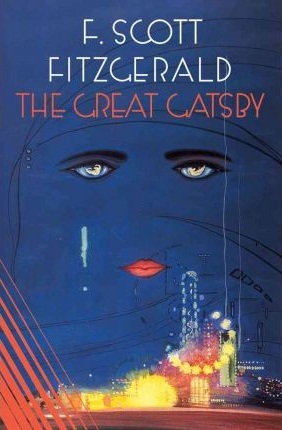
Tony’s Review: The Great Gatsby

4671

3/5

Nick Carraway lives in a 1920s world outside of reality, a world of endless parties and flitting affairs, a world of the extremely rich…the richest of which is Jay Gatsby, a legendary party host and a mystery.

The Great Gatsby is a short read, about 200 pages, but there’s a lot in there. At times, Fitzgerald’s prose is so thick with imagery that you have to cut it with a machete and read a paragraph again. Most of the time, this worked brilliantly, but there were times when the image he was going for was lost.

Unsurprisingly, some of the novel is dated. As I was reading about one summer of 1925, I couldn’t help but imagine how many of these rich and very spoilt people wold be bankrupt by the end of the depression and contrast it with John Steinbeck’s writing about the poor. However, the central theme of Gatsby – a man seeking his lost love – is timeless.

There’s a chapter which is nothing more than a list of names of ‘famous’ people in 1925 who attended Gatsby’s parties, most of which I skipped. I assume they were famous and not fictional; I only recognised one name. Such is transitory fame, another theme of the book.

Gatsby’s life is a forgery (even his name, even the title of the book), and he’s shallow and ephemeral, but he’s no shallower than the people around him. His only wish – impossible – is to have the woman back he loved (For a whole month!) five years before. All the parties, all the drive to make money, all of it was for that one purpose. Gatsby is a fantasist, chasing a dream lover he can’t have, and one he probably never had anyway. Who can’t relate to that?

Despite all his wealth, we come to pity him – the sadness of a man who can only live in the past. Gatsby dies at the end and no one – none of the famous, none of the rich who couldn’t get enough of him when he was alive – come to his funeral. He lies forgotten and abandoned, his only mourners Nick and Gatsby’s father.

The writing style is an immensely powerful engine that drives the story forward. Fitzgerald describes the world in terms I’ve not seen out of synaesthesia (experiencing the world through alternate senses: smelling a musical note, listening to a flower), and the different way of world building is mesmerising. The world is the best thing in the book actually; compared to that, the characters are thin and hollow – which was probably the point.

(Trivia of the day: The actress Sigourney Weaver took her stage name from a character in this book.)

Tony’s Review: A Streetcat named Bob

20168032

4/5

James Bowen was a mess. He’d lost touch with his family, his music career had stalled and he was a recovering drug user in emergency sheltered housing, only a few steps away from living on the streets. He scratched a living busking on the streets of London, but had no purpose or direction to his life.

Then he saw a cat sleeping outside a nearby flat, and after some hesitation, he adopted it. It was a decision that was to change his life.

Suddenly, he was aware he had a responsibility to his cat – he named him Bob – and from that he realised he wanted to take more responsibility for himself as well. The real transformation for him is when he took Bob busking – from scratching a living, suddenly he can afford a proper meal. Suddenly he wants his life back. He’s been thrown a lifeline and he snatches it with both hands.

This deceptively simple tale gets under your skin. It slips under your guard and sucker punches you, sliding into your heart and restoring your humanity. It melts your cynicism and makes you look at the people you ignore on the street with new eyes and compassion.

Bowen alternates tales of his cat with tales of himself, his past life and his attempts to rebuild himself. He doesn’t skim his past or romanticise it, being wise enough to know he was a mess, and smart enough to know what Bob has done for him.

I nearly cried when he lost Bob for a few hours – then he found him again, even more emotional. Even more when James visits his mother and starts the slow process of methadone withdrawal.

It is an overused word and almost a cliché, but this is the most heart-warming tale: This man, slowly slipping through the cracks of society, rebuilt his life because he adopted a cat.

What could you do with yours?

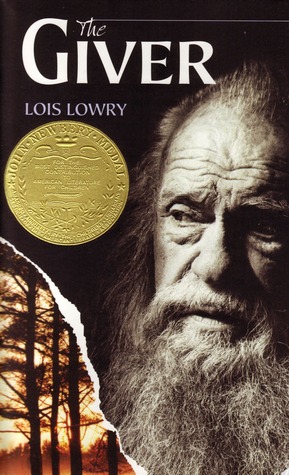
Tony’s Review: The Giver

3636

3/5 – Spoilers throughout

When Jonas reaches the age of twelve, his career will be chosen for him, as it is for every twelve year old in the community where he lives. Some will become labourers, some mothers, some doctors.

Jonas is the reciever of memory – every memory in the history of the old world, passed on by his tutor, The Giver. The question is, what will he do with that knowledge?

This is a short book, only about two hundred pages, so it only took me a few hours to read. The premise, though an old one – Utopia with a dark heart – is unique in its width. The community (it’s never named) has pushed blandness to an art form. Even colour (somehow) and music are banned, for fear of the population going wild and rioting if they see a patch of green grass or hear some Mozart, or something. Sex is forbidden and love controlled with drugs. Procreation is moved to a rotating group of birthmothers (who are presumably inseminated artificially).

However, they have taken the smart move of delegating everything ever learned onto one person. Most Utopias seem determined to forget the past ever existed.

Early in the book, Jonas talks about elderly patients and miscreants being sent ‘Elsewhere’ and ‘being released’, and it was very obvious from the first references that this is a community that not so much enjoys euthanasia as revels in it; ‘sub-standard’ infants and the elderly all go through the procedure. So it’s no shock to witness it when it happens late in the book to a baby.

The technical aspects of this book – it’s all telling and no showing (“Jonas was angry”, not “Jonas clenched his fists”) – and the oddly stilted dialogue make this book feel like it was written in 1955, not 1993. The writing is at the level of a children’s book; this is not YA, people! Eleven year olds have moved on – you don’t need to spoon-feed them by telling and not showing.

On the other hand, that stilted approach works well in the community as presented – everyone is bland and two-dimensional as the colourless world where they live. But here’s the thing: For effect, that tell-not-show should have changed when Jonas began his lessons with The Giver. And it didn’t.

Because of that, I felt nothing for Jonas or anyone else. I didn’t connect to him because he remained so two-dimensional. He could have been given so much more depth, but he’s never given the chance before he’s running away from home.

Jonas is also very passive. His relationship with The Giver is there only for exposition. Instead of Jonas finding things out for himself, instead of him pushing the boundaries of his life, instead of him maturing into an adult, he asks and The Giver explains the world to him on a plate. Spoon-feeding again. So the hero in this book does nothing until the last twenty pages.

Let’s talk about those last twenty pages, which is when the book really starts to fall over. Jonas crests a hill, finds a sledge and slips through the snow. It’s the first memory The Giver passed on to him. I had the feeling that Lowry wanted some deep metaphorical ending, but it didn’t work for me; Jonas is obviously hallucinating, or already dead. So the passive hero who does nothing but flee dies at the end. Lovely.

I rated this three stars, but I hesitated between that and two. Lowry creates a solid world, and one that works, but the hero in it is bland, even when he has the chance to become much more. The only colour in the book comes from The Giver, and all he does is exposit.

For a better time with a Utopia with a dark heart, read Mel Cusick-Jones, “Hope’s Daughter” – teenagers who actually discover things for themselves.

Disappointing.

Happy Halloween from TonyT: The Long Walk

The campfire was down to its last embers before Jonas turned to me and asked me to tell my tale. I smiled, but it didn’t reach my eyes.

“It’s not really a ghost story, Jonas,” I replied. Circled around me, the kids of class nine yawned and rubbed their eyes. Billy McAllister was the only one really still awake; the rest struggled and stared vacantly at the fire, eyelids drooping.

They were a little old for campfire ghost stories anyway. What would I tell them? The story of the hitchhikers and hook hand? They’d laugh that one out of the ballpark.

For an answer to my complaint, Jonas only shifted and tossed some more sticks on the fire, shrugging away my denial. “Give it a shot anyway,” he said.

I started at the fire, not seeing it.

“I was about the same age as you kids when it happened. But before we get to that, you need to know what happened before…if that makes sense.”

Billy nodded and the rest turned sleepy eyes towards me. I couldn’t have been much more than a shadow to them against the light of the fire, and that was fine by me. “Before…


…then. My brother had been killed in a car crash a few summers before, and my family was still picking up the pieces and wondering where we all went from here. We all had our ways of dealing with it.

Me? I went for long walks. Twenty five mile, six hour long walks. I was out from nine in the morning to three in the afternoon. Once a week I’d find a day and walk. Solitude was my silent partner, and a welcome one at that.

Through sleeping fields of corn and wheat, I looked for some answers, and tried to come to terms with what happened. It was good to get out of the house and away from it all for a while. On a long walk, I’d slip into a quiet Zen state, my feet moving automatically over what become well-known footpaths and fields. Long walks and silence. It was beautiful.

Except the countryside is rarely silent; there would always be a tractor or a car moving somewhere in earshot. Radios playing, or people moving in the dozing villages and hamlets I passed through without stopping. Always moving, always walking, that was me.

Something you should know about the car crash – there was another car involved. Yes, my brother was racing – new car, hot pair of wheels and a feeling of invulnerability. All it needed was a wet road and the laws of physics took over. Seatbelts don’t help when you roll a car that fast. The other driver – Andy, I think his name was – survived. Death by dangerous driving. Five years in jail.

Anyway, I walked and I walked, and I dropped into a Zen sleep. You walk a footpath often enough, even a twenty mile one, and you don’t even need to look at your feet anymore. Or think anymore.

Except this day was different.


I paused in my story, and the kids shifted and fidgeted. They were all listening now, more awake. Some of them had brothers, after all. I looked away from the fire and up at the night, endless and infinite before I told them…


…I was on my way home that day. A route I’d taken a dozen times before. A narrow road with high hedges, a gate, a farmer’s field. Five miles from home. Nothing I hadn’t seen or experienced before; nothing out of the ordinary in any way. A little quieter than usual, that was all.

I stopped to take a drink of water from my backpack when it started: That feeling on the back of your neck, the one that stretches its way up your spine and down your back. You turn, and there is no one there; but the feeling remains. The footpath and the field you stand beside are empty, the sky a deserted blue apart from the islands of floating clouds. Not a soul in sight.

You tell yourself it’s nothing, but the feeling stays there.

The feeling of being watched. The feeling of being followed.

And it’s a feeling that gets stronger the more you stay and the more times you look back. Whatever it is comes closer, and whatever it is, you don’t want to meet it. Even in broad daylight on a hot summer day, you do not. Want. To. Meet. It.

The silence behind me was thicker than usual, the bird song muted and the trees silent and watching.

So I picked up my pace a little…and the feeling faded again. Until I stopped, and there it was again. Still nothing behind me but emptiness and solitude. Only that solitude felt like a threat now, a danger I never recognised.

I turned my back on that feeling and walked on and on.

Then at about three miles from home, something odd happened. From nowhere the thought popped, complete and relating to nothing:

Maybe I’m needed at home.

But that’s not the extraordinary thing. The instant the thought about being at home came into my head, the feeling of being watched vanished instantly as though it had never existed.

I still didn’t look back though, or pause to rest. I must have made those three miles in record time.

It would be simple now to check something like that…a text message or a phone call, and you’d have such a random thought cleared up in a few minutes. But this was twenty years ago, kids. Nothing so advanced back then. I was alone and no one knew where I was. I was three miles out and an hour away from knowing.


I made it home, of course, with no one following me. There wasn’t anything out there but my imagination. Nothing at all.

Except:

When I got home, my mother told me that the other driver in the car crash – Andy – had received an early prison release that day.


Billy was the first to ask, the others turning to him as though they’d forgotten he was there.

“You think it was your brother, sir? Haunting you or something?”

I could have lied to them, I suppose. I could have told them something. “I don’t know, Billy. I really don’t. I only know it scared the life out of me.” I stretched. “I’d been walking twenty miles a week until then…but I didn’t go for a walk the week after.”

Billy nodded, seemingly satisfied. “What was your brother’s name, sir?”

I coughed and cut my eyes to the empty log to my left. “Jonas.”


(Excluding the framing story of the campfire, this did happen to me – all of it. What was following me that silent summer day? I really don’t have a clue…but it was one of the most terrifying experiences of my life.)

Tony’s Review: Monsters of Men, Patrick Ness

7540092


3/5

Todd and Viola – and a growing cast of others – have to fight for peace with the native ‘Spackle’, as well as keeping their own warring camps apart.

Phew. I’m exhausted. This is the third of the “Chaos Walking” trilogy, and I’m as war-weary as Todd and Viola. The pace is frantic, the writing dense and the characters actions thick and fast.

New this time is a “Spackle” character – they call themselves The Land, with obvious references to Native Americans (Or for a more modern audience, Avatar), complete with complex culture, nobility and a deep connection to the planet. They even ride their mounts standing.
Patrick Ness isn’t afraid to use the page to show you what’s going on. Explosion?

BOOM.

– with a size 40 font. Different character voices? Use a different font for each for extra emphasis.

After three books, some of his writing style was starting to grate though –

Like –

He will write something –

And then –

And do this –

And then do that –

…all the way down a page or two. His stream-of-consciousness style I can get behind most of the time though, tumbling together his sentences and images into a single paragraph. I certainly can’t complain, since I use it in my own writing style.

And as usual, his characters are full and three-dimensional and his world building is flawless, even the bit players like Ivan (who goes where the power is, something Ness uses to good effect).

The characters inaction frustrated me. Todd is over there, Viola is over here, and they spend a fair part of the book apart, worrying about each other, fighting to keep the warring factions apart. I wanted to shout at them: PICK YOURSELVES UP AND MOVE TO ANOTHER PART OF THE PLANET.

I was as frustrated as they were at the endless point-scoring of the Mayor and Mistress Coyle. What does it matter who wins the peace? All that matters is the end result. Not one person had the wisdom to tell them that.

Ness creates such a realistic world that I wanted to shout at the people who lived there to grow up. Now I know how it feels to be a politician, trying to bring peace to a war-torn country. No one can see past the hate and stupidity to see what bloody idiots they are. No one can see the futility.

I need to talk about The Mayor, the most developed character in the book. I never trusted him…well, maybe for chapter or two, but he never seemed anything less than sociopathic. Like most dictators, he was charming with it, able to (literally) bend minds to his will. He claimed that the best parts of Todd rubbed off on him. I didn’t believe him…until his actions at the climax of the book.

It’s a long haul from the start of book one right the way to the end of book three – it’s about 1500 pages, actually. I’ve been on that world with Todd and Viola, fought as they fought, felt their frustrations and their exhaustion.

Ness is one hell of a writer, and I’ll be back for more.

Review of Part One…Here

Part Two…Here